























Magdrive Launches Pioneering Lab for Electric Propulsion Testing in the UK
Magdrive, a leading space technology firm, has inaugurated its Disruptive Experimental Electric Propulsion (DEEP) Lab, a state-of-the-art facility aimed at enhancing electric propulsion systems for satellite operations. With an investment of £3.8 million, this lab provides British businesses, from startups to established aerospace companies, with access to essential testing environments to foster innovation in space technology.
The DEEP Lab: A New Era for UK Space Innovation
Funded through £1.8 million from the UK Space Agency’s Space Clusters Infrastructure Fund and an additional £2 million from Magdrive, the DEEP Lab spans 10,000 square feet. This facility is poised to become a critical resource for the UK space sector, enabling more efficient satellite maneuvers through cutting-edge electric propulsion technology.
Electric Propulsion: A Game-Changer for Satellite Technology
The new lab features advanced capabilities that include:
- Cleanroom assembly areas
- A mechanical prototyping workshop
- Plasma diagnostic testing chambers
Central to the facility is a two-metre diameter vacuum chamber, designed for thorough thruster testing and validation, which incorporates sophisticated plasma diagnostic techniques typically used in the fusion industry.
Government and Industry Support
Space Minister Liz Lloyd emphasised the importance of the DEEP Lab, asserting that it will greatly benefit UK companies looking to push the boundaries of space exploration. She stated that this facility will not only bolster the capabilities of ambitious startups but also assist established aerospace firms in enhancing their operational efficiencies.
Mark Stokes, CEO and co-founder of Magdrive, expressed his enthusiasm for the lab’s opening, highlighting its role in creating collaborative opportunities within the sector. He noted that the DEEP Lab is set to help commercialise next-generation propulsion technologies, placing the UK at the forefront of electric propulsion innovation.
Fostering Collaboration and Economic Growth
Dr Paul Bate, CEO of the UK Space Agency, commented on the significance of this investment for the national infrastructure, which aims to generate 50 highly skilled jobs. The establishment of the DEEP Lab also seeks to remove barriers for smaller companies, enabling them to access crucial testing facilities.
Since the launch of the Space Clusters Infrastructure Fund in 2023, over £45.6 million has been allocated for various projects. This funding has been complemented by more than £43.8 million in matching investment from the private sector, creating significant momentum in the space research and development landscape.
Building a Collaborative Ecosystem
The DEEP Lab promotes a flexible approach by allowing different aerospace companies and academic researchers to rent individual rooms or facilities. This strategy is designed to cover operational costs without focusing on profit, thereby making cutting-edge technology accessible.
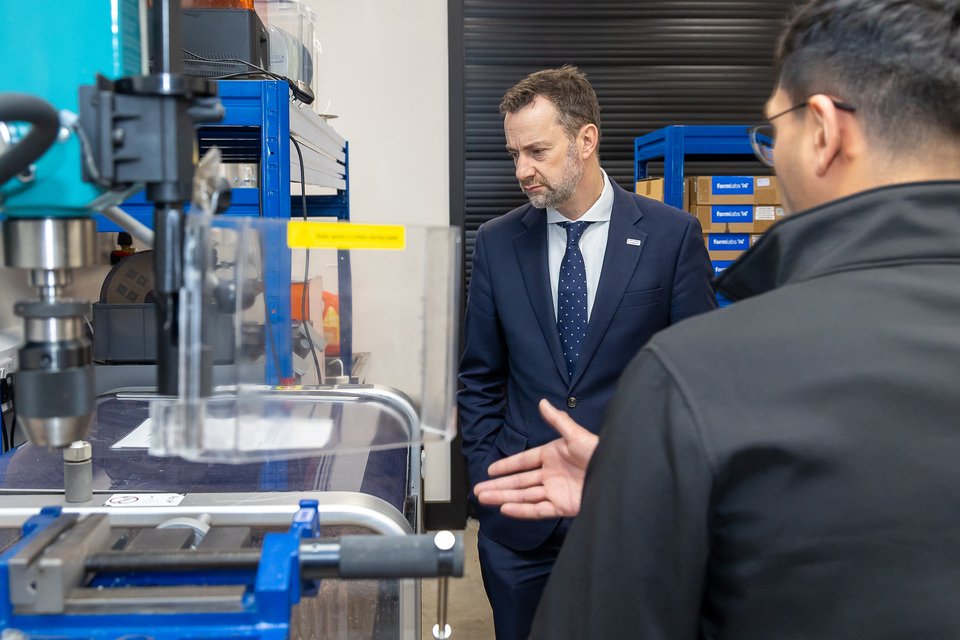
Equipped with a workshop featuring advanced machinery, the lab aims to streamline the prototyping process with the help of skilled technicians, thus reducing development timelines for new technologies.
Conclusion: A Significant Step for UK Space Ventures
Founded in 2020, Magdrive has swiftly progressed to secure more than £10 million in funding, receiving support from both the UK and European Space Agencies. The DEEP Lab is a pivotal addition to the UK’s space infrastructure, ensuring that domestic companies have the facilities needed to develop technologies essential for future space missions.
Source: official statements, news agencies, and public reports.
https://www.gov.uk/government/news/uk-space-agency-investment-helps-launch-cutting-edge-electric-propulsion-lab






