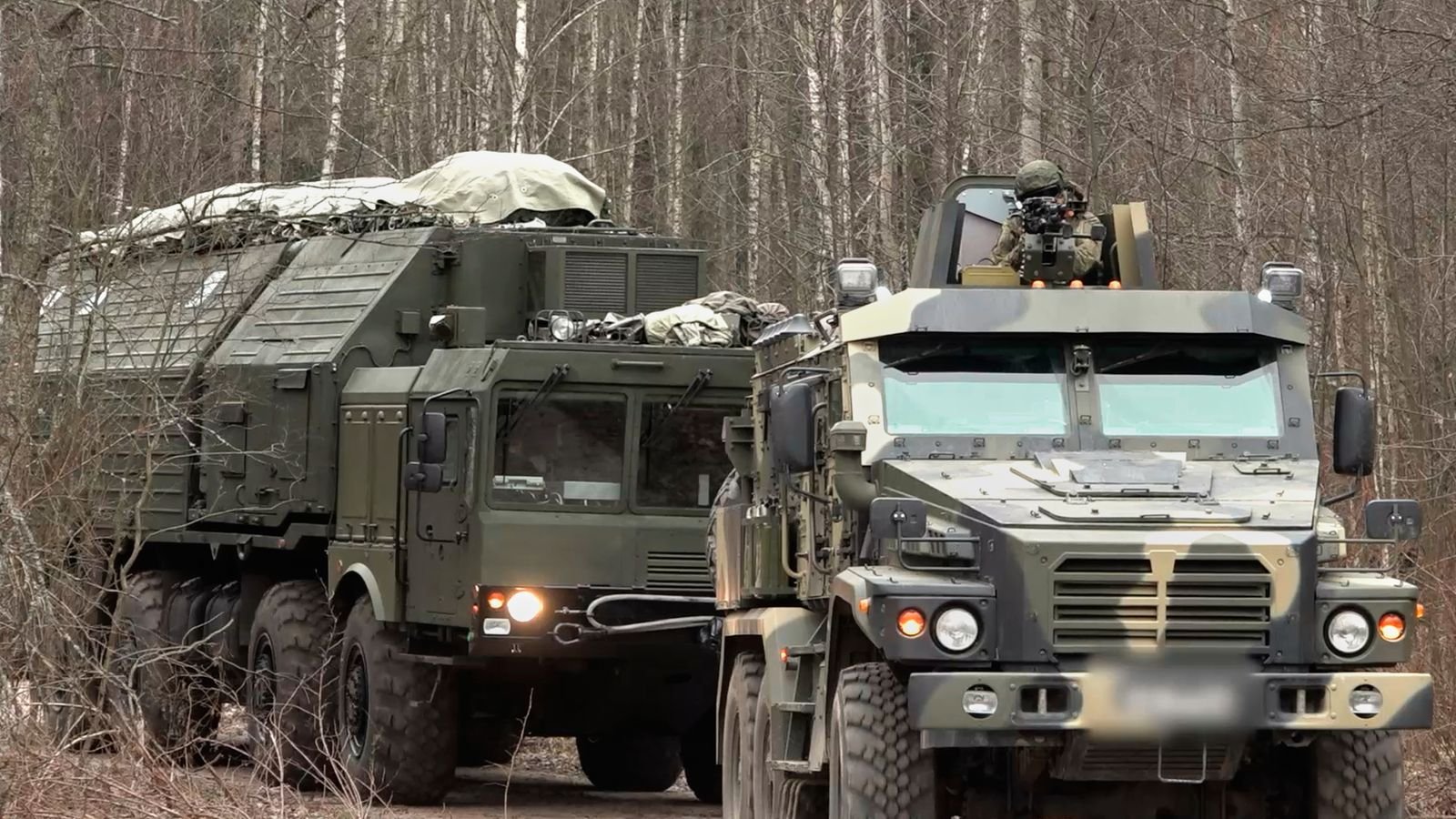
Russia Strikes Ukraine with Oreshnik Hypersonic Missile
The Russian military has confirmed the launch of its Oreshnik hypersonic missile at a target in Ukraine, marking the weapon’s second known deployment. Although the missile is capable of carrying nuclear warheads, Russian authorities have indicated that the weapon used in the latest attack did not have such a warhead attached.
Motivation Behind the Attack
According to Russian officials, the missile launch was a response to an alleged Ukrainian drone assault on one of President Vladimir Putin’s residences. This assertion has been vigorously denied by Kyiv and dismissed by United States intelligence.
This attack is part of a broader campaign aimed at degrading Ukraine’s critical infrastructure amid an ongoing conflict that has intensified over the past year.
Insights into the Oreshnik Missile
The Oreshnik missile is classified as an intermediate-range weapon, possessing a striking distance between 3,000 and 5,500 kilometers (approximately 1,860 to 3,415 miles), allowing it to reach targets within Europe and the US from Russian territory. Military analyst Sean Bell emphasizes that while this missile marks a development in Russian weaponry, it is not entirely new to their arsenal.
While the missile launched during the recent attack did not carry a nuclear payload, Putin previously claimed that deploying several Oreshnik missiles, even without nuclear warheads, could yield destruction comparable to a full nuclear strike. He has boasted about the missile’s capabilities, asserting that it travels at Mach 10, making it virtually invulnerable to current air defence systems.
Production and International Implications
Putin has stated that Russia plans to ramp up the mass production of the Oreshnik missile, while also acknowledging that other nations may eventually gain access to similar weaponry. Bell explains that the missile can be equipped with six to eight independent warheads, enabling simultaneous strikes on multiple targets. Despite their high speed making interceptions challenging, he cautions that the missile becomes more vulnerable upon re-entry into the Earth’s atmosphere, where air density significantly reduces its velocity.
Background
Russia’s military capabilities have been under scrutiny, especially with the ongoing conflict in Ukraine that dates back to 2014. The introduction of hypersonic technology represents both an advancement and a potential escalation in military engagement, drawing attention to strategic discussions in NATO and other international forums.
Source: Original Article