Winter Solstice Brings Shortest Day of the Year
As the winter solstice approaches, residents across the UK will experience the shortest day and longest night of the year. Occurring on 21 December, the solstice marks a significant turning point, with daylight in London lasting just over eight hours before the sun sets.
Significance of the Winter Solstice
The winter solstice, also referred to as Yule, represents the first day of winter in the astronomical calendar. Conversely, in the meteorological calendar, winter has already been in session for three weeks. This astronomical event occurs at 3:03 PM in the UK, although many observe the entire day as a time for celebration and reflection.
During this time, cultures across the globe commemorate the return of the sun, symbolising rebirth and renewal. It is also a period recognised by various festivals and holidays.
Increasing Daylight Ahead
From 22 December onward, the days will gradually lengthen in the Northern Hemisphere. Initially, the increase in daylight will be minimal, amounting to mere seconds per day. However, as spring approaches, this gain will accelerate to approximately three additional minutes of light each day by March, according to forecasts.
The Science Behind the Solstice
The winter solstice occurs due to the Earth’s axial tilt, which causes varying amounts of sunlight to reach different parts of the planet. In the Northern Hemisphere, the tilt positions the upper half of the Earth away from the sun, resulting in a shorter daytime. This phenomenon contrasts with the summer solstice, which occurs between 20 and 22 June, when the Northern Hemisphere is oriented towards the sun, creating the longest day of the year.
Global Celebrations and Local Observances
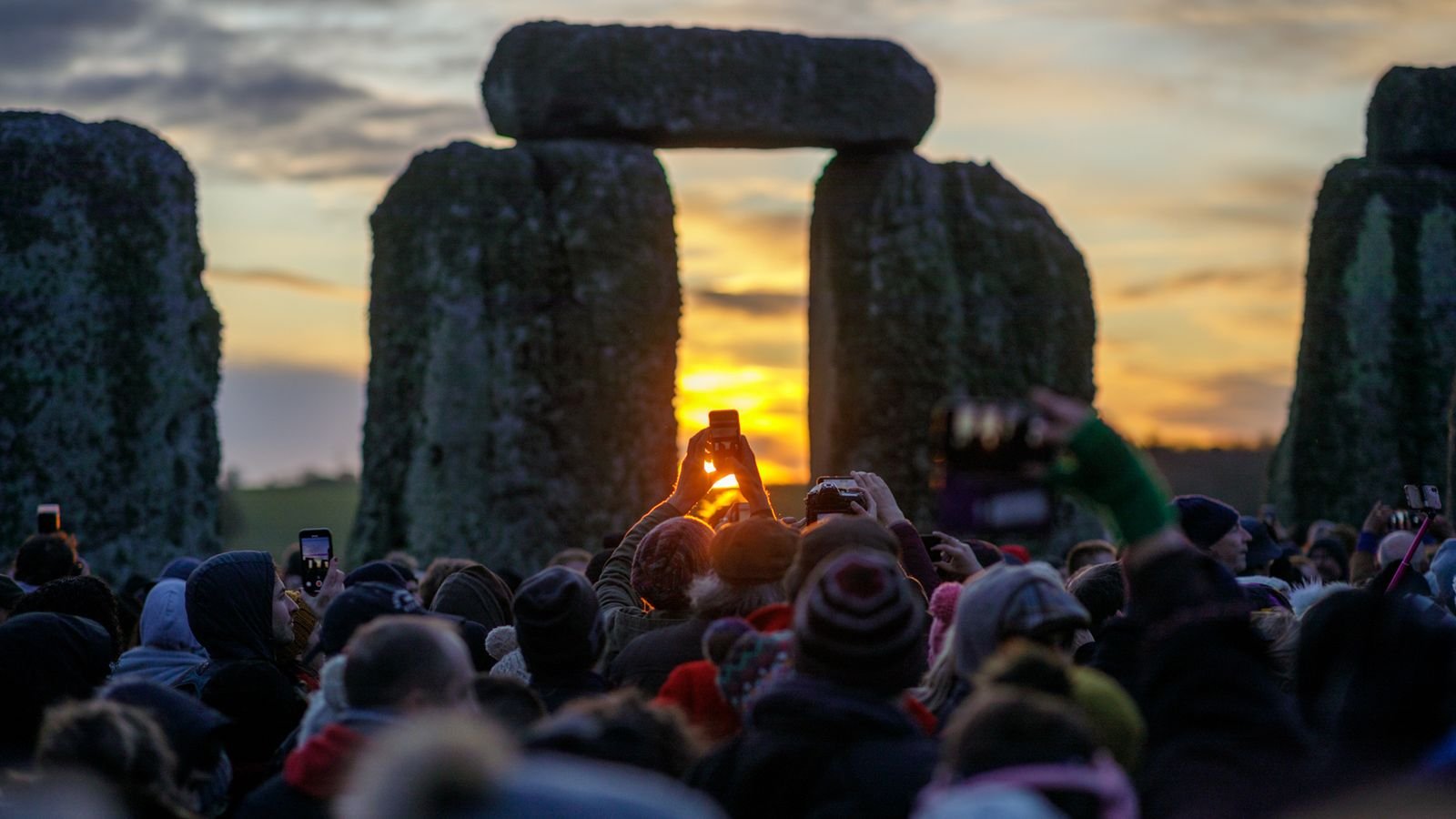
Across the globe, the winter solstice has been celebrated for thousands of years. In the UK, notable gatherings occur at historic sites such as Stonehenge and Newgrange in Ireland. Many individuals gather at Stonehenge to witness the sunrise, which takes place shortly after 8 AM on this day. The ancient monument has long been associated with celestial alignments and has hosted solstice celebrations for millennia.
In Co Meath, Ireland, public interest in Newgrange peaks during the winter solstice, as its unique structure allows sunlight to illuminate its inner chamber for a brief period on this day.
Local Festivals in the UK
The winter solstice is also marked by various local celebrations in the UK. For instance, the Burning the Clocks festival in Brighton involves participants parading with lanterns made from paper and willow. This event combines traditional Cornish customs with a contemporary approach, offering a community-focused celebration of light and warmth on the darkest night of the year.
Looking Ahead
As communities across the UK engage in these festivities, the winter solstice serves as a reminder of the changing seasons and the inevitable return of longer, brighter days. With the gradual increase in daylight, people can look forward to the spring, fostering hope and renewal in their lives.
Source: Original Article