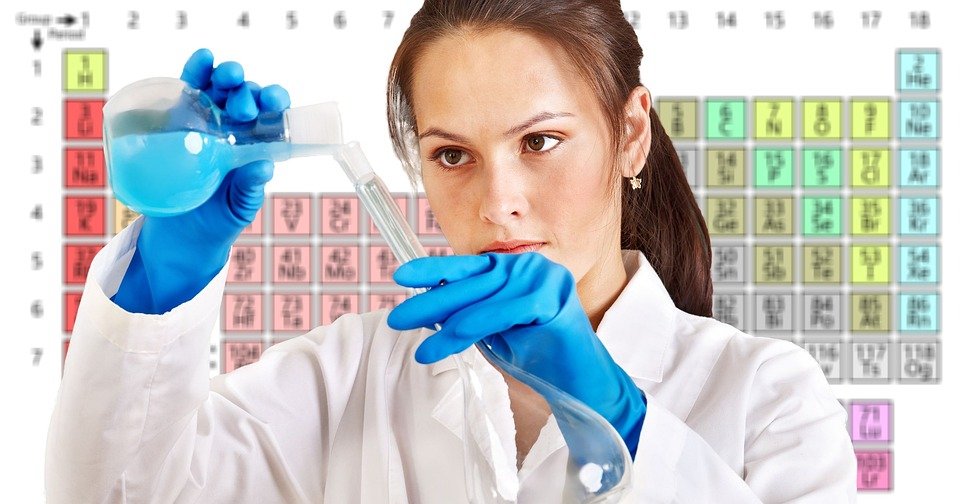
The periodic table is one of the most significant achievements in the field of chemistry, serving as a comprehensive framework for understanding the elements and their relationships. Its development involved a series of historical milestones, shaped by the contributions of various scientists over centuries.
The Early Foundations
Before the periodic table existed, ancient civilizations categorized substances based on their properties. The Greek philosopher Democritus proposed the concept of atoms, but it wasn’t until the 18th century that the modern chemical understanding began to take form.
- Antoine Lavoisier: Often referred to as the “Father of Modern Chemistry,” Lavoisier established the law of conservation of mass and compiled a list of elements in his book “Traité Élémentaire de Chimie” (1789).
- John Dalton: In the early 19th century, Dalton’s atomic theory proposed that elements consist of indivisible particles (atoms) that combine in specific ratios to form compounds.
Mendeleev’s Contribution
The culmination of these foundational ideas led to the advancement of the periodic table. In 1869, Russian chemist Dmitri Mendeleev created the first widely recognized periodic table. Mendeleev organized the elements by increasing atomic weights, arranging them in rows and columns based on similar chemical properties.
- Mendeleev’s table was unique as it predicted the existence and properties of undiscovered elements, such as gallium and germanium.
- His work highlighted periodicity, the tendency of elements to exhibit similar characteristics at regular intervals when arranged according to their atomic weights.
The Modern Periodic Table
As scientific understanding advanced, so did the periodic table. In particular, the development of atomic theory and the discovery of the electron fundamentally changed the organization of the table.
- Henry Moseley: In 1913, Moseley determined that elements are better organized by atomic number rather than atomic weight, leading to the modern arrangement of the periodic table we use today.
- Periodicity: The modern periodic table emphasizes the periodic law, which states that the properties of elements are a periodic function of their atomic numbers.
Structural Changes and Discoveries
Throughout the 20th century, many new elements were discovered, which required updates to the periodic table, including:
- The identification of transuranium elements, which are those beyond uranium in the periodic table, largely produced through nuclear reactions.
- The addition of synthetic elements and the expansion of the table to accommodate these new discoveries, with the most recent updates including elements like nihonium and muscovium.
Impact and Importance
The periodic table is more than just a collection of elements; it plays a crucial role in scientific education and research. It provides a structured way to understand elements’ relationships and behaviors, influencing fields such as:
- Chemistry: Fundamental in predicting reactions between elements.
- Physics: Essential for understanding atomic structure and quantum mechanics.
- Biology: Helps in understanding biochemical processes and the role of elements in life.
In conclusion, the periodic table’s evolution reflects the cumulative knowledge of chemistry and showcases humanity’s ongoing pursuit of understanding the natural world. Its enduring significance underscores the interconnectedness of scientific disciplines and the importance of structured knowledge in advancing our understanding of the universe.