NASA Set to Launch Artemis II Mission Around the Moon
Nasa is gearing up for its Artemis II mission, which aims to send astronauts on a lunar journey for the first time in over five decades. Planned for launch on 6 February, pending several crucial checks, this mission will transport a crew further than any human has ventured in space thus far.
Overview of the Artemis Programme
The Artemis programme represents NASA’s renewed efforts in lunar exploration, with the objective of landing humans on the moon for the first time since the Apollo programme concluded in December 1972. These missions are essential components of a broader strategy to create the Lunar Gateway, a planned space station that will allow astronauts to reside and train for future expeditions to Mars.
Key Details on Artemis II
The Artemis II flight follows the successful launch of Artemis I in November 2022, which tested NASA’s Space Launch System (SLS) by sending an uncrewed Orion capsule around the moon. This mission is seen as critical not only for scientific exploration but also for reinstating U.S. leadership in space amidst increasing competition from countries like China.
The Rocket and Spacecraft
The SLS, unveiled just weeks ago, is a towering rocket measuring 98 metres, exceeding the height of Big Ben. It consists of a core stage containing approximately two million litres of liquid hydrogen and 750 million litres of liquid oxygen, alongside two boosters. Combined, these components produce the thrust equivalent to 14 jumbo jets, supplying most of the power necessary during the launch’s initial moments.
NASA claims the SLS is uniquely capable of transporting astronauts, cargo, and the Orion capsule directly to the moon without staging multiple launches. Financially, the SLS programme has incurred costs of approximately $23.8 billion since its inception in 2011, with the Orion capsule adding an estimated $20.4 billion over a decade.
Mission Objectives
During the planned 10-day mission, the crew will conduct critical tests on life support, navigation, and communication systems essential for deep space travel. Many assessments will occur within Earth’s orbit prior to entering the moon’s vicinity. Following this, the team will pilot the Orion capsule around the moon and return to Earth, splashing down in the Pacific Ocean. The success of this mission is vital for NASA’s future plans to eventually land astronauts on the moon as part of Artemis III, slated for mid-2027.
Artemis II Crew and Logistics
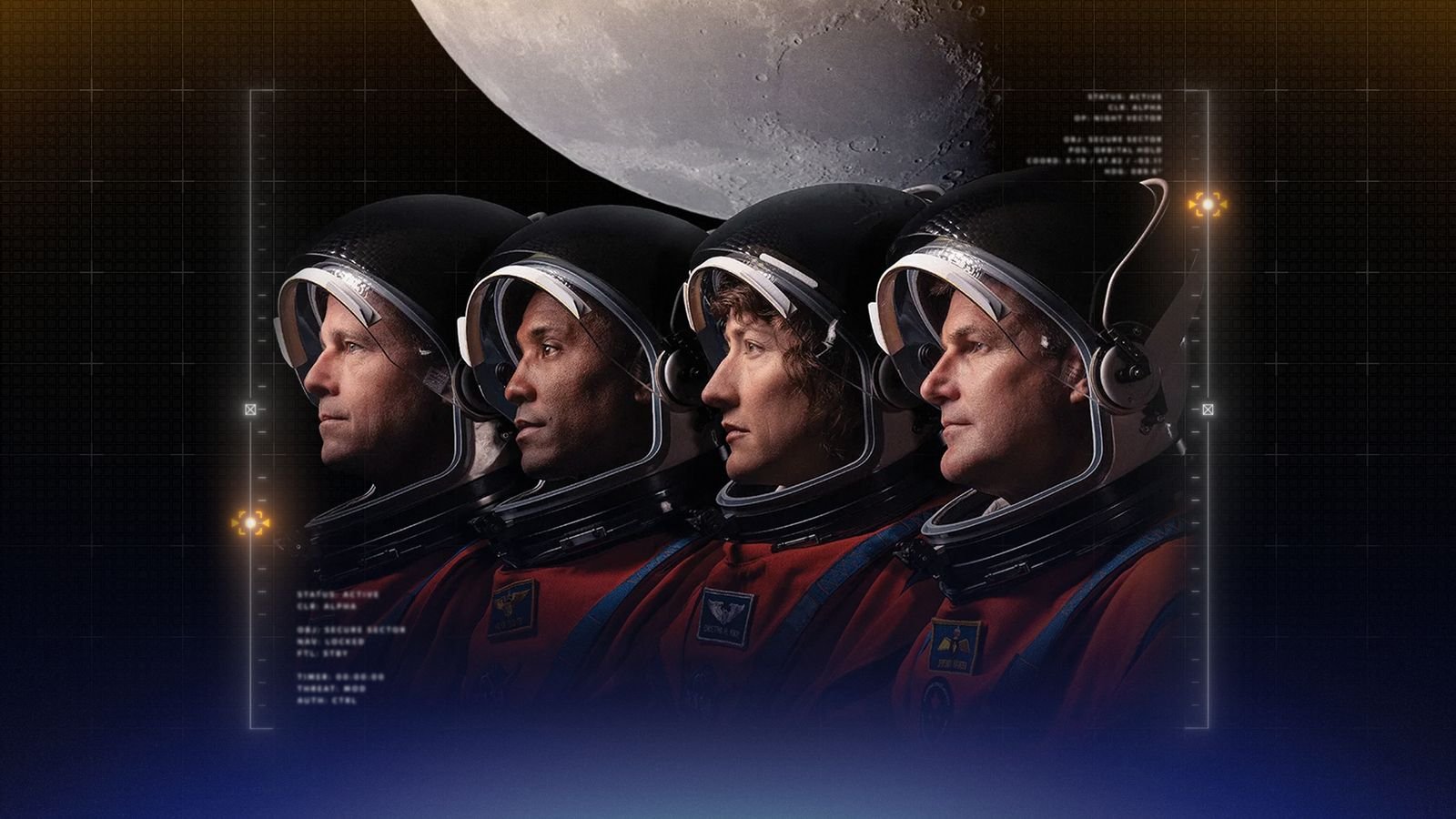
The Artemis II crew comprises three American astronauts and one Canadian. They began their health stabilization programme on 23 January to prevent illness ahead of the mission. This protocol typically begins 14 days prior to launch but can be adjusted if the schedule changes.
Potential Launch Delays
The launch date of 6 February is contingent on the results of a key wet dress rehearsal, occurring four days prior to lift-off. This test simulates the countdown process to identify any potential issues. Weather conditions will also play a significant role, as NASA evaluates multiple atmospheric factors to determine launch safety. If postponed, the mission could be rescheduled to various windows through April.
Background
The Artemis initiative signifies a revival of lunar exploration after decades of limited funding and interest since the 1970s. It embodies a significant shift in U.S. space policy, reflecting a commitment to reestablishing human presence beyond Earth, with broader objectives that extend to missions to Mars in the future.
Source: Original Article