






















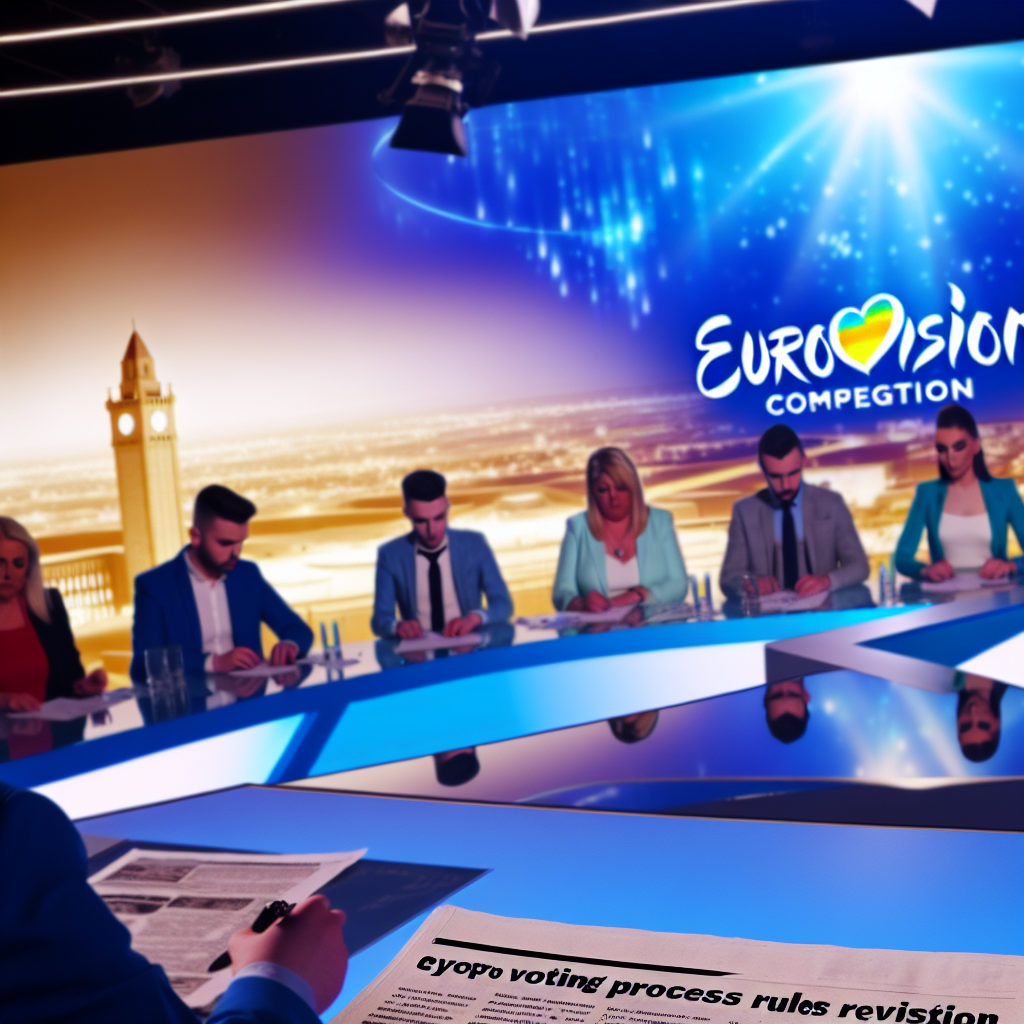
Eurovision Song Contest to Revamp Voting System Amid Allegations of Political Interference
The Eurovision Song Contest will introduce significant changes to its voting mechanism following accusations of governmental interference that emerged during this year’s contest. The announcement comes after concerns were raised by various broadcasters regarding the results involving Israel’s entry, which notably received strong public support but fell short after jury votes were accounted for.
Controversy Surrounding Israel’s Participation
Israeli artist Yuval Raphael was a prominent figure in the recent Eurovision, having garnered extensive public votes but ultimately finishing in second place due to the influence of jury votes. This outcome prompted broadcaster RTE from Ireland to demand detailed voting breakdowns from the European Broadcasting Union (EBU), while Spain’s RTVE called for a comprehensive evaluation of the voting process to mitigate any external influences.
Further complicating matters, Dutch broadcaster AVROTROS indicated their inability to support Israel’s participation moving forward due to the ongoing Israel-Hamas conflict. They claimed that Israeli governmental interference had been substantiated during the previous contest, stating that the event had been manipulated for political gain. Specific details regarding this interference have not been disclosed.
Upcoming Changes to the Contest
The EBU is set to convene in December to deliberate on proposed amendments to the voting structure. If the modifications do not satisfy member broadcasters, a vote concerning Israel’s continuation in the contest may take place. Key proposed changes include:
- Implementing clearer rules on the promotion of artists and their entries.
- Halving the cap on public voting.
- Reinstating professional juries during the semi-finals.
- Enhancing security measures to prevent voting manipulation.
These alterations aim to counteract disproportionate promotional efforts, particularly those backed by governmental entities. Contest director Martin Green emphasized that no broadcaster or artist should engage in external campaigns that could compromise the integrity of the contest.
Professional Juries and Balanced Voting
The reintroduction of professional juries aims to establish a more even distribution between jury and audience votes. Furthermore, each jury will include at least two jurors between the ages of 18 and 25, to better reflect the contest’s appeal to younger demographics. Additional technical safeguards will be implemented to detect and prevent coordinated or suspicious voting activities.
Political Context and Implications
This overhaul comes amid heightened scrutiny over the political dimensions of the contest. In recent years, global events have increasingly influenced Eurovision, with Russia being expelled from the event following its invasion of Ukraine. Israel, which has a storied history with the competition, has faced calls for exclusion due to the actions of Prime Minister Benjamin Netanyahu’s administration in relation to the Hamas-Israel conflict.
Countries including Spain, the Netherlands, and Ireland threatened to withdraw from Eurovision if Israel remains in the competition. Protests against Israel’s involvement have also occurred in the host city for the upcoming 2025 contest.
Conclusion
Iceland’s RUV has expressed cautious optimism about the proposed changes, suggesting they are a positive first step. With ongoing developments in the Middle East affecting many aspects of social and cultural events, Ireland’s broadcaster also noted that the EBU will further discuss participation in future contests at their upcoming Winter General Assembly.
Background
The Eurovision Song Contest, established more than 50 years ago, is a significant cultural event broadcasting across Europe and beyond, featuring entries from numerous countries. The competition has often been a platform for political expression, with past entries and voting patterns reflecting the socio-political climate of the time. In the context of current Middle Eastern tensions and the recent Israeli-Hamas war, the integrity of the contest is under scrutiny as it heads towards its 70th anniversary in Vienna next May.






