






















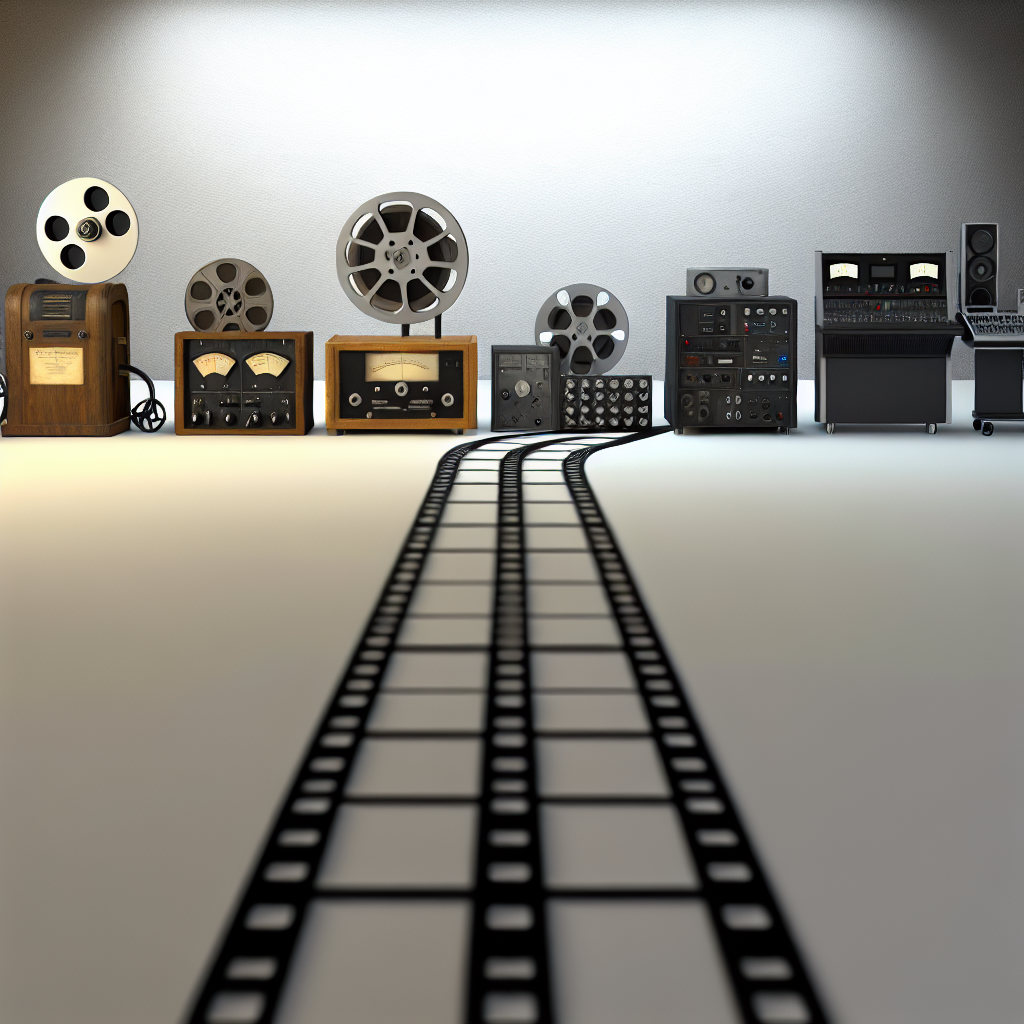
Introduction to Sound Design in Cinema
Sound design in cinema has witnessed remarkable evolution since the early days of filmmaking. From silent films accompanied by live music to the immersive experience of modern surround sound, the journey has been both revolutionary and transformative. Understanding this evolution not only highlights technological advancements but also showcases the artistic intent behind sound in film.
The Birth of Sound in Film: Silent Era to Early Talkies
The transition from silent films to sound began in the late 1920s. Initially, films were accompanied by live orchestras, providing emotional context to the storytelling. The first major adoption of synchronized sound was in 1927’s The Jazz Singer, which introduced “talkies” and changed the landscape of cinema forever.
Mono Sound: The Standard for Early Films
During the 1930s and 1940s, mono sound became the standard in filmmaking. Soundtracks were typically limited to one channel, which meant that all audio—dialogue, music, sound effects—was mixed into a single track. This period saw the establishment of sound recording and playback technologies, with studios developing methods to enhance clarity in dialogue and sound effects.
The Advent of Stereo Sound
In the late 1950s and 1960s, stereo sound began to make its way into cinema. While not yet widespread, films like West Side Story (1961) showcased the potential of multiple audio channels, enriching the viewer’s experience. Stereo sound allowed for separation of audio, giving filmmakers new tools for creative expression and expanding the audience’s emotional engagement with the narrative.
Surround Sound: A New Dimension
Surround sound technology took a significant leap forward in the 1970s. The introduction of formats like Dolby Stereo, first utilized in the film A Star Is Born (1976), allowed filmmakers to position sounds in a three-dimensional space. This innovation provided a more immersive viewing experience, bringing audiences closer to the film’s environment.
The Digital Revolution: Advancements in Sound Design
The 1990s ushered in the digital era, which brought about significant advancements in sound design. The introduction of Dolby Digital and DTS (Digital Theater Systems) transformed the landscape once again, allowing for up to eight discrete audio channels. Films like Jurassic Park (1993) and Saving Private Ryan (1998) utilized these technologies to convey intense soundscapes, enhancing storytelling through sound.
Modern Innovations: Immersive Soundscapes
In the 21st century, further innovations like Dolby Atmos and Auro 3D have taken surround sound to unparalleled heights. These technologies utilize sound objects, allowing for precise placement and movement of audio in a three-dimensional space. This progression is visible in films such as Gravity (2013) and Blade Runner 2049 (2017), where sound plays an intricate role in world-building and audience immersion.
The Impact of Surround Sound on Cinema
The evolution of sound design, particularly through the implementation of surround sound, has profoundly impacted narrative techniques in cinema. Sound now plays an integral role in storytelling, guiding audience emotions and creating immersive experiences. Through decades of innovation, filmmakers have learned to harness the power of sound to complement visual elements, leading to richer cinematic experiences.
Conclusion
The journey of sound design in cinema reflects technological advancements, artistic evolution, and a deepening understanding of audience engagement. As filmmakers continue to explore new sound technologies, the possibilities for storytelling expand, ensuring that sound remains a vital and evolving element of the cinematic arts.






