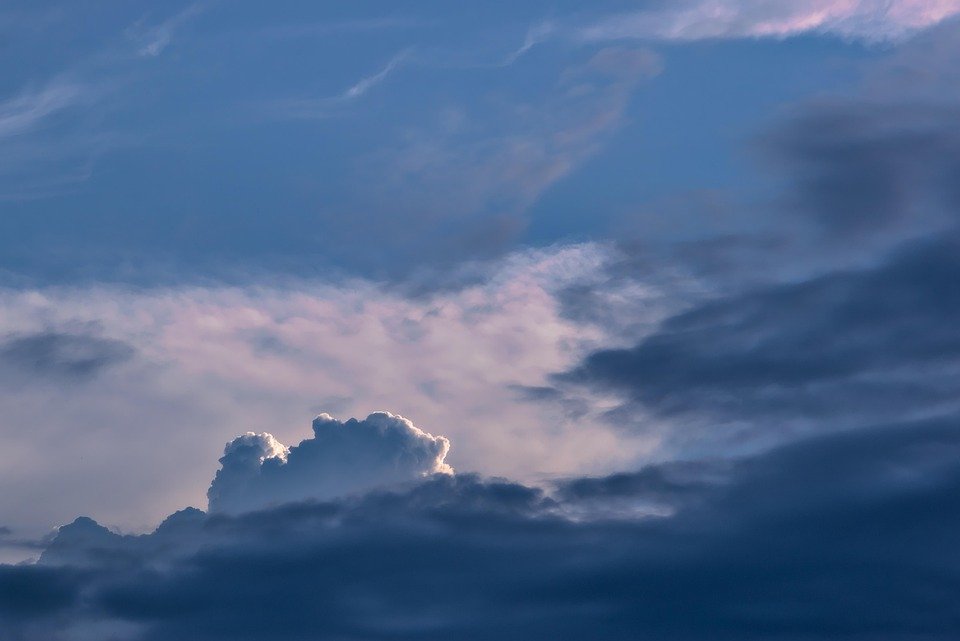
The formation of clouds is a fundamental component of the Earth’s weather system and is intricately connected to the water cycle. Understanding how clouds form involves various disciplines of science, including meteorology, physics, and environmental science.
The Water Cycle
The water cycle, also known as the hydrological cycle, describes the continuous movement of water within the Earth and its atmosphere. This cycle involves several key processes, each contributing to the formation of clouds.
- Evaporation: Water from oceans, rivers, and lakes evaporates, transforming from liquid to water vapor due to solar energy. This process causes water to rise into the atmosphere.
- Transpiration: Plants release water vapor into the air through a process called transpiration, contributing to the overall moisture in the atmosphere.
- Condensation: As water vapor rises, it cools due to lower temperatures in the atmosphere. This cooling causes water vapor to condense into tiny droplets, forming clouds.
- Precipitation: Once cloud droplets combine to form larger droplets, they eventually fall as precipitation—either rain, snow, sleet, or hail—returning water to the Earth’s surface.
Cloud Formation
Clouds are formed when water vapor condenses into tiny droplets or ice crystals. This process is influenced by several factors:
- Cooling Air: When air rises, it expands and cools. The rate at which air cools is known as the lapse rate. Cooler air holds less moisture, prompting condensation.
- Condensation Nuclei: For water vapor to condense, it requires surfaces to cling to, known as condensation nuclei. These can include dust, pollen, or smoke particles in the atmosphere.
- Humidity: The relative humidity of the air affects cloud formation. Air must reach a certain humidity level, known as the saturation point, for clouds to form.
Types of Clouds
Clouds can be classified based on their appearance and altitude, with several main types:
- Cumulus: Fluffy, white clouds often associated with fair weather. They form due to rising warm air.
- Stratus: Layered clouds that cover the sky, often leading to overcast conditions and light precipitation.
- Cirrus: Thin, wispy clouds at high altitudes, indicating fair weather but can signal a change in weather.
- Stratocumulus: Low, lumpy clouds that may bring light rain or drizzle.
- Cumulonimbus: Towering clouds associated with thunderstorms and severe weather.
Conclusion
Understanding the science of cloud formation and the water cycle is essential in meteorology and environmental science. This knowledge helps forecast weather patterns, understand climate change, and explain the various phenomena associated with clouds.