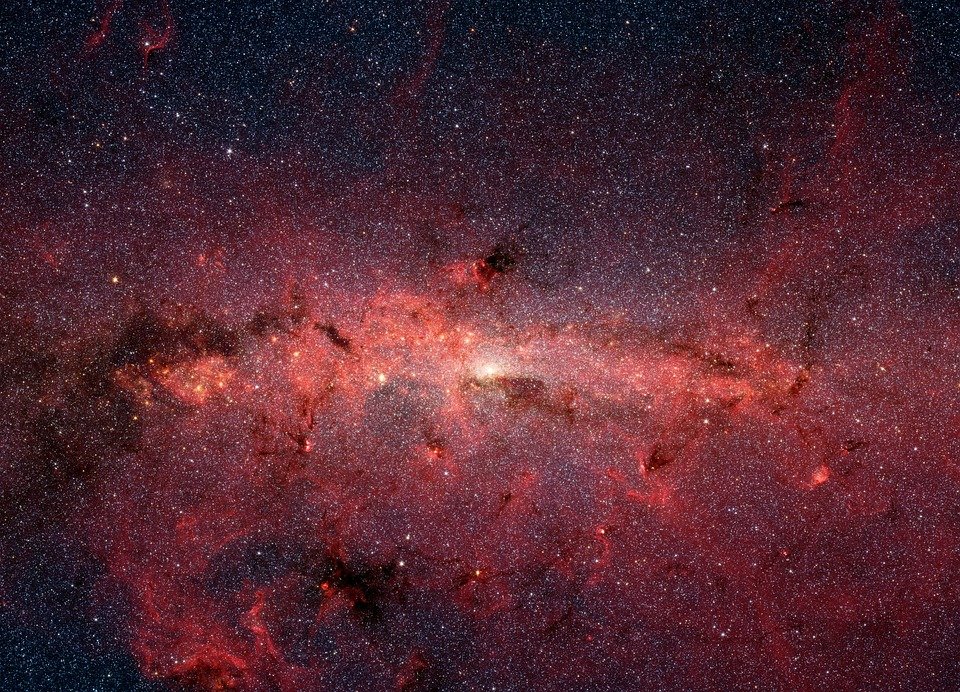
Astronomy Basics: The Fundamental Principles that Shape Our Understanding of the Universe
Astronomy is the scientific study of celestial objects, space, and the universe as a whole. It seeks to understand the nature, properties, and behavior of galaxies, stars, planets, and other celestial phenomena. The fundamental principles of astronomy are based on well-established scientific concepts and theories that have been developed over centuries. This article will outline some of these core principles.
The Nature of Light
One of the foundational aspects of astronomy is the study of light. Light travels in waves, and its properties are central to how we observe the universe. The speed of light in a vacuum is approximately 299,792 kilometers per second (or about 186,282 miles per second). Key principles include:
- Electromagnetic Spectrum: Light is part of the electromagnetic spectrum, which includes radio waves, microwaves, infrared, visible light, ultraviolet, X-rays, and gamma rays.
- Redshift and Blueshift: The movement of celestial objects affects the wavelength of light. If an object is moving away from us, its light is redshifted; if it is moving towards us, it is blueshifted.
- Light Year: A light year is the distance light travels in one year, approximately 9.46 trillion kilometers (about 5.88 trillion miles), and is used to measure astronomical distances.
Gravity and Motion
Gravity is a fundamental force that governs the motion of celestial bodies. Sir Isaac Newton’s law of universal gravitation describes how every mass attracts every other mass in the universe. Key points include:
- Newton’s Laws of Motion: These laws explain the relationship between the motion of an object and the forces acting upon it.
- Kepler’s Laws of Planetary Motion: Johannes Kepler formulated three laws describing the orbits of planets around the Sun:
- Planets move in elliptical orbits with the Sun at one focus.
- A line segment joining a planet and the Sun sweeps out equal areas during equal intervals of time.
- The square of the orbital period of a planet is directly proportional to the cube of the semi-major axis of its orbit.
Cosmology and the Structure of the Universe
Cosmology is the study of the universe’s structure, origin, and evolution. The following concepts are essential to understanding the universe:
- Big Bang Theory: This widely accepted theory posits that the universe began as a singularity approximately 13.8 billion years ago and has been expanding ever since.
- Cosmic Microwave Background Radiation: This remnant radiation from the Big Bang provides critical evidence for the universe’s early conditions.
- Dark Matter and Dark Energy: Observations suggest that a significant portion of the universe is composed of dark matter and dark energy, influencing its structure and expansion.
The Solar System
Our solar system consists of the Sun and the celestial bodies that orbit it, including planets, moons, asteroids, and comets. Key details include:
- Planets: The solar system contains eight recognized planets, classified into terrestrial (rocky) and gas giant categories.
- Moons: Many planets have natural satellites, or moons, each with unique characteristics.
- Asteroid Belt: Located between Mars and Jupiter, this region contains numerous rocky bodies and provides insight into the solar system’s formation.
Conclusion
The study of astronomy is firmly grounded in empirical evidence and established scientific principles. By understanding the nature of light, gravitational forces, the structure of the universe, and the components of our solar system, we can deepen our appreciation of the cosmos. As our observational technologies improve, so too does our understanding of these fundamental principles, opening up new avenues of exploration in the vast universe we inhabit.