






















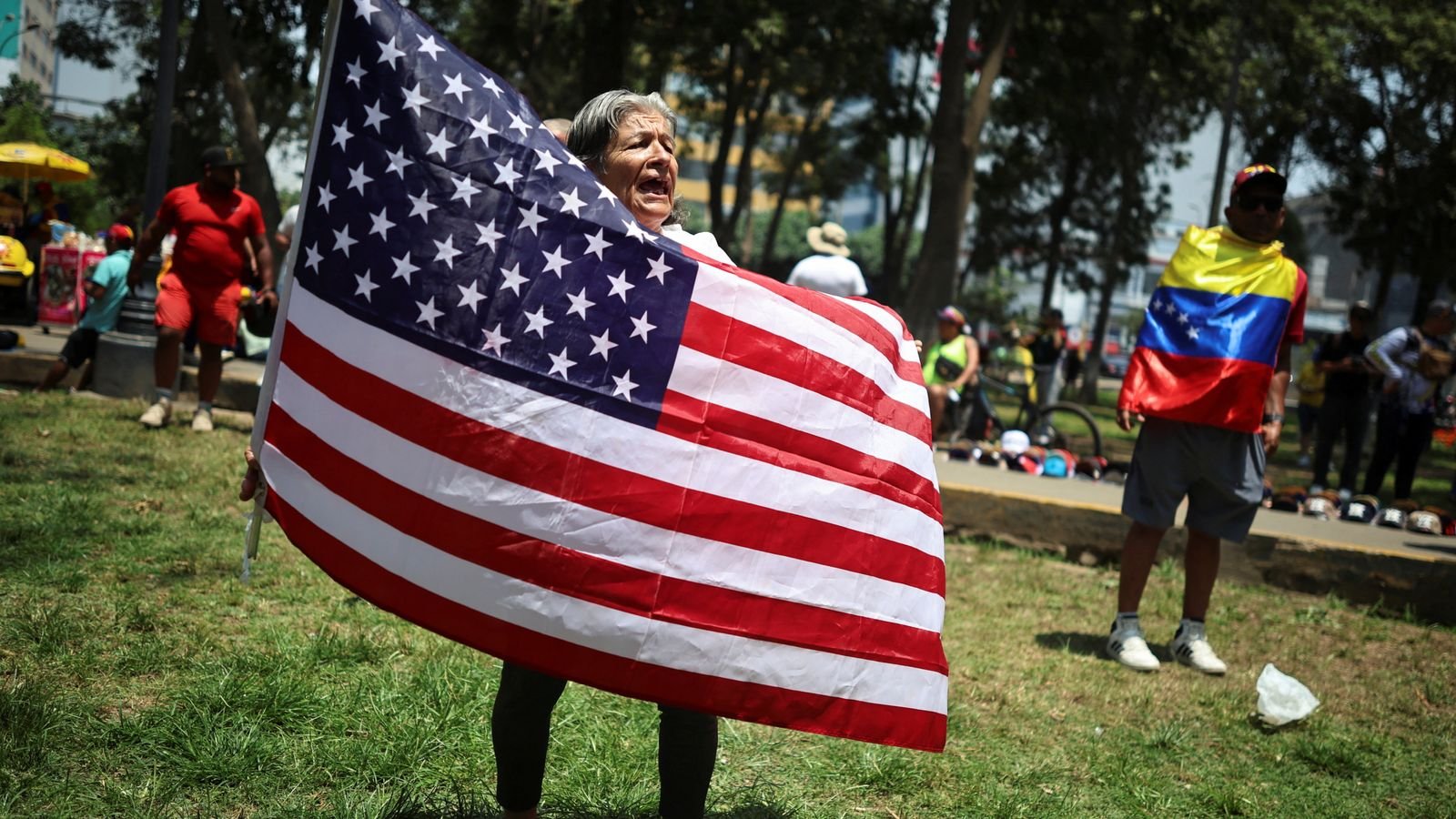
Following recent military actions in Venezuela, US President Donald Trump has hinted at the potential for similar interventions in neighbouring Colombia, Cuba, Mexico, and even Greenland. This aggressive rhetoric suggests a broader strategy aimed at reshaping US foreign policy through the influence of military might.
Escalating Tensions in Latin America
Trump’s administration has shown a readiness to utilize military force to achieve its foreign policy objectives, particularly in Latin America. After announcing a military operation aimed at capturing Venezuelan President Nicolas Maduro, Trump then turned his attention to Colombia, criticizing President Gustavo Petro, whom he associated with drug trafficking. Trump declared, “Operation Colombia sounds good to me,” indicating a willingness to consider further military options.
Reactions to Colombia’s Leadership
Colombia is currently grappling with significant drug trafficking issues, often regarded as the heart of the global cocaine supply. Trump’s comments came amidst sanctions imposed by his administration on Petro’s government, accusing it of complicity in the cocaine trade. The suggestion of potential military action has raised alarms among experts and political leaders in the region.
Impact on Cuba
Concerns also extend to Cuba, a historical ally of Venezuela, which is suffering economically following Maduro’s ousting. Trump suggested that Cuba’s situation would worsen and described its governance as “down for the count.” He noted that Cubans had played a protective role for Maduro, indicating further vulnerability should US military action be extended to Cuba.
Implications for Neighbouring Countries
Mexico is another country on the US radar, particularly regarding drug trafficking. Trump has expressed dissatisfaction with Mexico’s efforts to combat these issues, claiming that the Mexican government needs to “get their act together.” This statement hints at a possible rise in military rhetoric against Mexico, although specific details remain ambiguous.
Greenland in the Crosshairs?
In an unusual move, Trump’s administration has also sparked discussions about Greenland, a territory under Danish jurisdiction. Trump expressed a desire for Greenland for strategic reasons, prompting a response from Danish Prime Minister Mette Frederiksen, who asserted that the island is not for sale and urged the US to reconsider its aggressive stance.
Global Reactions and Background
The international community has reacted with caution to Trump’s military posturing. The strategy appears to be spurred by previous military successes in Venezuela and signals a shift in post-Cold War US foreign policy. Such actions could have implications far beyond Latin America, potentially destabilising relations with countries that have historical and strategic ties in the region.
Background
Prior to this, Venezuela has been a focal point of US foreign policy. Trump’s administration has long criticized Maduro’s regime, seeking to undermine it through sanctions and support for opposition leaders. The current military operations can thus be viewed as part of a broader effort to combat perceived threats from leftist governments in Latin America.
The potential for US interventions raises questions about the future of diplomatic relations in the region, as nations navigate the implications of military strategies driven by the Trump administration. The situation warrants close observation, especially for global powers and neighboring countries involved in trade, security, and geopolitical dynamics.
Source: Original Article






