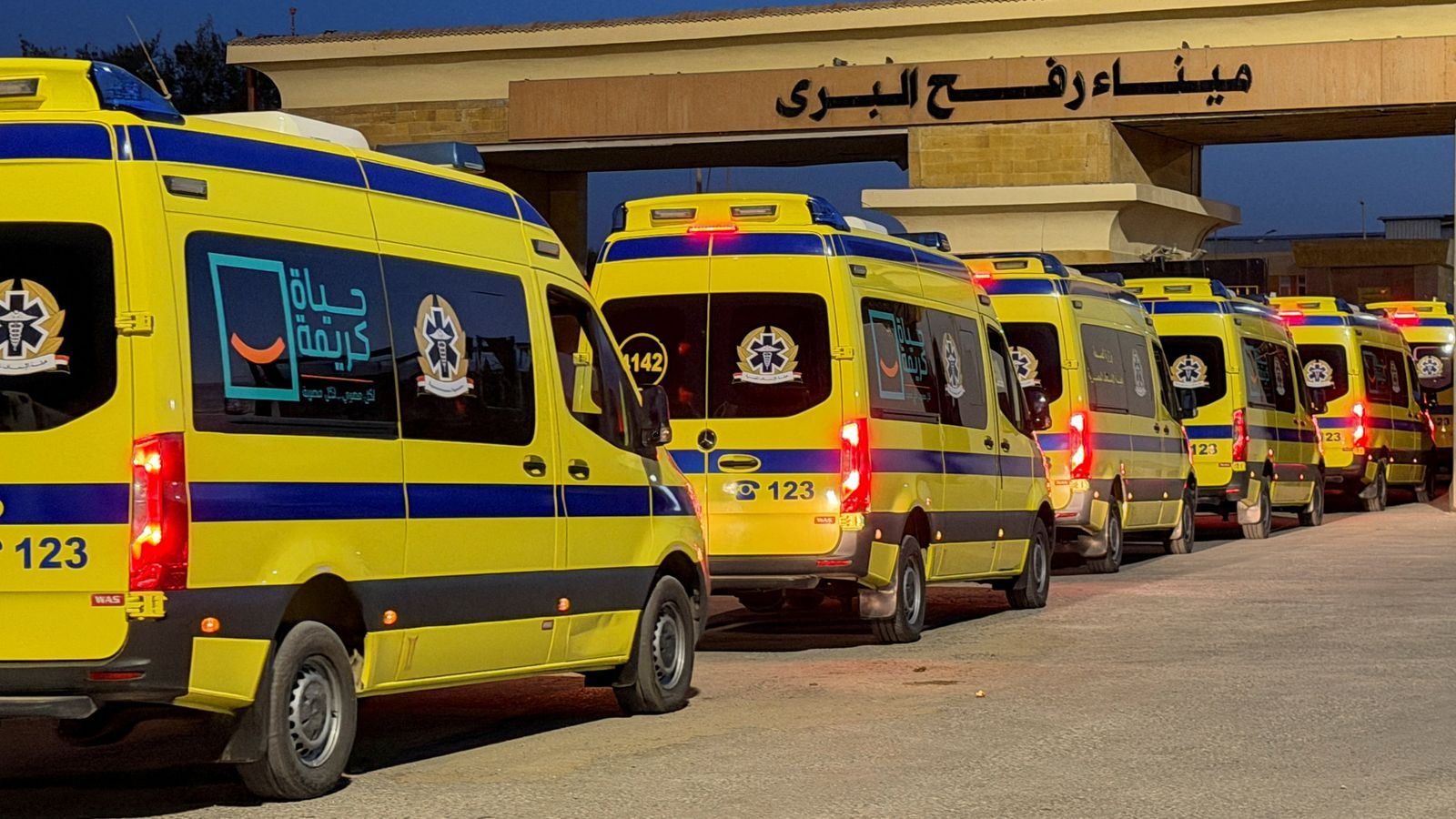
Limited Reopening of Rafah Crossing Highlights Ongoing Humanitarian Crisis
The Rafah crossing between Gaza and Egypt has reopened, but the reality it presents is far from simple. Despite the announcement by Israeli officials that the crossing would be accessible for civilians, only a small number of individuals managed to cross before night fell, underscoring the stringent controls in place.
Day One: Openings and Limitations
On its first day of reopening, only five individuals were able to travel from Gaza to Egypt, highlighting the urgency facing the many thousands in the region requiring medical care. While this small number represents a glimmer of hope, it is starkly contrasted by the refusal of numerous other applications for passage.
Critical Medical Needs Met for Few
Among those who were fortunate enough to leave was Ahmed, a young man whose condition is dire; he has a bullet lodged in his head. His father reported that the World Health Organisation had endorsed his need for urgent medical intervention, noting that procedures available within Gaza are insufficient for his case. The prospect of successful treatment in a modern facility is merely 10%, yet this slim chance is a step forward compared to previously non-existent options.
Urgent Call for Increasing Patient Transfers
The goal is to escalate the daily evacuations to 50 patients per day, a figure that still falls short when considering the backlog of nearly 20,000 individuals in urgent need of care. Sam Rose from the United Nations Relief and Works Agency (UNRWA) stated that the current pace is inadequate for those critically ill.
Immediate Challenges Ahead
Rose emphasized the necessity of accelerating the volume of patients crossing to prevent further casualties, arguing that the stakes are incredibly high in this fragile moment. He acknowledged that failure to do so could perpetuate a cycle of conflict that would only escalate in severity.
Geopolitical Context and Future Prospects
The reopening of the Rafah crossing has been part of broader negotiations linked to a US-led peace initiative for Gaza, making it a pivotal moment in regional diplomacy. Yet, while the crossing straddles Gaza and Egypt, Israel retains significant control over movement in both directions, a situation that enables them to manipulate the flow of people via security protocols.
Factors influencing these decisions include political variables, regional dynamics, and the upcoming Israeli elections. As stakeholders navigate this complex landscape, the reopening is seen as both a critical opportunity and a challenging test for future humanitarian efforts.
Background
The Rafah crossing has long been a focal point for humanitarian access and political negotiations involving Gaza, Israel, and Egypt. Periods of closure or restricted access have often exacerbated already dire humanitarian conditions in the region. The current situation follows a long-standing history of conflict and humanitarian crises, demanding urgent international attention to support those in need.
Source: Original Article