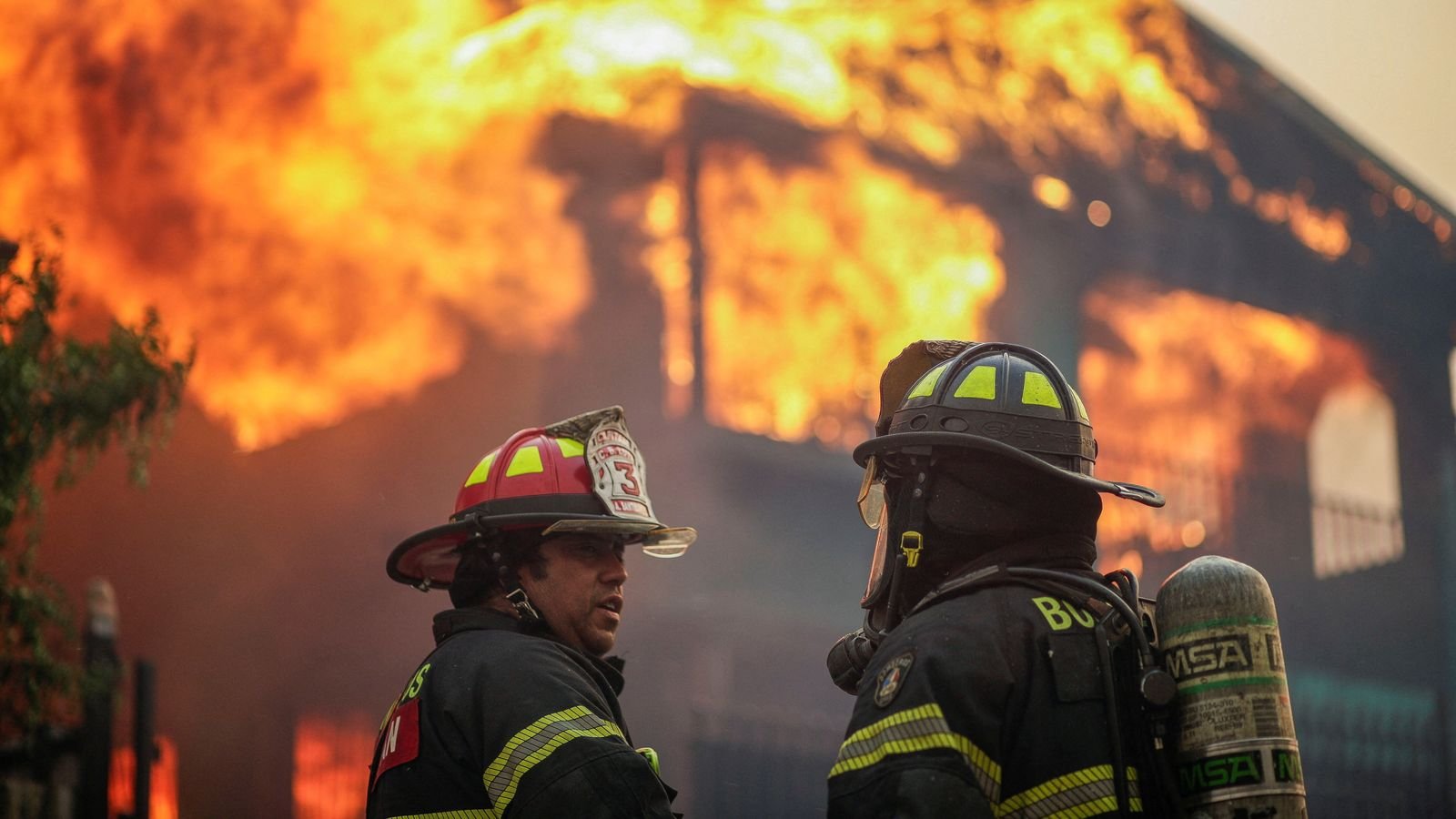
Wildfires in Chile: State of Catastrophe Declared as Casualties Rise
At least 16 fatalities have been reported as fierce wildfires continue to ravage large areas of Chile, prompting officials to declare a state of catastrophe in the affected regions. Approximately 20,000 individuals have been forced to evacuate their homes as firefighters contend with 24 separate blazes, primarily concentrated in Nuble and Bio Bio.
Extent of the Damage
The wildfires have inflicted significant damage, with more than 250 properties destroyed and nearly 33 square miles of land ravaged by flames. Emergency response teams are stretched thin, contending with multiple fires exacerbated by high temperatures and strong winds, which have worsened conditions across the region.
Government Response
Chilean President Gabriel Boric announced the declaration of a catastrophe via social media, stating, “In light of the serious ongoing wildfires, I have decided to declare a state of catastrophe in the regions of Nuble and Bio Bío. All resources are available.” This declaration facilitates the allocation of additional resources to tackle the crisis and aid those affected.
Casualties and Evacuations
As of Sunday, authorities confirmed that 15 deaths are attributed to the fires in the Bio Bio region, alongside one confirmed fatality in Nuble. The scale of the evacuations is significant, with many residents fleeing to safer locations as the fires continue to threaten communities.
Context and Background
This disaster comes amid broader concerns regarding climate-related events in the region. Both Chile and Argentina have experienced unprecedented heatwaves this year, leading to extreme weather conditions that have sparked devastating wildfires, including those in Argentina’s Patagonia earlier this month. With temperatures in parts of Chile potentially reaching up to 38°C (100°F), the situation poses a considerable challenge for emergency services and local communities alike.
Impact on Local Communities
The ongoing wildfires have severely affected multiple communities in the regions of Nuble and Bio Bio, resulting in a humanitarian crisis. As the country grapples with the consequences, many are left to contemplate the long-term repercussions of these devastating environmental events.
As international attention turns to Chile, the implications of these wildfires are felt beyond the borders of the nation, highlighting the urgency of addressing climate change and its widespread effects on global ecosystems.
Source: Original Article