Call for Unity Against US Intervention in Colombia
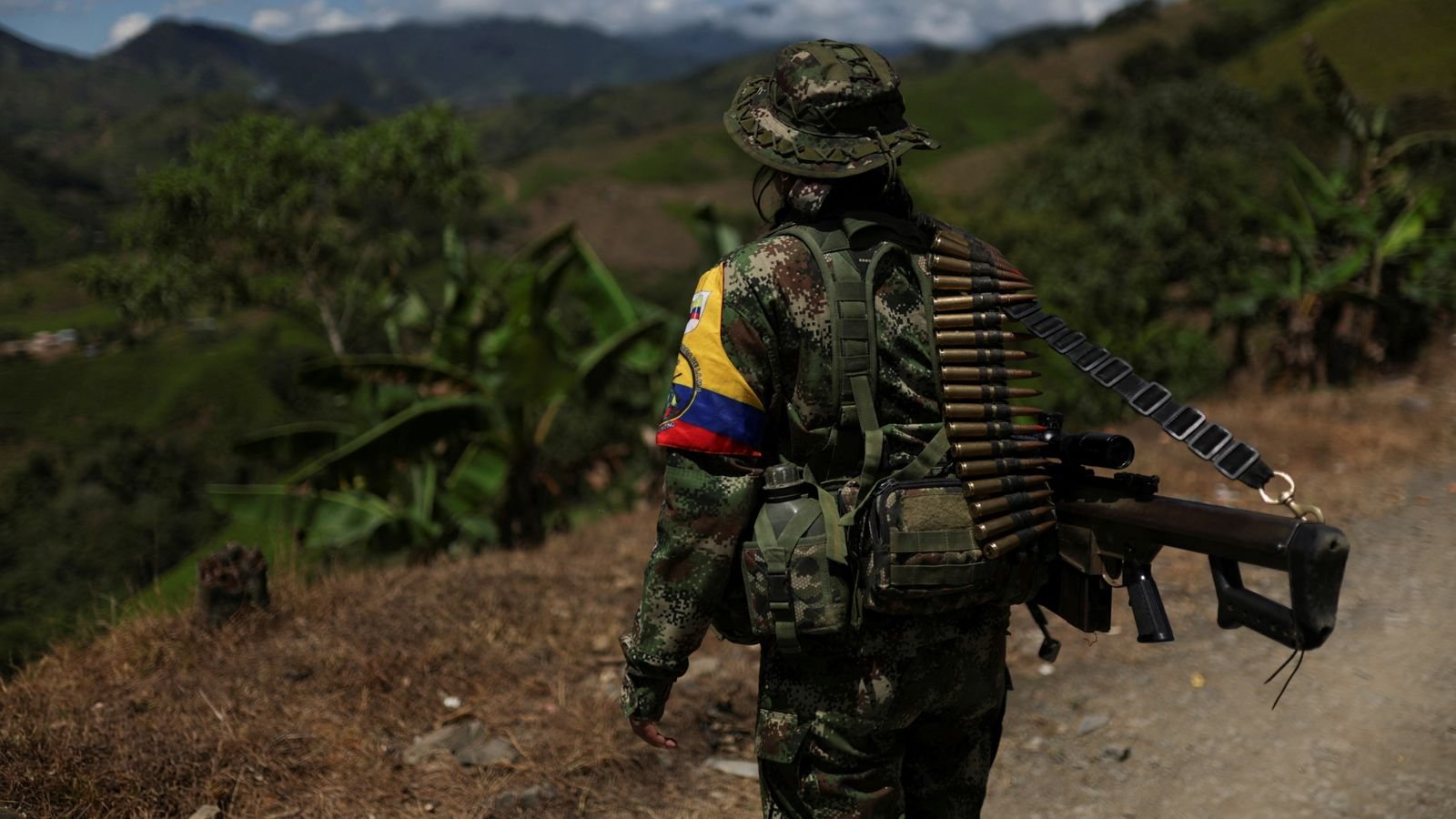
The leader of Colombia’s primary dissident faction of the Revolutionary Armed Forces of Colombia (FARC) has urged rebel groups to unite in opposition to potential US military intervention in the region. Nestor Gregorio Lozada, known as “Ivan Mordisco,” issued this call amidst heightened tensions following comments from former US President Donald Trump regarding military action targeting Colombia.
Response to Trump’s Remarks
In a recent video address, Lozada asserted that it is vital for various armed factions to join forces against what he perceives as a looming threat from the US. His remarks followed Trump’s endorsement of possible military operations against Colombia, declaring, “sounds good to me,” when probed on the issue. The former President has drawn further attention by branding Colombia’s President Gustavo Petro as a “sick man” involved in drug-related activities.
Implications of a US Military Presence
Trump’s statements have raised alarms given recent US interventions in neighbouring Venezuela, which resulted in the arrest of President Nicolas Maduro. Unlike Venezuela, Colombia maintains robust military alliances with the United States, creating a complex geopolitical landscape. Recent analysis by Sky News indicates that this partnership has strengthened despite conflicting political ideologies between the two nations’ current administrations.
In contrast, the Venezuelan military has limited cooperation with US forces, complicating the situation further. Colombian forces have been proactive in combating cocaine production, facing significant challenges in this ongoing struggle.
Historical Context of the Conflict
Colombia’s history is marked by a conflict involving various rebel groups, including FARC, and has resulted in over 450,000 fatalities over more than five decades. A controversial peace agreement was reached in 2016 under then-President Juan Manuel Santos, following earlier failed negotiations. However, sporadic fighting persists in rural areas as splinter factions continue to reject this peace deal.
Petro, the country’s first left-wing president and a former combatant, has committed to achieving “total peace” in Colombia, but violence has resurged in several regions. Carlos Ruiz Massieu, a representative for the United Nations, has noted that armed groups are exploiting the government’s limited presence to gain control over illicit economies, thereby perpetuating instability.
Conclusion
If military operations are initiated by the US against Colombia, it is anticipated that the focus would be on these armed actors rather than the Colombian military itself. The evolving situation warrants close observation as it pertains not only to regional stability but also to international relations involving Colombia and the US.
Background
The long-standing armed conflict in Colombia stems from historical grievances and socio-economic inequality, drawing attention from various international actors. The FARC has shifted from a traditional guerrilla force to a dissident group following the peace deal, and its recent resurgence highlights the complexities of the peace process.
As geopolitical tensions rise, the ramifications for Colombia, its leadership, and its relationship with the US could have broader implications for global diplomatic dynamics.
Source: Original Article