






















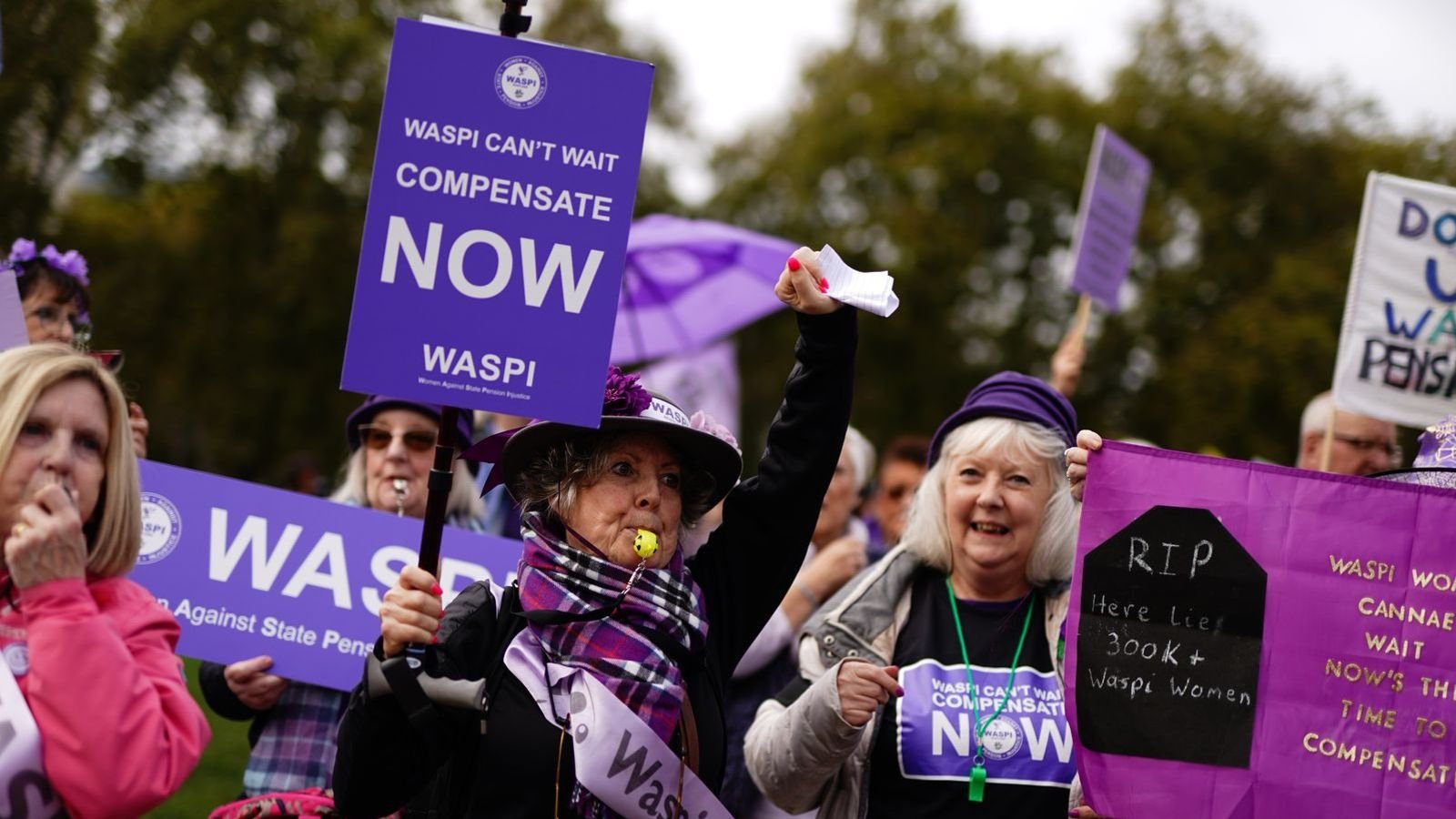
Government Reiterates Rejection of Compensation Claims from Waspi Women
The UK government has once again declined to compensate women who argue that they are owed substantial amounts due to changes in the state pension age, which was increased to align with men’s pensions. The Women Against State Pension Inequality (Waspi) campaign has voiced concerns that the adjustment was made without adequate notification, leaving many women financially disadvantaged.
Details of the Claims
With a significant lobbying effort, the Waspi campaign contends that the rise in the state pension age for women—from 60 to 65—was implemented too rapidly. Many women maintain that they were not sufficiently informed about these vital changes, which have left them unprepared for the financial implications.
After rejecting similar claims in December 2024, the government indicated it would review the situation in November of the following year to consider new evidence regarding how these changes were communicated.
Government’s Response
The review examined whether the government adequately informed affected women about the changes. Work and Pensions Secretary Pat McFadden stated in the House of Commons that the government arrived at the same conclusion regarding compensation as previously announced. He acknowledged that the communication process surrounding the pension age changes was not optimal.
McFadden expressed regret that personal notifications to women regarding the changes were not sent sooner, reiterating an earlier apology from former Work and Pensions Secretary Liz Kendall. However, he underscored that the review focused on communication rather than the merits of the policy itself, claiming that there was no direct financial disadvantage to the women due to the delay in communication.
The Financial Ramifications
Approximately 3.6 million women, particularly those born between April 1951 and 1960, have been impacted by the adjustment to the state pension age. The government has suggested that compensating these individuals could potentially cost up to £10.5 billion.
Background
The alterations to the state pension age were initially introduced in the 1995 Pensions Act, with the objective of achieving equality between male and female pensions by the year 2020. However, in 2011, this timeline was accelerated, which arguably contributed to the rising discontent among the women affected.
As the situation continues to develop, updates will be provided, and the government’s decision is likely to have ongoing implications for many women across the UK.
Source: Original Article






