Counterterrorism Drill Simulates Ferry Hijacking Scenario off South Coast
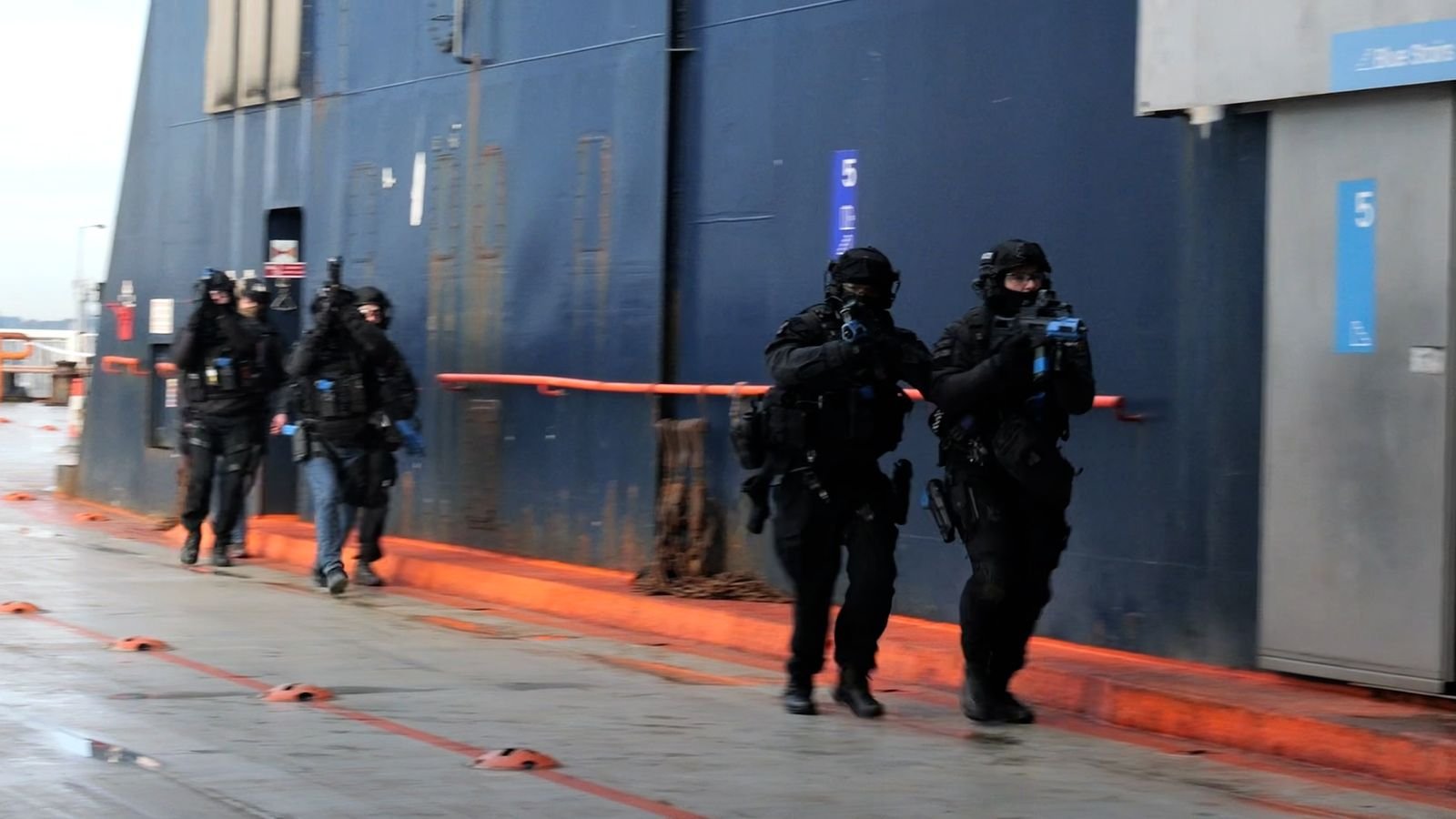
In a major counterterrorism exercise, police staged a simulated ferry hijacking involving armed assailants aboard a Brittany ferry off the south coast of England. This drill, conducted at Poole Harbour, aimed to improve emergency response strategies to potential terrorist threats, with around 300 civilian volunteers participating.
The Simulation: A Startling Realism
The exercise commenced with a fictional emergency notification from the Coastguard at approximately 9 AM, reporting an armed attack on the ferry, which was en route from France. Reports from within the vessel quickly indicated that the attackers were opening fire on passengers, leading to several casualties.
In response, Counter Terrorism Specialist Firearms Officers (CTSFO) and other first responders mobilised to handle the crisis. A Coastguard helicopter took to the air, facilitating armed police to board the ferry and assess the situation, where they observed victims affected by gunfire.
Operational Response
The police teams, equipped and in constant communication with a control centre, began searching the complex layout of the ferry. Their objective was to regain control, which included locating the hostage captain taken by the attackers on the bridge.
With assistance from the crew, police navigated towards the bridge, leading to a swift tactical breach where one assailant was killed, and the captain was successfully rescued after a 45-minute captivity.
Dealing with Additional Threats
As first responders continued their operations, they discovered another militant holding a wounded passenger in a cabin. The suspect surrendered, allowing the officer’s medical team to assist the injured citizen.
However, the situation escalated further down the ship, where two additional assailants had taken around 20 passengers hostage. Negotiators attempted to engage with these attackers, but tensions heightened, provoking fears among the hostages.
The Resolution
Faced with an urgent need to act, police made the decision to storm the room where the captives were held. The operation resulted in the neutralisation of the two remaining militants, and officers directed all remaining passengers to raise their hands or hold their heads to ensure safety.
The exercise, designed to refine response strategies, featured six mock attackers, with three presumed dead and two taken into custody while the fate of one was left uncertain.
Voices from the Drill
Civilian participants reflected on the realism of the simulation. Viktoria, a 16-year-old student from Germany, expressed, “I knew that it was acting and that we were safe, but it was kind of, how can you say, intimidating.”
Bernadette, a 66-year-old police volunteer, articulated her rationale for participating, stating, “It really is a great opportunity and if it does happen, let’s pray it never does, but if it does, we know we’re ready in Dorset.”
Background
This high-stakes scenario underscores the UK’s ongoing commitment to bolstering its counterterrorism measures, especially following an increase in global terror threats. The exercise spurred insights into operational effectiveness, enabling authorities to identify potential areas for improvement in real-life crisis situations.
The comprehensive drill, involving collaboration among police forces, paramedics, firefighters, and Coastguard members, will formally conclude following an evaluation of the responses and strategies employed.
Source: Original Article