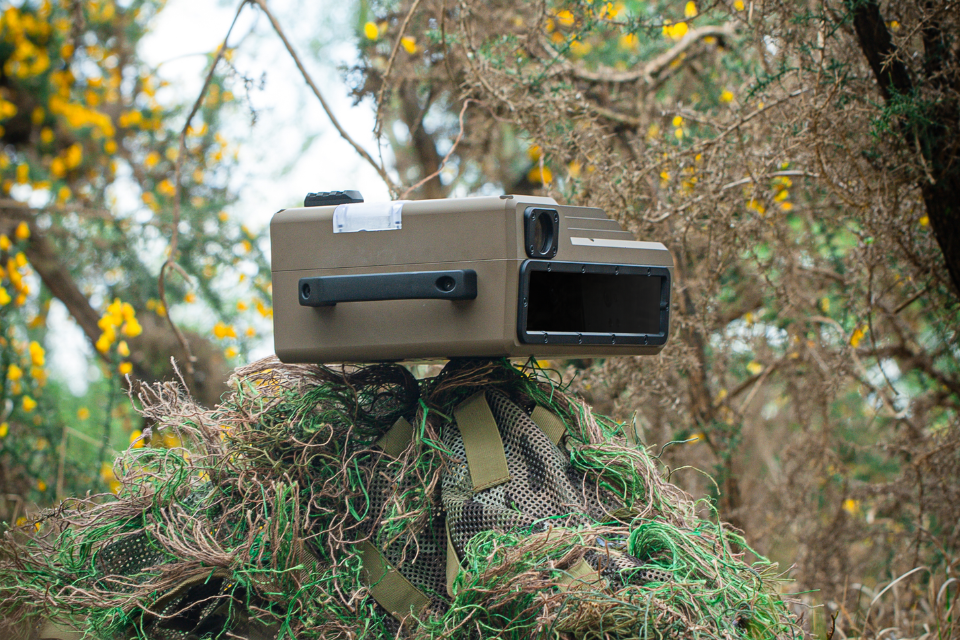
Sentinel Photonics: Pioneering Laser Detection for Defence
Founded by former scientists from the Defence Science and Technology Laboratory (Dstl), Sentinel Photonics is making strides in laser detection technology vital for modern military operations. Established in 2019, the company emerged from a successful Dstl initiative and has quickly grown, now boasting a team of 20, with its products already in use across NATO member states.
The Need for Advanced Detection
In contemporary warfare, the capability to identify enemy laser systems can be life-saving. Lasers are increasingly used in targeting equipment and munitions, creating significant threats for military personnel. This necessity inspired Sean Tipper and Chris Burgess to innovate a new laser detection methodology during their time at Dstl.
“Our experience and the years of foundational work at Dstl helped us recognise the potential of our technology to enhance the safety of our armed forces,” Tipper explained, now serving as Chief Technology Officer at Sentinel Photonics. The firm was officially launched in 2019 and began operations in late 2020 with initial funding from DASA, the Defence and Security Accelerator.
Innovating Detection Methods
Conventional laser warning systems typically utilise photodiodes designed to identify abrupt changes in light. However, these systems have limitations in detecting continuous wave lasers, often resulting in false alerts.
Sentinel Photonics has developed a cutting-edge product known as LASERD MAX (Laser Signal and Event Recording Device). This system leverages a novel camera-based approach to assess both the spectral and spatial characteristics of laser emissions. Its significant advantage lies in its ability to provide extensive situational awareness and portability, as it can monitor a wide area instead of being restricted to a narrow field of view.
Tipper notes, “Our technology can track multiple laser threats at once, even in challenging conditions, enhancing the safety of personnel on the frontlines.” The LASERD MAX is capable of detecting various threats, including LIDAR systems used by drones, artillery rangefinders, and even invisible scanning lasers aimed at undisclosed targets.
Supportive Framework
The collaborative efforts with DASA and Dstl have been crucial in shaping Sentinel Photonics’ progress. Early DASA projects offered vital funding that enabled the firm to focus on technology development full-time. Tipper remarked that these resources were integral for testing various sensors and camera systems that underpin their cutting-edge technology.
By 2022, DASA’s Defence Innovation Loans provided the necessary means for Sentinel to expand its operations, transitioning from a startup to a more established enterprise prepared to deliver sophisticated defence solutions.
Commercial Growth and Future Plans
Since its inception, Sentinel Photonics has achieved remarkable growth—from a single part-time employee in 2020 to a workforce of 20 by 2025. In addition to the LASERD MAX, the company has introduced the FROST system, which shields users’ eyesight from laser exposure and has recently been integrated into the UK Army’s KS1 rifles.
The company is not just focused on domestic markets; it is actively pursuing partnerships across Europe and beyond. Tipper highlighted their collaborations with entities in Poland, the Netherlands, Romania, Denmark, Australia, and France, noting that DASA’s funding has directly facilitated these international ventures.
The Role of Collaboration
Sentinel Photonics’ journey underscores the impactful synergy between government research laboratories, innovation accelerators, and dynamic small businesses. While Dstl laid the groundwork for the core technologies, DASA provided the essential financial and strategic support enabling the transition to marketable products.
As the landscape of military threats continues to evolve, technologies like those developed by Sentinel Photonics are increasingly crucial for the protection of UK forces and their allies. The transition from innovative concepts in the lab to effective battlefield tools illustrates the importance of bolstering promising defence technologies through appropriate support mechanisms.
Source: official statements, news agencies, and public reports.
https://www.gov.uk/government/case-studies/laser-focus-dasa-and-dstl-funding-accelerates-novel-laser-detection-tech