Severe Floods Devastate Sri Lanka Following Cyclone Ditwah
Colombo, Sri Lanka, is grappling with extensive flooding as a result of Cyclone Ditwah, which has tragically claimed over 400 lives. Thousands are still unaccounted for, and the impact is being felt across both urban and mountainous regions of the island nation.
Personal Accounts of Loss and Survival
Residents like Asiri have been forced to seek refuge in elevated areas of their homes to escape the floodwaters. Asiri recounts his harrowing experience of spending five days trapped upstairs, where he has been able to keep his family safe. However, the devastation becomes apparent as he examines the damage on the lower floors, where the water reached a height of approximately two and a half feet.
Error-prone infrastructure has only exacerbated the crisis, with reports of no electricity or clean water affecting entire communities. “It all broke,” Asiri lamented, summarising the disarray caused by the floods.
Government Response Under Scrutiny
Criticism has been directed at the government for its delayed response to the emergency situation. Many allege that the administration was slow to declare an emergency and subsequently lagged in providing the necessary aid and rescue operations for those stranded.
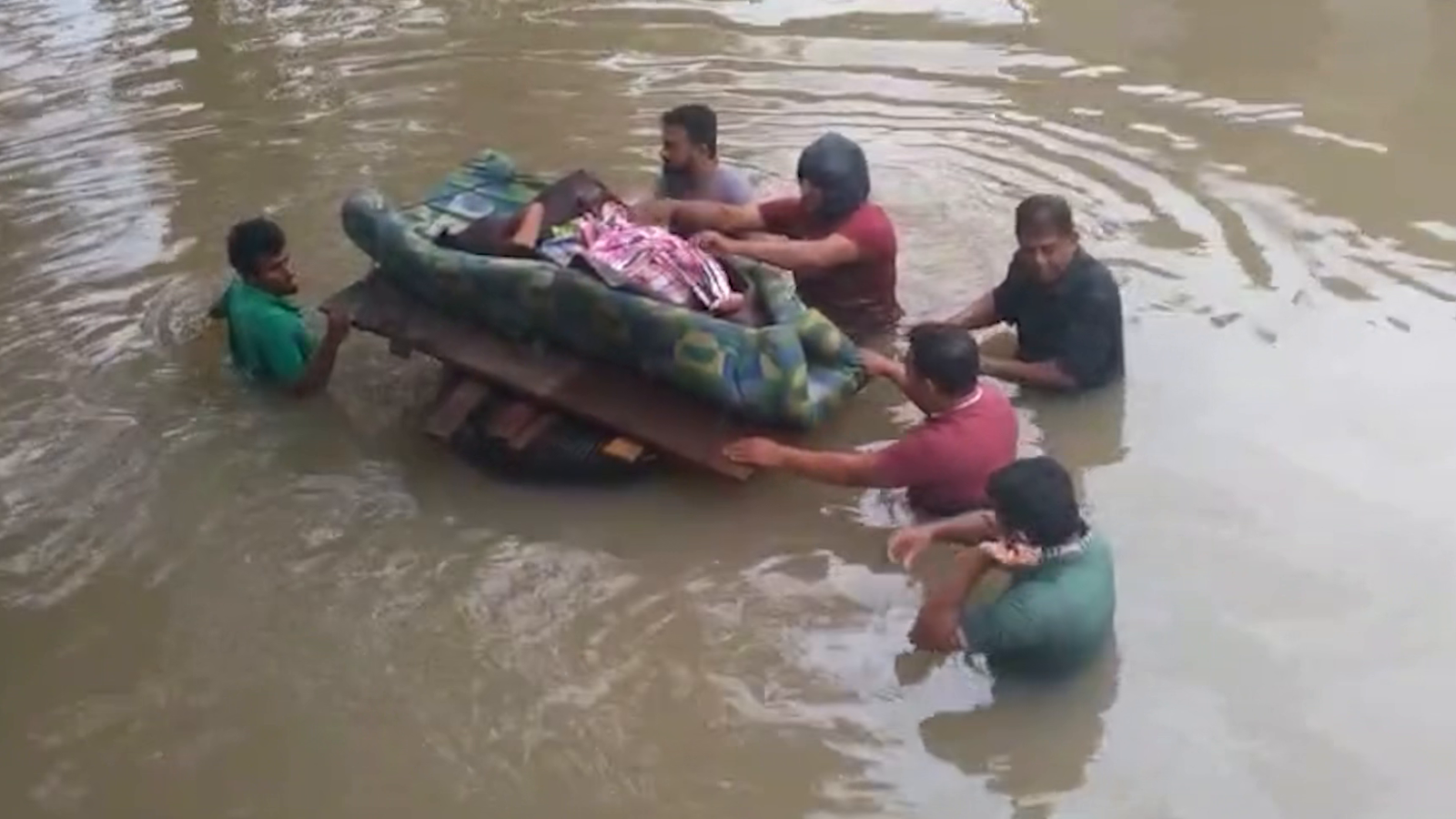
In a poignant demonstration of familial love and ingenuity, Asiri’s uncle created a makeshift raft to transport his brother to a hospital. This effort highlights the desperate measures individuals are taking to cope with the unfolding disaster.
Wider Implications of Climate Events
The flooding in Sri Lanka is not an isolated event; it is part of a growing trend of severe weather patterns affecting many Asian nations during the monsoon season. Each passing year seems to bring increasingly intense storms, posing significant challenges that appear to overwhelm governmental capacities for disaster management.
International Aid and Future Recovery
Aid is beginning to arrive from neighbouring countries, with India and Pakistan sending helicopters and cargo planes to assist with recovery efforts. Yet, the road to rehabilitation will likely be long and arduous, requiring both physical rebuilding and emotional healing for a nation that has experienced considerable trauma in recent years.
Background
Sri Lanka has faced numerous natural disasters in its history, including a devastating tsunami that claimed approximately 35,000 lives in 2004. The country has also recently navigated a significant economic crisis. The current challenges posed by Cyclone Ditwah represent one of the most severe natural disasters the country has confronted, necessitating urgent global awareness and support.
Source: Original Article