US Pushes Forward with Gaza Peace Efforts Amid Challenges
The United States is moving ahead with the next phase of peace initiatives in Gaza, as Steve Witkoff recently announced a new phase of the ceasefire. Although all living hostages have returned, the remains of Ran Gvili have yet to be recovered, adding urgency to the ongoing situation.
Phase Two of the Ceasefire: Immediate Actions
Despite the return of hostages, political pressure is mounting. Concerns have arisen that Hamas is using the pause to strengthen its position. In response, Witkoff declared via social media that the second phase of the peace plan is now underway.
As this new phase unfolds, three distinct governing bodies are set to emerge. The first will comprise Palestinian technocrats, led by urban planning expert Ali Shaath, who will manage the administration of Gaza. The executive committee will include Witkoff and Jared Kushner, alongside various American and Israeli officials, some of whom have faced criticism for their roles in past humanitarian efforts.
The Board of Peace and Its Role
At the helm will be the Board of Peace, chaired by former President Donald Trump. While the specific membership remains unclear, invitations have been extended to world leaders, including UK Labour leader Keir Starmer and Italy’s Giorgia Meloni. While Trump expresses confidence in the board’s influence, others are more hesitant about committing without a clear understanding of the terms involved.
Significant Challenges Ahead
The peace plan faces formidable obstacles, particularly concerning the disarmament of Hamas. Questions linger about the extent of disarmament required, the classification of Hamas, and the mechanisms for verifying compliance. Another contentious issue is the proposed withdrawal of Israeli forces, which many see as implausible unless Hamas disarms completely.
Despite the lofty goals of the peace initiative, it is unlikely that Israel would vacate territory in Gaza while Hamas retains its military capabilities, especially given that the group remains active.
The Humanitarian Crisis in Gaza
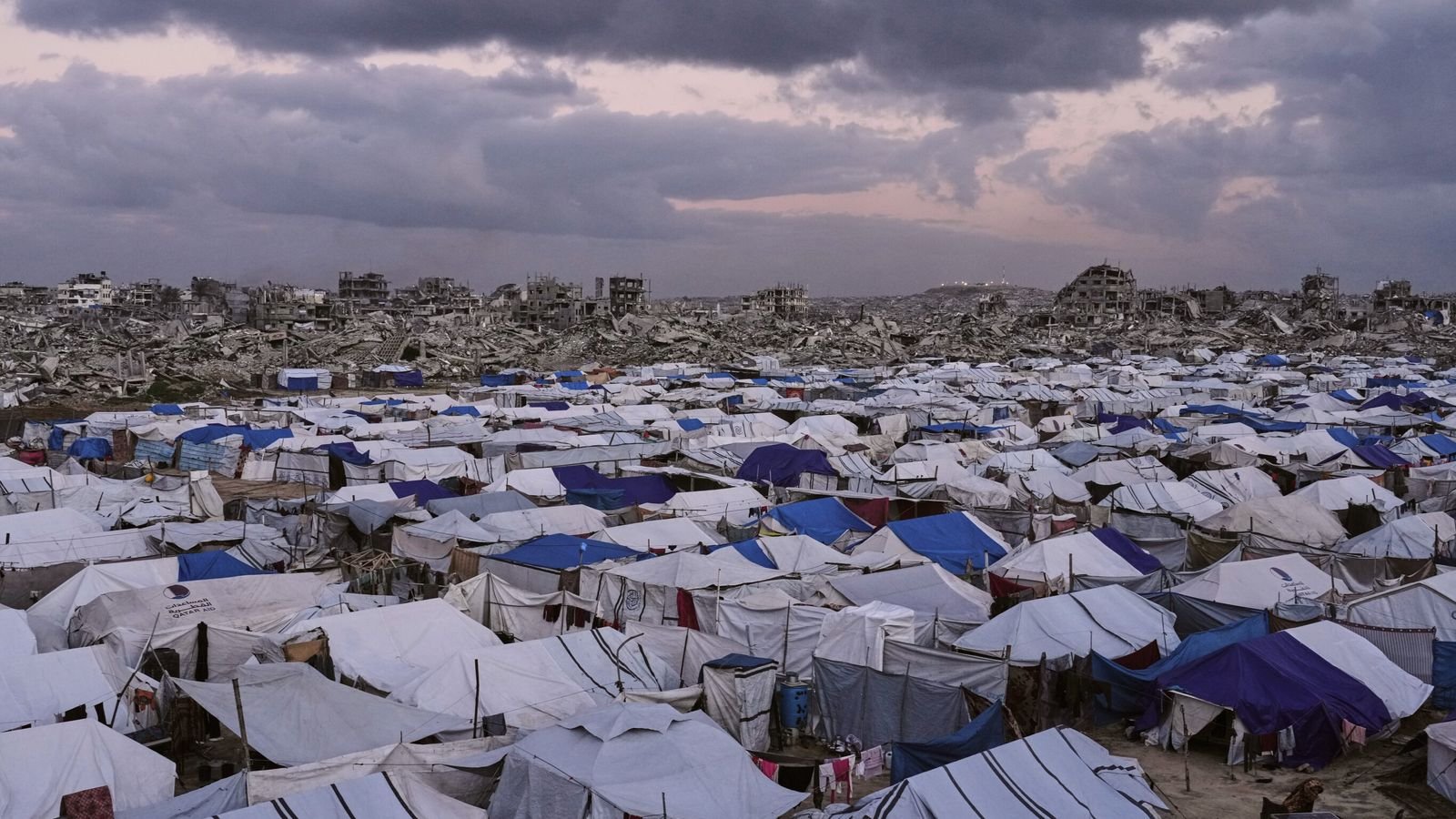
Compounding these complications is the dire humanitarian situation in Gaza. Continuous conflict has left vast segments of the population—currently exceeding two million—living in tents or severely damaged structures, often lacking basic necessities. Massive reconstruction efforts will be essential to rebuild the region, including housing, healthcare, and essential infrastructure.
The question remains whether these rebuilding efforts will begin under Shaath’s leadership, or if they will be stalled due to conditions linked to Hamas’s disarmament. Observers are curious to see if Trump will advocate for decisive action or rather permit a state of inaction.
Conclusion
While Phase Two of the peace plan may appear as a firm commitment, it is rooted more in aspirations and negotiating stances than in concrete solutions. The path forward is fraught with complexities, and as the situation unfolds, it promises to be anything but straightforward.
Background
The Israeli-Palestinian conflict has persisted for decades, marked by cycles of violence and failed peace attempts. Recent escalations have exacerbated the humanitarian crisis in Gaza, making international interventions increasingly necessary to seek a lasting resolution. This new phase represents another effort by the US to stabilize the region amidst ongoing tensions.
Source: Original Article