






















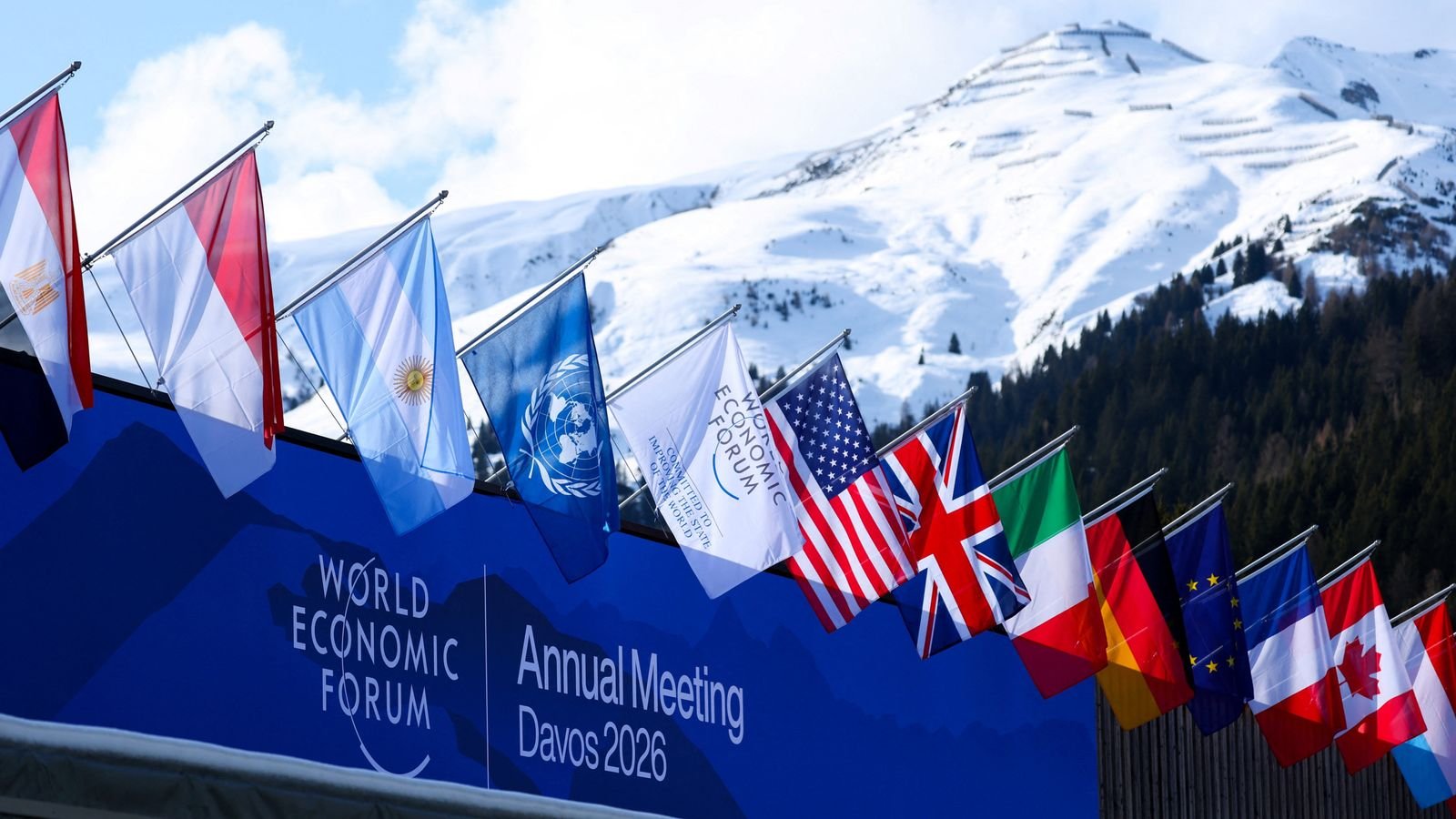
World Leaders Express Concerns Over Erosion of Global Order at Davos
World leaders at the World Economic Forum in Davos have issued stark warnings regarding the deteriorating state of the global order, highlighting the resurgence of imperial ambitions and the infringement of international law. The ongoing debate surrounding U.S. President Donald Trump’s controversial comments about Greenland and his threats to impose tariffs have dominated discussions at the summit.
Trump’s Controversial Announcements
During the forum, President Trump reiterated his desire to see Greenland as part of U.S. territory, referring to the vast island as “actually part of North America.” His remarks come amid a broader narrative that reflects a shifting attitude toward international cooperation, with many leaders asserting that a rules-based global order is waning.
Global Reactions
Canadian Prime Minister Mark Carney, who departed from Davos without directly engaging with Trump, remarked on the severity of the current geopolitical climate, stating that the world finds itself experiencing a “rupture” rather than a mere transition. He expressed the urgency for middle powers to unite, cautioning that “if we’re not at the table, we’re on the menu.” Carney highlighted the troubling tendency for nations to acquiesce to avoid confrontation, while great powers increasingly utilise economic measures as instruments of coercion.
French President Emmanuel Macron echoed this sentiment, declaring a movement toward a “world without rules.” Macron’s comments underscored concerns about U.S. trade policies that, according to him, undermine European interests and exert leverage over political sovereignty.
Imperial Ambitions and Economic Coercion
In stark terms, Macron stated that international law is being disregarded, with the strongest nations pursuing their imperialistic goals. He condemned practices that attempt to economically dominate European nations through unfair trade agreements and punitive tariffs, which he described as fundamentally unacceptable.
Call for a New European Framework
European Commission President Ursula von der Leyen articulated the need for Europe to establish a more independent stance in light of these challenges. She called for a proactive approach, suggesting that if the current shifts in global dynamics are enduring, then Europe must strive to reinvent itself accordingly.
Von der Leyen emphasised the bond between the United States and Europe, asserting that fostering a constructive relationship should remain a priority. She warned against returning to patterns of conflict that would only serve to empower external adversaries.
Background
The conversations at Davos come against the backdrop of escalating tensions between major global powers. President Trump’s earlier remarks regarding tariff threats have already raised alarms internationally, triggering fears of economic instability and political strife. The situation in Latin America, particularly regarding Venezuela’s oil reserves, further complicates these dynamics and exemplifies the ongoing struggle for influence in an increasingly competitive landscape.
The sentiment at Davos reflects a growing unease about the international community’s ability to manage its obligations under existing agreements, with leaders advocating for collaboration amidst challenging circumstances.
Source: Original Article






