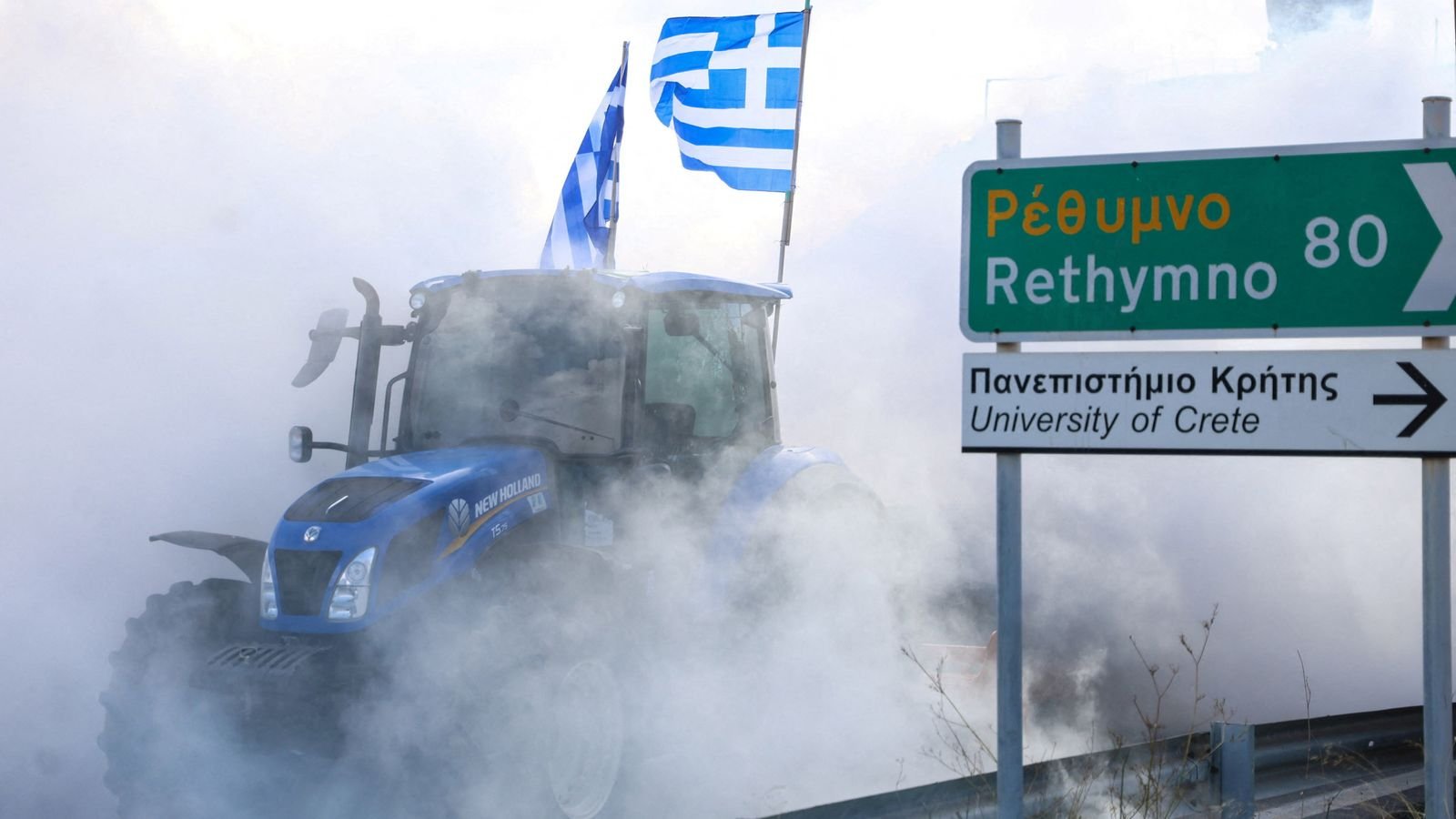
Greek Farmers Protest Delayed EU Subsidy Payments, Disrupt Airport Operations
Farmers in Greece have taken to the streets, shutting down Crete’s international airport in Heraklion due to delays in receiving crucial European Union-backed agricultural subsidies. The protests escalated into violent clashes with riot police, resulting in injuries and significant disruption to travel on the island.
Airport Shutdown and Clashes
Protesters gathered on the tarmac of Nikos Kazantzakis International Airport, leading to the suspension of all flights. In Chania, Crete’s second-largest city, confrontations arose between farmers and law enforcement, where reports indicated that two individuals suffered injuries. Authorities responded with tear gas as demonstrators retaliated by throwing rocks and overturning police vehicles.
Reasons Behind the Protests
The unrest stems from unresolved issues surrounding the payment of EU agricultural subsidies. Recent scandals involving fraudulent claims have led to authorities reassessing subsidy requests, a move that farmers claim amounts to unfair collective punishment. They argue that the delays have left them financially strained and unable to prepare for the upcoming planting season.
Wider Impact on Greek Farming
In addition to financial woes, Greece’s agricultural sector is grappling with an epidemic of goat and sheep pox, resulting in a widespread cull of livestock. Farmers have mobilised tractors and other vehicles at key transport hubs across the country, including borders and major roadways, to amplify their message and demands for timely subsidy payments.
Government Response
Michalis Chrisochoidis, Greece’s Minister for Public Order, stated that the government is open to dialogue but will not permit disruptions to essential transit routes. This follows previous incidents where police intervened to clear roads blocked by farmers protesting in Thessaloniki.
Background
Protests of this nature are not uncommon in Greece. Historical incidents have seen farmers create significant traffic blockades that can hinder movement between the northern and southern parts of the country for extended periods. The ongoing issues around agricultural subsidies highlight a crucial intersection between economic pressures and social unrest in the region.
As this situation develops, further disruptions are anticipated, prompting concerns over the impact on Greece’s agricultural productivity and overall economy.
Source: Original Article