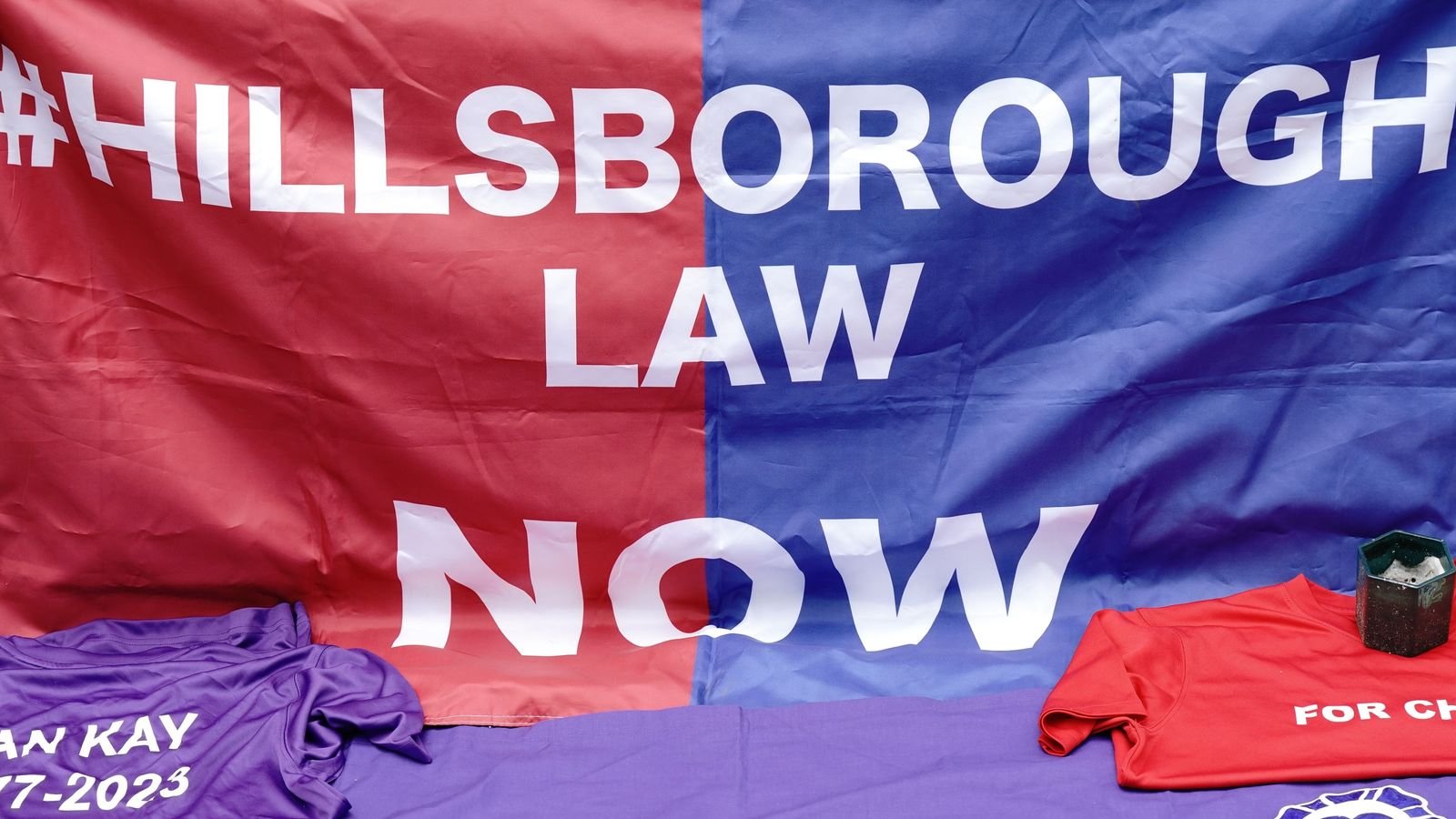
The Hillsborough Law Faces Obstacles Amidst Controversy
The Hillsborough Law, formally known as the Public Office (Accountability) Bill, is currently facing significant delays and backlash following its introduction to Parliament. This legislation aims to impose criminal penalties on officials who attempt to conceal the truth surrounding tragedies, including the Hillsborough disaster and the Grenfell Tower fire.
What is the Hillsborough Law?
The Hillsborough Law is designed to eliminate the pervasive culture of cover-ups in the aftermath of public disasters. Its title refers to the catastrophic incident at Hillsborough Stadium on April 15, 1989, when 97 Liverpool supporters lost their lives due to overcrowding during an FA Cup semi-final match. In the aftermath, misleading narratives, including accusations of hooliganism, were disseminated by police, compounding the trauma experienced by victims’ families.
The proposed legislation includes several key changes:
- A legal and professional duty of candour for public officials that requires honesty and integrity, enforceable by criminal sanctions;
- The most substantial expansion of legal aid for bereaved families in a decade, offering non means-tested support for inquests;
- A new offence of misleading the public, punishable by criminal penalties for serious violations.
The government asserts that these modifications will prevent the injustices and institutional failures of the past from recurring, a view supported by families of victims from various recent disasters, including Grenfell and the ongoing COVID-19 pandemic.
Delays and Controversies
The journey of the Hillsborough Law has been fraught with obstacles since it was first proposed in 2017 by Andy Burnham, Mayor of Greater Manchester, despite initial approval in 2022. Recently, concerns over certain amendments have raised alarms among critics, particularly regarding the “duty of candour” specifically for security services.
In early October 2023, the bill faced a government-led delay just prior to a scheduled reading due to backlash from Labour MPs. There were allegations that the legislation was being weakened, particularly regarding provisions for the security services that would limit who could face scrutiny and accountability.
U-Turn on Amendments
The bill was expected to undergo its third reading on January 19, 2024, but was unexpectedly withdrawn at the last moment. Following mounting pressure from campaigners and MPs, the government announced it would completely remove controversial amendments related to how intelligence services would be compelled to disclose information.
A spokesperson for the government noted their aim was to strike a balance between accountability and national security. They emphasized that the bill should enhance scrutiny of law enforcement and government actions without compromising safety measures.
Background
The Hillsborough disaster is one of the UK’s most tragic events, casting a long shadow over public safety and accountability. The failures in the aftermath led to public outrage and calls for comprehensive reforms in how disasters are managed and reported. This law stands as an effort to ensure that similar tragedies are handled with greater integrity and transparency in the future.
Despite the promise this legislation embodies, the current turbulence surrounding its passage underscores the complexities inherent in legislative processes, especially when national security concerns intersect with accountability measures. The government has committed to further collaboration with stakeholders to refine the bill as it progresses through the parliamentary process.
Source: Original Article