






















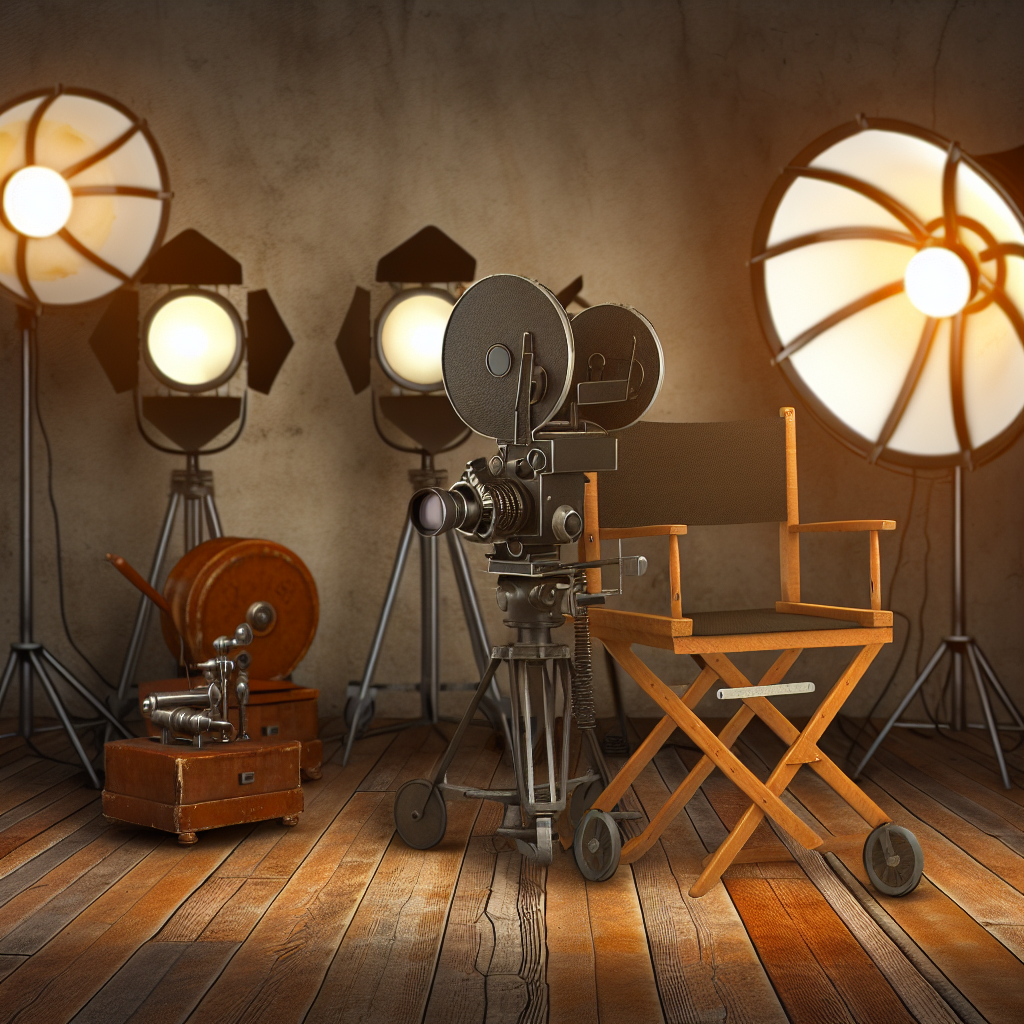
Introduction to Lighting in Film
Lighting is a fundamental aspect of filmmaking that shapes the mood, tone, and visual narrative of a movie. From the early days of cinema to the contemporary digital age, lighting has played a crucial role in storytelling. It is not merely a technical consideration but an artistic choice that can enhance the thematic elements of a film.
Early Innovations and Techniques
The history of film lighting can be traced back to the silent film era. The use of natural sunlight was prevalent, and filmmakers often shot outdoors to take advantage of daylight. As studios began to emerge in the early 20th century, filmmakers needed to innovate artificial lighting solutions.
- Thomas Edison and the Kinetoscope: In the late 1800s, Edison’s Kinetoscope utilized incandescent lights, paving the way for controlled lighting environments.
- Hollywood’s Golden Age: During the 1920s and 1930s, the introduction of three-point lighting techniques became standard practice, with key, fill, and back lights used to create depth and dimension.
Classical Techniques and the Art of Lighting
Filmmakers embraced sophisticated lighting techniques to evoke emotions and draw attention to specific elements within the frame. The chiaroscuro technique, which employs strong contrasts between light and dark, became a hallmark of film noir, prominently featured in the works of directors like Orson Welles and Billy Wilder.
- Orson Welles: His film “Citizen Kane” (1941) is renowned for its innovative use of lighting, particularly with the use of shadows to convey the complexity of its protagonist’s character.
- Billy Wilder: Films such as “Double Indemnity” (1944) utilized low-key lighting to enhance the suspense and moral ambiguity typical of the film noir genre.
The Influence of Cinematic Movements
Cinematic movements such as German Expressionism and Italian Neorealism had distinct lighting styles that reflected their thematic concerns. The tension and psychological depth of the former is exemplified in the use of stark lighting contrasts.
- German Expressionism: A movement characterized by distorted sets and lighting that conveyed emotional states, as seen in films like “The Cabinet of Dr. Caligari” (1920).
- Italian Neorealism: Emphasized natural lighting to portray authenticity and realism in post-World War II cinema.
The Evolution of Film Technology
Technological advancements have continually transformed the landscape of film lighting. The introduction of color film in the 1930s led to innovative approaches to lighting color palettes, notably in films like “The Wizard of Oz” (1939), where the transition from monochrome to vibrant color was amplified through lighting techniques.
- Electronic Lighting Equipment: The shift from incandescent to fluorescent lights in the mid-20th century reduced heat and energy consumption, allowing for more versatile setups.
- Digital Lighting: With the advent of digital cinematography, filmmakers now have the ability to manipulate light in post-production, expanding creative possibilities.
Contemporary Practices and Influences
Modern filmmakers continue to build on the legacy of their predecessors while incorporating new technologies and stylistic choices. Directors like Christopher Nolan and Emmanuel Lubezki push the boundaries of lighting with ambitious projects, often favoring natural light for authenticity and immersive experiences.
- Christopher Nolan: Known for his meticulous attention to detail, Nolan often uses practical lighting to create realistic environments, exemplified in films like “Dunkirk” (2017).
- Emmanuel Lubezki: As a cinematographer, Lubezki’s work in “The Revenant” (2015) is acclaimed for its use of natural light, illustrating the film’s raw and unfiltered narrative.
Conclusion
Lighting remains an essential element of cinematic storytelling, serving as both a technical requirement and a creative tool. The progression of lighting techniques from the silent era to modern filmmaking reflects the evolving relationship between technology, artistry, and narrative in cinema. As filmmakers continue to explore the possibilities of light, its historical significance will undoubtedly influence future generations of storytellers.






