






















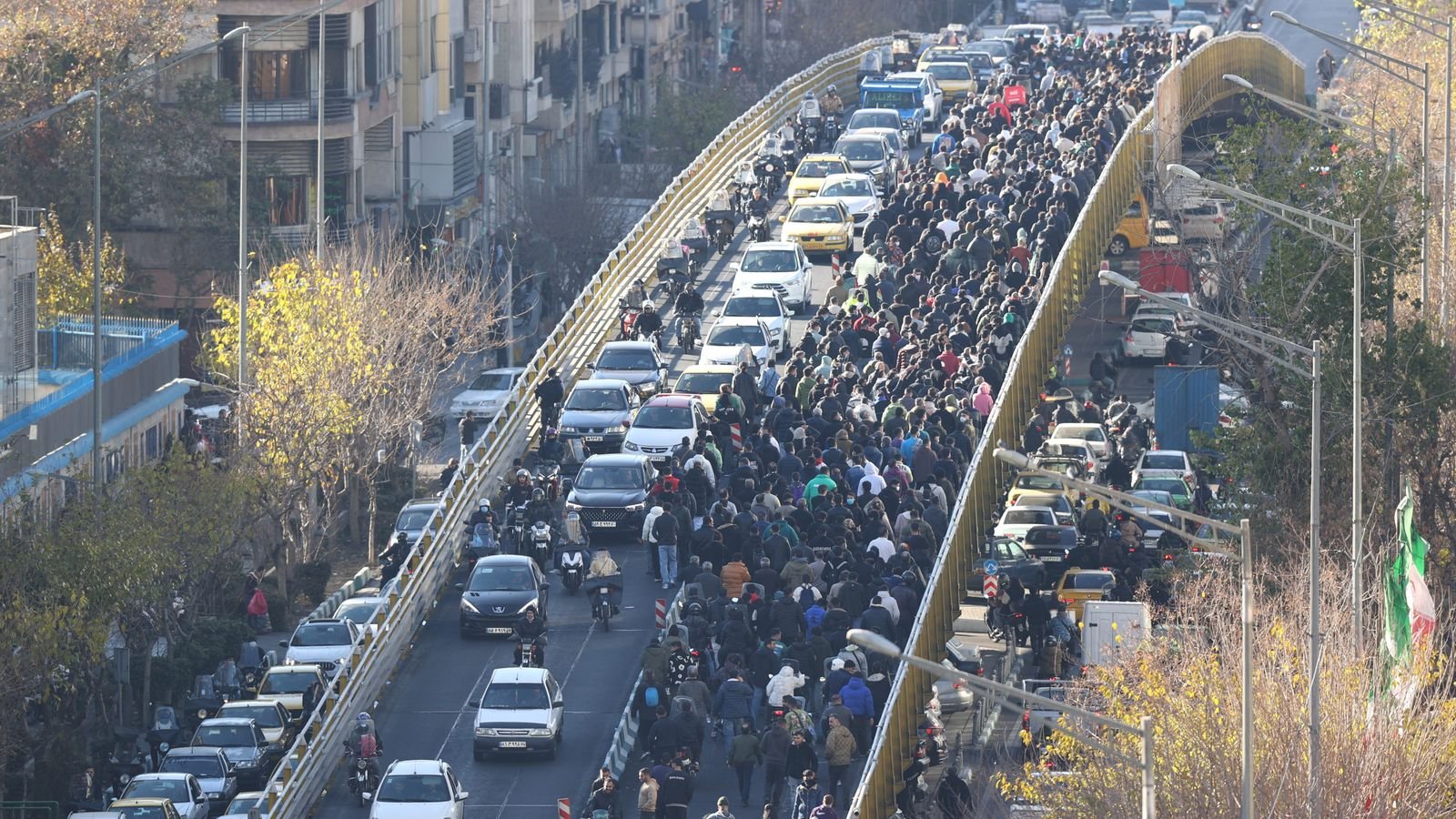
Students and Merchants Protest Economic Hardship in Iran
In Iran, university students have joined forces with shopkeepers and bazaar workers to protest against the escalating cost of living that has plagued the nation. Protests erupted in Tehran, where demonstrators expressed their discontent, making references to historical figures linked to Iran’s past governance.
Demonstrations Erupt in Tehran
Footage from the protests captured numerous individuals marching through the capital, chanting phrases such as “rest in peace Reza Shah,” a nod to the former monarch who was removed from power following the 1979 Islamic Revolution. According to the semi-official Fars News Agency, students took to the streets at four distinct universities across Tehran this week.
On Monday, videos surfaced showing crowds gathering in the city’s heart, united in their calls for change. The protests mark a significant moment in Iran, with demonstrators voicing both economic and political grievances.
Economic Strain Fuels Discontent
The Iranian economy is currently experiencing significant turmoil, with the nation’s currency, the rial, losing nearly half of its value against the US dollar in 2025. The inflation rate soared to 42.5% in December, while food prices have skyrocketed by as much as 72%. This economic crisis is largely attributed to ongoing US sanctions and threats of military actions from both the US and Israel.
Iran’s President, Masoud Pezeshkian, has acknowledged the situation by requesting the interior minister to address the “legitimate demands” of the protesters. The government has also stated that they are planning to establish a dialogue mechanism that will include discussions with protest leaders.
Government representatives have openly recognised the protests, asserting that they understand the hardships stemming from diminished livelihoods. The demonstrations are notable, being the first major unrest since military strikes by the US and Israel in June, which had initially sparked patriotic feelings among the populace.
International Context and Historical Background
The economic challenges facing Iran have been exacerbated since the re-imposition of US sanctions under former President Donald Trump in 2018, which undermined an international agreement regarding Iran’s nuclear ambitions. Following this, additional sanctions were enacted by the United Nations in September, further straining the country’s economy.
In the recent past, Iran has witnessed widespread protests throughout 2022 due to rising prices, including basic staples like bread. These escalated following the highly publicised death of Mahsa Amini, a young woman whose passing while in police custody sparked a wave of unrest challenging the country’s clerical leadership.
Internationally, Iran remains under significant scrutiny, particularly with Trump’s recent remarks suggesting he might support further Israeli airstrikes if Iran resumes its nuclear activities. The US and Israel conducted sustained military strikes in June aimed at halting what they deemed a threat from Iran’s military ambitions.
Impact and Implications
The situation in Iran is critical, not only for its citizens but also for global stability, as ongoing economic turmoil and growing unrest can lead to broader implications for the region. As protests continue, the response from both the Iranian government and the international community will be crucial in shaping Iran’s future and its relationships on the world stage.
Source: Original Article






