






















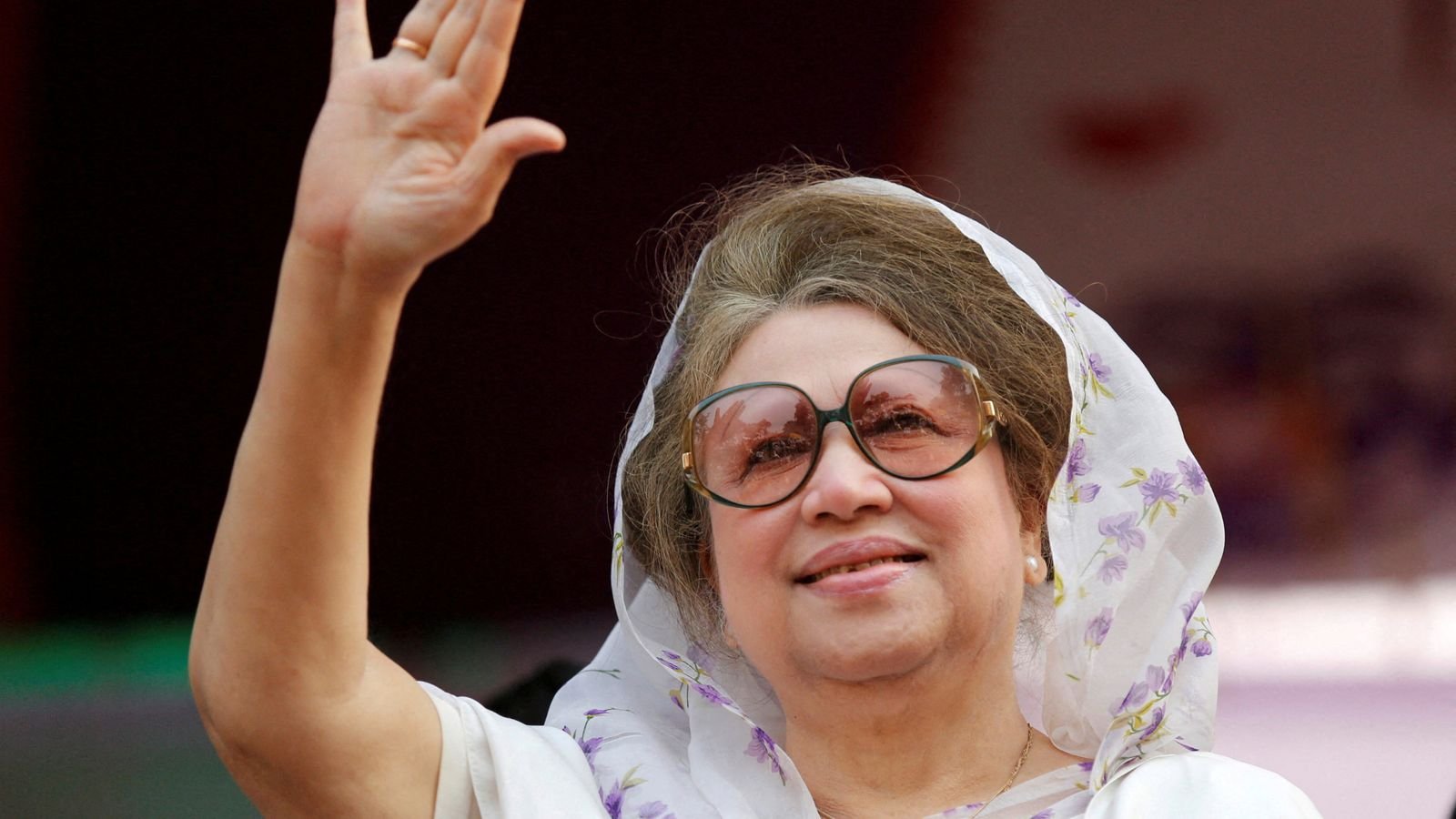
Khaleda Zia, Bangladesh’s First Female Prime Minister, Passes Away
Khaleda Zia, the first female Prime Minister of Bangladesh, has died after a long period of illness, according to an announcement from her party, the Bangladesh Nationalist Party (BNP). Zia led the nation in two separate terms from 1991 to 1996 and again from 2001 to 2006, marking her as a significant figure in the political landscape of Bangladesh.
Political Legacy and Rivalry
Khaleda Zia’s political career was significantly characterised by her contentious rivalry with fellow politician Sheikh Hasina. The two leaders frequently alternated roles between government and opposition, which shaped the political dynamics in the country. Zia faced multiple legal challenges, including a conviction related to corruption charges, from which she was acquitted earlier this year.
The BNP confirmed her death through social media channels on Tuesday. Zia had been suffering from a range of health issues in recent years, including advanced liver cirrhosis, arthritis, diabetes, and heart complications. In early 2025, she sought medical treatment in London, where she remained for four months before returning to Bangladesh.
Early Life and Entry into Politics
Before entering the political arena, Zia dedicated herself to her family as a wife and mother. Her life changed drastically in 1981 when her husband, Ziaur Rahman—a military leader who later became president—was assassinated during an attempted coup. This incident propelled her into politics, and she took leadership of the BNP, a party founded by her husband, just three years later. She committed herself to fulfilling his vision of “liberating Bangladesh from poverty.”
Upholding a Democratic Legacy
Both Khaleda Zia and Sheikh Hasina played crucial roles in the pro-democracy movement that led to the ousting of military ruler Hussain Muhammad Ershad in 1990. The subsequent year marked a significant milestone for Bangladesh, with Zia winning what was seen as the first free and fair election, thus becoming the nation’s first female Prime Minister.
In recent years, Zia faced significant hurdles, including a conviction for embezzling funds from an orphanage trust during her second incumbency. Initially imprisoned, she was later placed under house arrest in March 2020 due to deteriorating health conditions.
Political Outlook and Succession
Although Zia had been out of power for nearly two decades, she retained a loyal support base. The BNP is now seen as a leading contender for the upcoming parliamentary elections set for February 2025. Zia’s eldest son, Tarique Rahman, currently serves as the party’s acting chairman and is considered a strong candidate for the position of prime minister.
Background
The political landscape of Bangladesh has been heavily influenced by the ongoing rivalry between Khaleda Zia and Sheikh Hasina, whose parties represent the major political factions in the country. Given that Zia had played a pivotal role in the democratic movement of the 1990s, her passing signals a significant moment in Bangladeshi politics. As the BNP prepares for the upcoming elections, her legacy may continue to resonate within the party and its supporters.
Source: Original Article






