Nicolas Maduro’s Court Appearance: A President’s Fall from Power
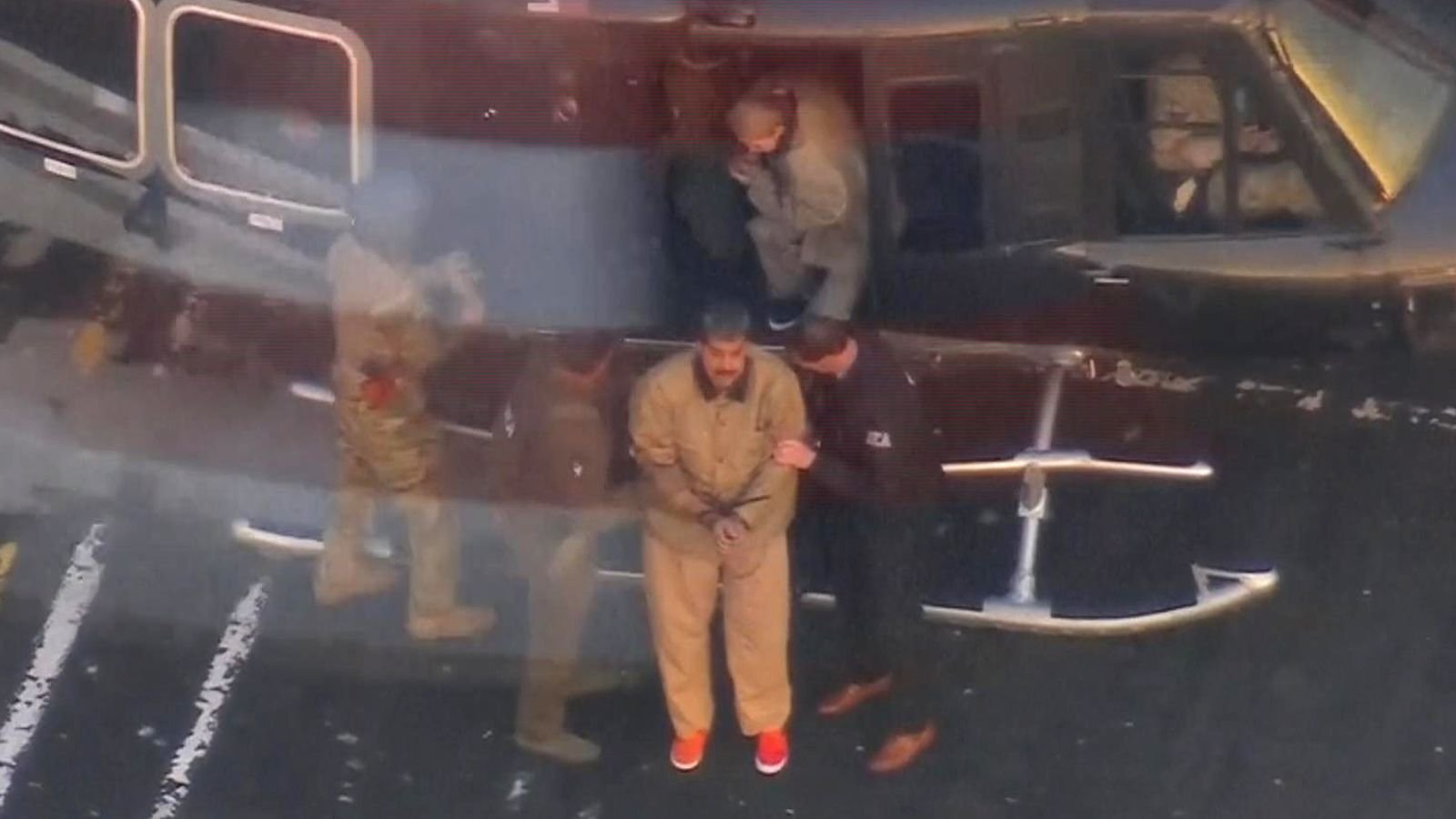
Nicolas Maduro, the Venezuelan leader facing charges in the United States, arrived in New York for his court appearance, visibly subdued. Handcuffed and dressed in beige prison attire alongside his wife, Maduro’s journey was marked by a striking contrast—a former president now under the scrutiny of U.S. justice.
Journey of Humiliation
The transfer from prison to court encapsulated the dramatic turn of events for Maduro. As he and his wife navigated the chilly air of New York, they were escorted between vehicles and a helicopter, shielded by military personnel. This meticulously planned operation included road closures, highlighting the seriousness of the circumstances surrounding their transfer.
Courtroom Challenges
Inside the court, Maduro will face a system that does not extend presidential privileges. The initial hearing will likely see him paired with a public defender, a stark contrast to the array of legal advisors he was accustomed to during his tenure. This raises questions about how he will secure high-quality legal representation amidst U.S. sanctions and asset freezes against him.
Politics and Legal Proceedings
The arraignment will offer a formal introduction to the charges he faces, providing an opportunity for Maduro to respond. The presiding judge, Alvin K. Hellerstein, a veteran in high-profile cases, was appointed by Bill Clinton and is expected to guide the proceedings with a firm hand.
Background
This court appearance marks a significant moment not only for Maduro but also for U.S.-Venezuela relations. Maduro’s administration has long been under fire for authoritarian practices and human rights abuses. His legal troubles come at a time when the international community is closely monitoring the political climate in Venezuela and its implications for regional stability.
As Maduro prepares to enter the courtroom, the world watches closely, not only for the outcome of this case but also for its potential impacts on Venezuela and U.S. foreign policy in Latin America.
Source: Original Article