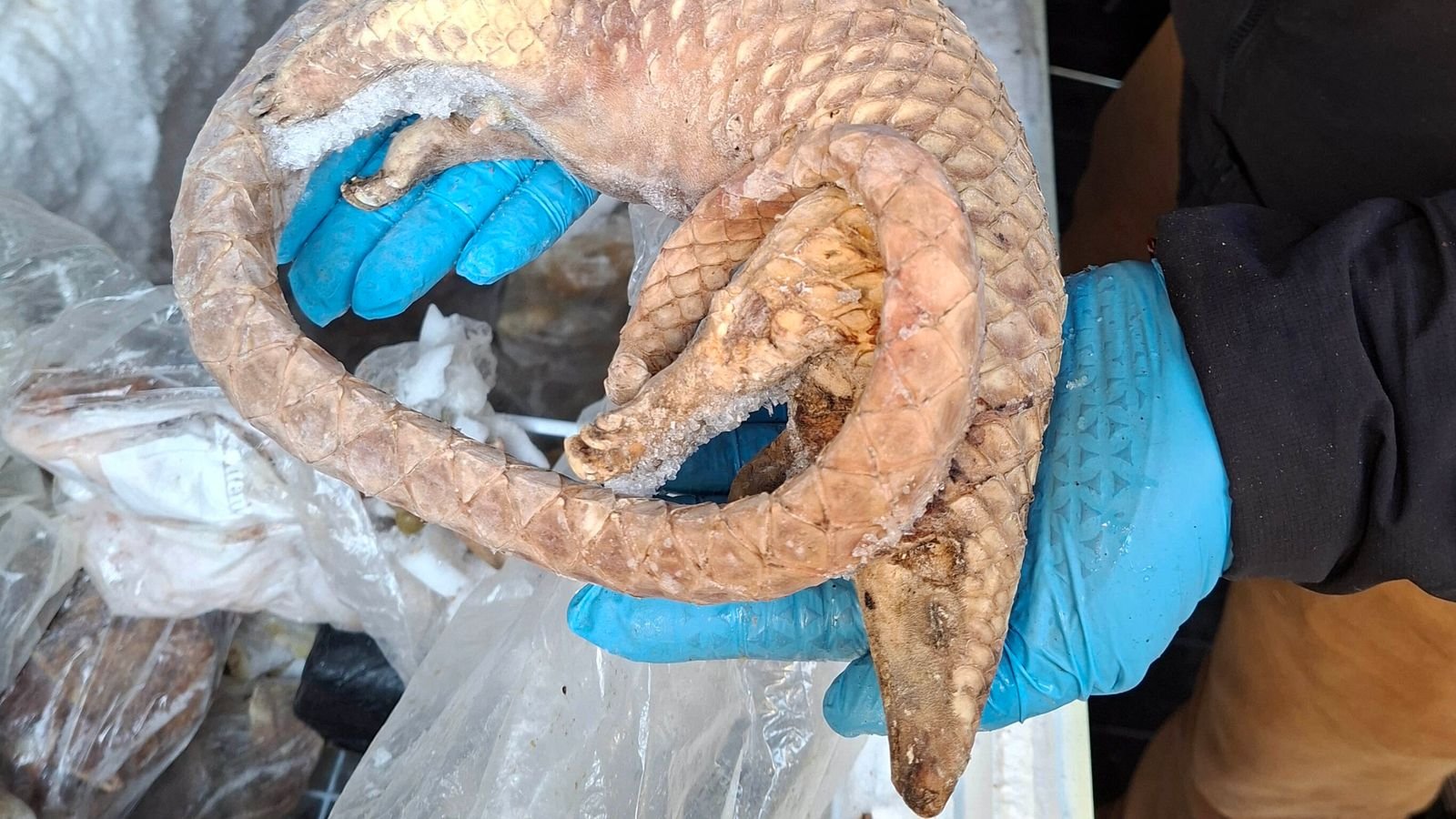
Illegal Bushmeat Seized in South East London, Man Arrested
A significant law enforcement operation in Southeast London has led to the arrest of a man following the confiscation of 38 kilograms of illegal frozen bushmeat. This haul included species such as pangolins, cane rats, and porcupines. The operation, conducted on December 5, was a joint effort by the Food Standards Agency (FSA) and the Metropolitan Police.
The Risks of Illegal Bushmeat
Bushmeat refers to wild animals hunted for food, typically originating from tropical regions. The FSA warns that illegally imported meat could pose serious health risks to consumers as it bypasses essential food safety checks.
A 57-year-old male was taken into custody during the operation but has since been released while investigations continue.
Conservation Concerns
Pangolins, among the species seized, are critically endangered. The unlawful trade in their meat and scales is a significant concern, as they are often hunted for traditional medicinal uses in various parts of the world. The Zoological Society of London has highlighted that an estimated one million pangolins have been poached over the last ten years, making them one of the most trafficked mammals globally.
Despite persistent claims of their purported health benefits, scientific evidence disputing these claims has been presented. Simon Ashwin, a senior investigator at the FSA, emphasised the importance of public awareness regarding the consumption of illegally imported meat.
A Global Challenge
This incident coincides with a broader global issue of wildlife trafficking. Recent data shows that authorities across 134 nations intercepted a record volume of illegally traded live animals and bushmeat during a major operation conducted from September 15 to October 15. This coordinated effort, orchestrated by Interpol and the World Customs Organisation, resulted in numerous arrests, revealing an expansive network involved in wildlife crime.
- 1,100 suspects identified with 24 arrests made in South Africa.
- Two arrests in Vietnam and one in Qatar.
- Nearly 30,000 live animals seized during the operation.
The scale and sophistication of these criminal networks pose substantial threats not only to wildlife but also to global biosecurity and public health. The trafficking of wild animal products, often linked to traditional medicines, has become increasingly problematic, with Interpol reporting significant rises in illegal activities.
Background
Wildlife crime represents a multi-billion pound industry, with estimates suggesting it could be worth around £14.9 billion annually. The ongoing demand for exotic animals as pets and traditional medicine continues to fuel these illicit markets.
As illegal activities surge, authorities highlight the critical need for stronger enforcement and public education to curb wildlife trafficking and protect vulnerable species.
Source: Original Article