






















AI and Robotics Revolutionise Lung Cancer Detection in NHS Pilot
A groundbreaking initiative incorporating artificial intelligence and robotics is poised to enhance the early detection of lung cancer in the UK. This pioneering scheme aims to leverage cutting-edge technology to support lung cancer screening efforts, with all eligible individuals expected to receive their initial assessments by 2030.
Enhancing Lung Cancer Screening
The National Health Service (NHS) has announced plans to broaden its lung cancer screening programme, enabled by the integration of sophisticated AI software. This software will scrutinise lung scans for potential anomalies, specifically identifying suspicious nodules that may indicate cancer.
Robotic Biopsy Technology
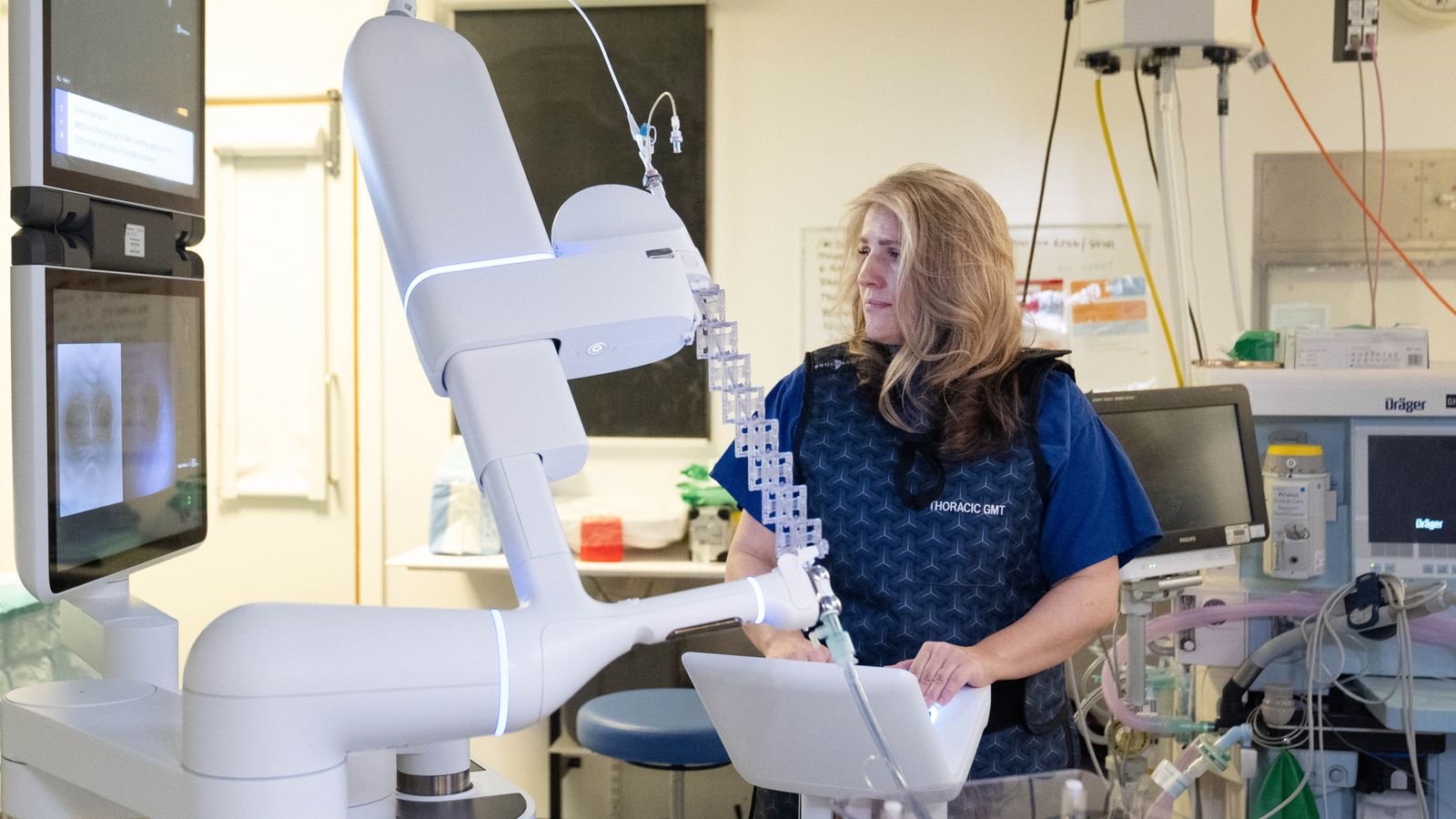
To facilitate precise diagnosis, a robotic catheter—essentially a slender tube inserted through the throat—is employed to extract biopsies directly from identified nodules. This advanced procedure is capable of reaching nodules as small as six millimetres, which often elude conventional scanning techniques.
This robotic approach addresses the challenge faced by doctors in accessing hard-to-reach nodules, which usually results in patient anxiety as they await additional scans to determine any changes in size.
Initial Results and Future Prospects
Experts from the Guy’s and St Thomas’ NHS Foundation Trust have already successfully conducted robotic biopsies on 300 patients, with approximately 215 subsequently receiving treatment for cancer. The new pilot programme will see an expansion to include 250 more patients, with hopes that additional NHS trusts will adopt this innovative procedure.
Professor Peter Johnson, the national clinical director for cancer at NHS England, has emphasised that the upcoming pilot will pave the way for quicker and more precise biopsy processes, heralding a new era in cancer detection.
The Importance of Early Detection
Lung cancer stands as the third most frequently diagnosed cancer in the UK, contributing to over 49,000 new cases and approximately 33,000 deaths annually. Since 2019, over 1.5 million individuals in England aged between 55 and 74 who have a history of smoking have been encouraged to undergo lung health assessments. An additional 1.4 million people are set to be reached by the NHS in the coming year.
Health Secretary Wes Streeting, who underwent robotic surgery for kidney cancer, has shared that the NHS treatment he received was life-saving. He highlighted the significance of the new pilot in facilitating earlier detection of lung cancer, stating it would replace lengthy and invasive testing with a single, targeted procedure.
Background
The introduction of AI and robotics into medical practice, particularly for cancer detection, represents a significant leap forward in healthcare technology. By utilising these advanced methods, the NHS aims to improve patient outcomes and increase the likelihood of successful treatment through early diagnosis.
Source: Original Article






