






















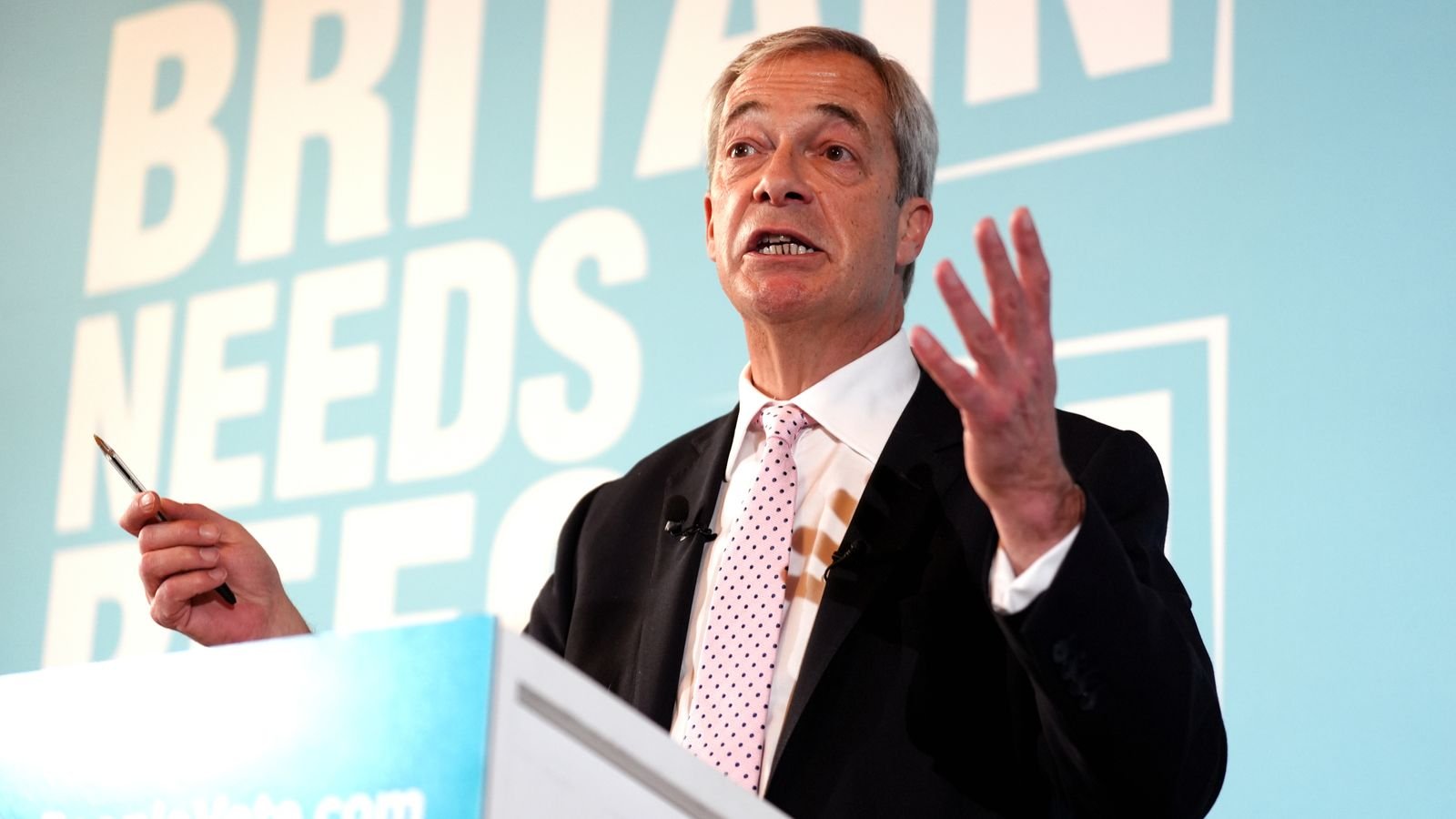
Farage Considers Abolishing Budget Watchdog if Elected
Nigel Farage, leader of Reform UK, has expressed his intention to seriously consider dismantling the Office for Budget Responsibility (OBR) should his party emerge victorious in the upcoming general election. Farage argues that the OBR directs chancellors’ decisions excessively, hindering their independent judgment.
Criticism of the OBR’s Role
In an interview with The Telegraph, Farage questioned the utility of the OBR, stating, “The question we have to ask ourselves is ‘is the OBR serving any useful purpose?'” He suggested that the current setup makes chancellors reliant on the agency’s forecasts instead of allowing for independent fiscal decisions.
Farage further remarked that the OBR resembles a “Blairite-style quango,” implying that it wields influence that should belong to elected politicians. He believes that the power within government has shifted unjustly to judicial entities and quangos, rather than remaining with elected representatives.
Government Response
In response, Treasury Minister James Murray cautioned against what he termed “fiscal recklessness.” He likened Farage’s potential policies to a “Liz Truss plan on steroids,” warning that such approaches could devastate the British economy.
Murray remarked, “Working people know the price of fiscal recklessness – many are still paying huge sums more on their mortgages than they would have done before Liz Truss crashed the economy.” His comments reflect widespread concern regarding the stability of economic forecasts and the implications of political decisions on everyday citizens.
Concerns Surrounding the OBR
Established in 2010 by the Conservative-Liberal Democrat coalition, the OBR is tasked with providing five-year economic forecasts and is expected to accompany the budget with its assessments twice a year. Nonetheless, the watchdog has faced criticism over the accuracy of its forecasts and its perceived grip on policymakers’ decisions.
A notable controversy arose last year when forecast details were made available on the OBR’s website prior to the official budget announcement, leading to the resignation of chairman Richard Hughes.
Implications of Scrapping the OBR
Farage declined to specify who would be responsible for economic forecasting in the absence of the OBR. Historical context shows that prior to the OBR’s formation, the Treasury produced forecasts, which were often accused of being biased in favour of the government. In what some viewed as a detrimental move, former Prime Minister Liz Truss opted not to consult the OBR during her controversial “mini-budget,” a decision widely believed to have prompted a negative market response that ultimately led to her resignation.
Background
Since its establishment, the OBR has been pivotal in shaping public finance debates in the UK. Critics argue that its forecasts can constrain government action, while supporters maintain it enhances accountability and transparency in economic governance. Farage’s stance signals a significant potential shift in fiscal policy if Reform UK gains power.
Source: Original Article






