Severe Flooding Crisis Affects South and Southeast Asia
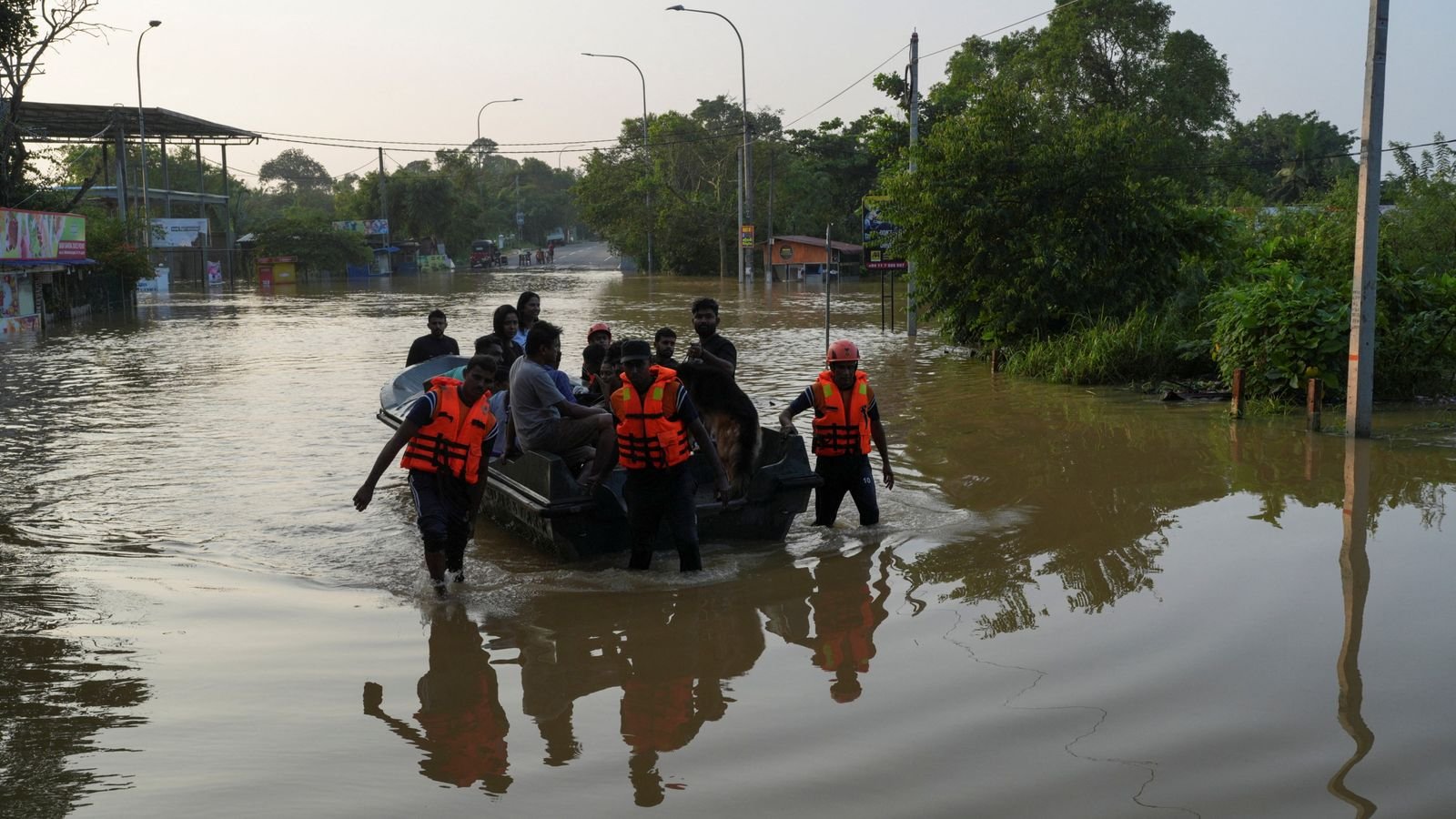
Rescue operations are ongoing across South and Southeast Asia as the toll from catastrophic flooding continues to rise. Authorities report that at least 334 fatalities have been confirmed in Sri Lanka, 502 in Indonesia, and 170 in Thailand as the region grapples with extreme weather events exacerbated by Cyclone Ditwah.
Impact in Sri Lanka
The cyclone has had a devastating effect in Sri Lanka, with rescue teams still searching for 370 individuals reported missing. Heavy rains have inundated homes, farm fields, and roads, prompting landslides particularly in the hilly central regions of the island. Nearly a million people have been affected, with approximately 200,000 seeking shelter due to the relentless downpours, as stated by the country’s disaster management officials.
Many residents were seen scouring through the remnants of their homes along the banks of the Kelani River near Colombo on Monday. Although some train and flight operations have resumed, schools in the region remain closed.
President Anura Kumara Dissanayake labelled the cyclone as the “largest and most challenging” natural disaster in the annals of Sri Lankan history.
Conditions in Indonesia
As recovery efforts continue in Indonesia, reports indicate that around 700 lives have been lost due to cyclones that struck the region. Rescuers are actively searching for over 508 people still unaccounted for, while communities work to clear mud and debris from affected areas. Approximately 28,000 homes have suffered damage, influencing 1.4 million individuals, prompting President Prabowo Subianto to announce reconstruction plans as he visited the impacted provinces.
Witness Accounts
One resident, Afrianti, expressed the heartbreaking reality faced by many, recounting how floodwaters engulfed her home. “Nothing remains. I can only live near this one remaining wall,” she stated as she and her family have taken shelter beside the solitary wall left standing of their damaged home.
Situation in Thailand
In Thailand, unprecedented rainfall has significantly impacted around three million people across eight southern provinces. The military has mobilised to evacuate critical patients and reach those trapped in floodwaters. The city of Hat Yai recorded its highest rainfall in 300 years, with emergency services working tirelessly to assist those in need.
Prime Minister Anutin Charnivirakul has set expectations for residents to return to their homes within a week, as the government begins distributing compensation to those affected.
Broader Context and Continuing Risk
This extreme weather has not only resulted in loss of life but also underlined the growing frequency and intensity of such natural disasters due to climate change. As communities begin recovery efforts, the ongoing risk of additional flooding looms, particularly in Malaysia, where authorities remain vigilant in preparations against further incidents.
Background
Recent years have seen a concerning trend of increasingly severe weather events across Asia, raising questions about infrastructure resilience and disaster preparedness. The current floods represent one of the most challenging humanitarian crises in the region, demanding international attention and support.
Source: Original Article