






















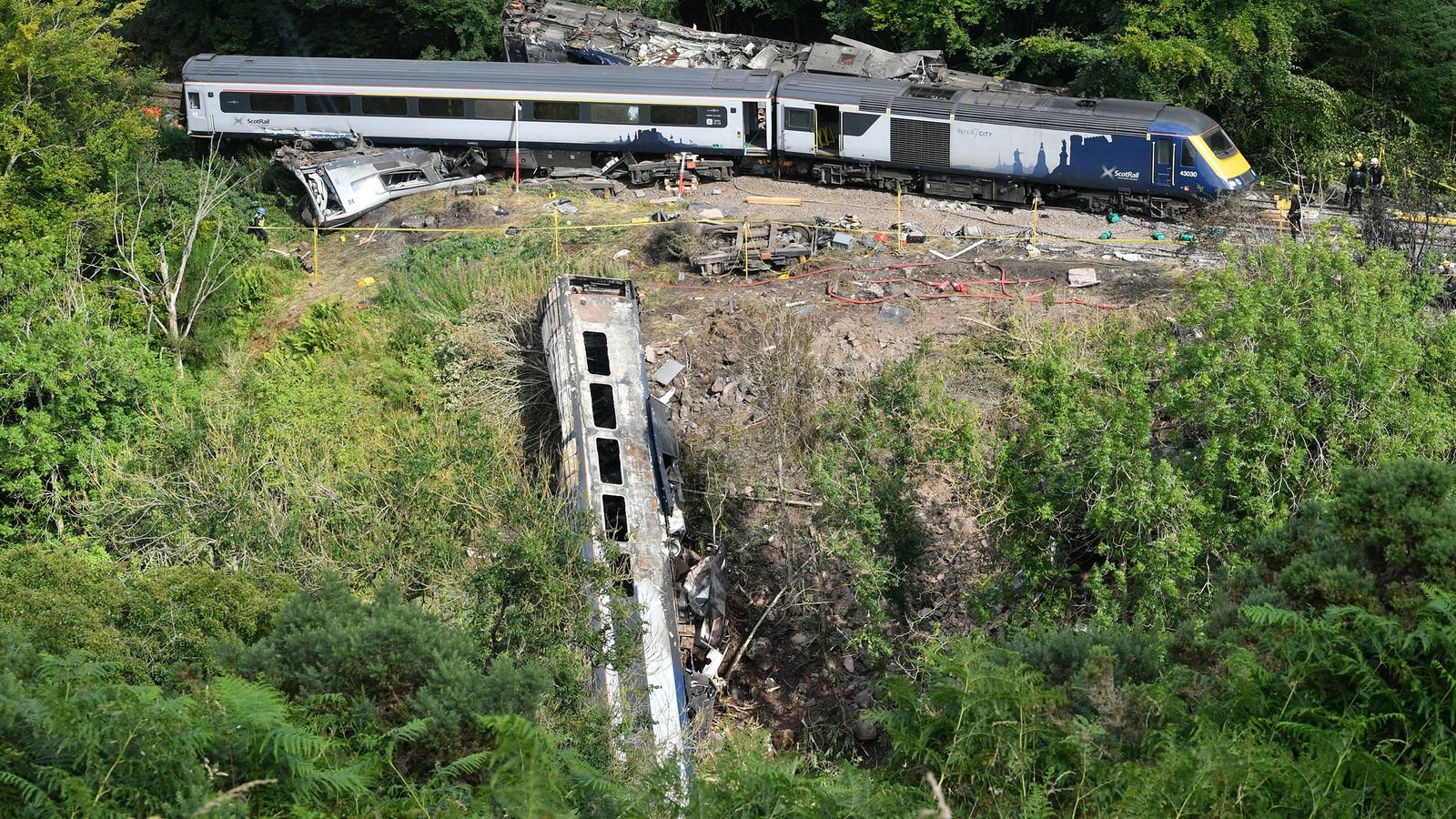
Fatal Train Derailment Inquiry Reveals Unsurvivable Injuries
In a tragic train derailment near Stonehaven, Aberdeenshire, three men lost their lives due to injuries that were deemed unsurvivable, according to ongoing testimony in a fatal accident inquiry. The incident occurred on 12 August 2020, involving a ScotRail service traveling from Aberdeen to Glasgow Queen Street, which derailed after colliding with debris caused by heavy rainfall.
Circumstances of the Crash
During the inquiry held at Aberdeen Sheriff Court, it was reported that train driver Brett McCullough, 45, conductor Donald Dinnie, 58, and passenger Christopher Stuchbury, 62, all suffered multiple blunt force injuries, as revealed by post-mortem examinations. Crown counsel Alex Prentice KC stated that these injuries rendered survival impossible, with death likely occurring immediately after the crash.
The train was moving at approximately 73 mph when it hit materials washed onto the track, resulting from excess water flow following torrential rain. The incident injured six other individuals as well, marking it as a highly complex scene for emergency response teams. Two firefighters also sustained injuries during rescue efforts.
Victims Remembered
Statements from the families of the deceased expressed profound grief. Diane Stuchbury shared that her husband died on what was supposed to be their wedding anniversary, highlighting the couple’s robbed future. Mr. Dinnie’s family described him as deeply loved and will be greatly missed by all.
Findings of the Inquiry
Evidence from the inquiry included insights from Nick Bucknall, an inspector with the Rail Accident Investigation Branch (RAIB), who confirmed that the train derailed after striking debris. The inquiry has illuminated systemic failings, particularly regarding the inadequate drainage system that could not handle heavy rainfall. This raised questions about Network Rail’s operational preparedness.
- Network Rail was fined £6.7 million in 2023 for health and safety violations linked to the three fatalities.
- A total of nearly £1 million in damages was awarded to seven individuals affected by the incident.
- The RAIB report identified construction errors in the drainage systems, which had been installed by Carillion, a company that entered liquidation in early 2018.
Impact and Future Recommendations
In light of the incidents leading to the derailment, Mr. Bucknall emphasised that Network Rail lacked effective operational measures to tackle severe weather conditions. Further, he noted that certain safety protocols remain unaddressed, calling for fundamental improvements in railway safety standards.
Network Rail has voiced its commitment to learning from these mistakes, stating that it is dedicated to implementing recommendations made by the RAIB to enhance safety across the rail network. The ongoing inquiry is set to conclude on 13 February, with a final session planned for 23 February.
Background
This incident marks a crucial point in UK rail safety discussions, especially in the context of increasing extreme weather events. The derailment has raised concerns about infrastructure resilience and the ability of rail networks to respond effectively to adverse weather conditions, underscoring the importance of rigorous safety protocols in protecting passengers.
Source: Original Article






