A Digital Leap in Local Planning: Councils Embrace Technology to Enhance Community Engagement
Plymouth City Council, alongside South Hams District Council and West Devon Borough Council, has initiated a pioneering digital consultation programme aimed at overhauling traditional planning engagement methods. By employing advanced technology and innovative strategies, the councils have significantly improved participation rates in local consultations, demonstrating the potential of digital tools in amplifying community voices.
The Need for Change
The joint local plan area encompasses a wide-ranging geography, including urban, rural, and coastal communities. Historically, local councils have faced challenges in engaging diverse populations, resulting in insufficient feedback from underrepresented groups. Manual processing of consultation responses often led to delays in analysis and inadequate reflection of residents’ experiences.
Recognising these hurdles, the councils sought to modernise their approach by testing whether digital innovations could enhance community participation, streamline analysis, and improve the clarity of reporting mechanisms.
Innovative Strategies Implemented
The councils partnered with the digital consultancy firms Commonplace and City Science to revamp their consultation approach. Key initiatives included:
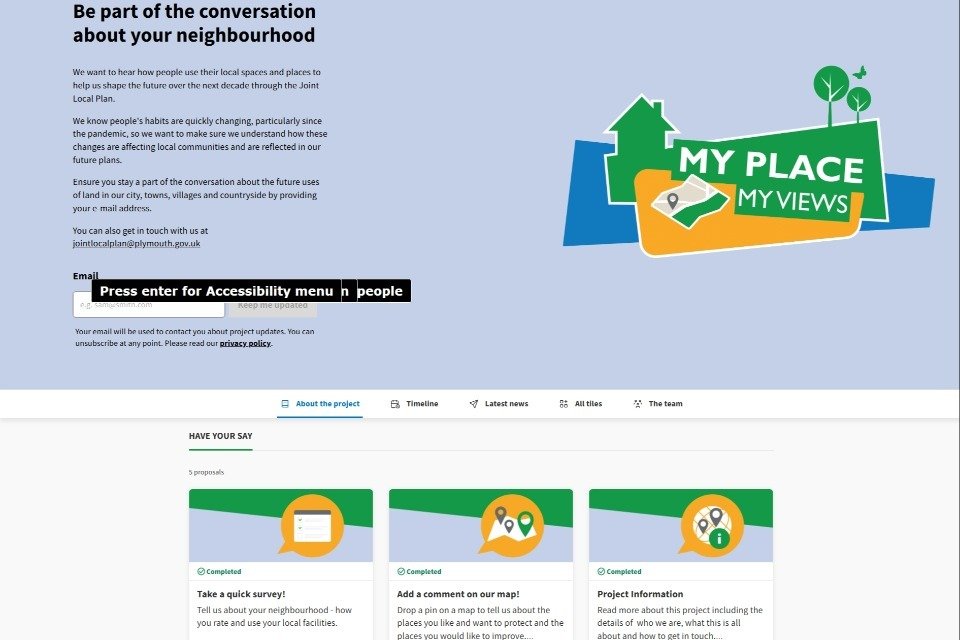
- Launching an interactive digital survey featuring a mapping tool for residents to share views on local facilities and issues.
- Implementing straightforward language in surveys alongside quick polls and concise open-text fields.
- Utilising targeted communication strategies, including promotional posters, community drop-in events, and social media advertising to reach a broader audience.
- Monitoring responses in real-time, allowing for adaptive communication strategies throughout the consultation.
Enhanced Analytical Approaches
On the analytical front, the councils worked with City Science to create a benchmarking tool that linked public sentiment with open data regarding local service access. Additionally, they collaborated with Commonplace to refine a Natural Language Processing (NLP) model capable of categorising responses based on key themes, geographical areas, and sentiments.
This approach aimed not only to expedite analysis but also to provide civil servants with the tools necessary to quickly identify trends and insights.
Outcomes and Insights
The pilot project indicated remarkable improvements in community engagement and operational efficiency:
- Over 1,400 residents participated in the consultation.
- Three out of four electoral wards experienced increased engagement compared to previous efforts.
- A substantial 69% of respondents were new participants in joint local plan consultations.
- The survey was rated as easy or very easy to complete by 75% of respondents.
- NLP testing resulted in a notable 66% decrease in processing time, with officers saving approximately 10 minutes per response.
Despite the successes, the councils acknowledged ongoing challenges, particularly the underrepresentation of younger residents and those in more deprived areas—issues that reflect national trends in planning participation.
Key Takeaways
The councils’ experiences yielded several crucial lessons:
- Simple survey designs helped attract new respondents.
- In-person workshops and events remain vital for engaging a diverse demographic.
- AI-powered tools can accelerate analysis processes but should complement, not replace, professional judgement.
- Utilising local datasets improved model accuracy, while consistent data standards are necessary for effective planning.
Future Implications
Looking ahead, the councils intend to refine their NLP models and enhance their benchmarking strategies as they advance through the stages of the joint local plan. They plan to broaden training datasets, experiment with AI for summarising more complex responses, and strengthen outreach efforts particularly aimed at younger people and areas of low participation.
The findings from this pilot programme signal an encouraging step towards integrating digital tools within local governance, potentially transforming engagement strategies across the UK.
Source: official statements, news agencies, and public reports.
https://www.gov.uk/government/case-studies/plymouth-south-hams-and-west-devon-improve-analysis-with-ai