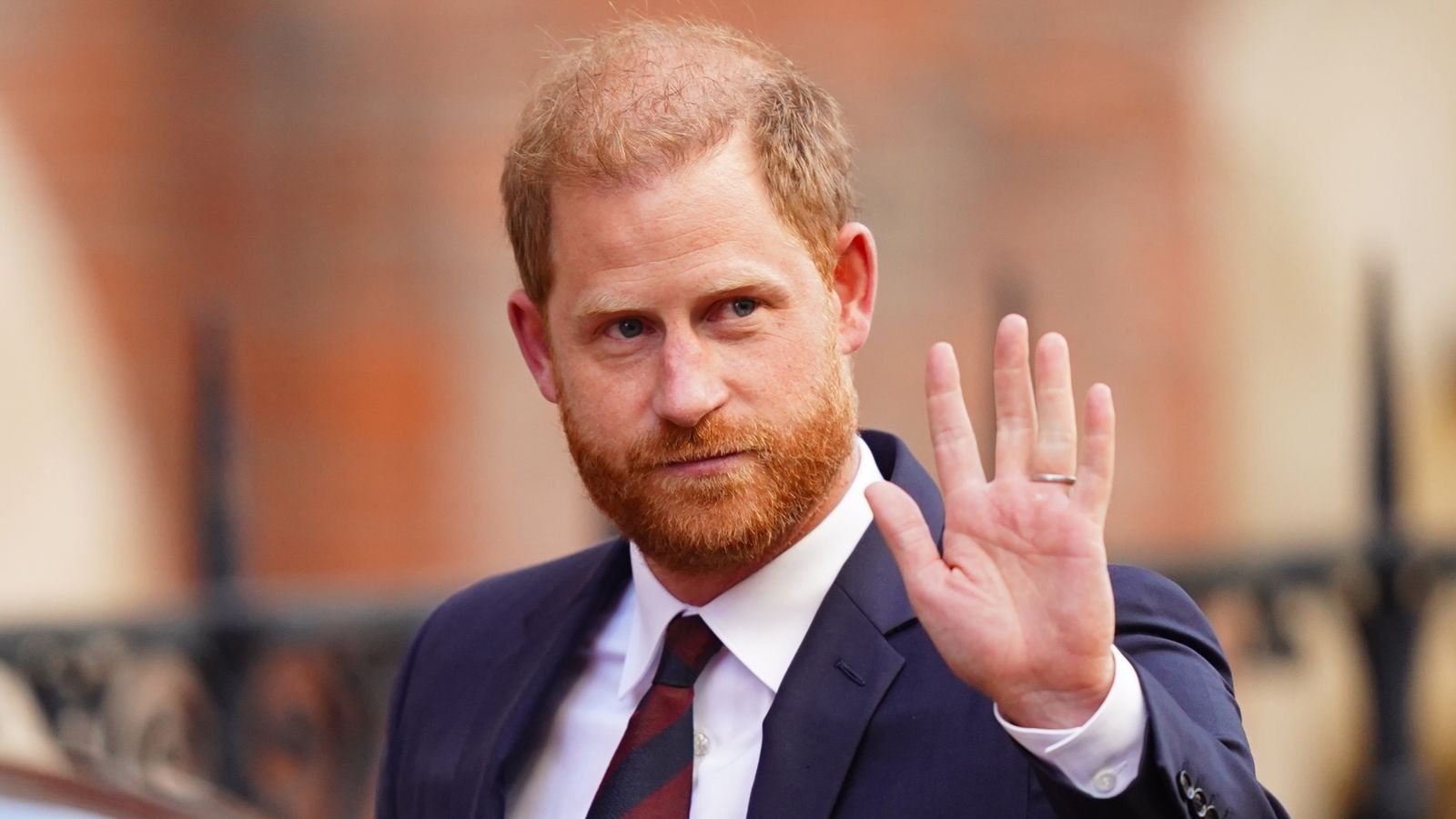
Prince Harry to Testify in Privacy Case Against Daily Mail Publisher
Prince Harry is set to testify in London’s High Court next week regarding a privacy lawsuit he instigated against Associated Newspapers Limited, the publisher of the Daily Mail. Joining him in this legal battle are high-profile figures, including Sir Elton John and actress Elizabeth Hurley, who collectively allege that private investigators were hired to carry out unlawful surveillance and gather personal information from the 1990s to 2011.
Allegations Against Associated Newspapers Limited
The lawsuit claims that Associated Newspapers engaged in various illicit activities, such as:
- Installing listening devices in vehicles
- Employing deceit to access private records, which included flight itineraries and medical information
- Intercepting confidential phone conversations
Prince Harry is scheduled to spend an entire day on the witness stand next Thursday as part of a nine-week trial that will commence the following Monday. Other prominent individuals involved in the case include David Furnish, the spouse of Sir Elton John; actress Sadie Frost; and former Liberal Democrat MP Simon Hughes.
Legal Proceedings and Accusations
The group filed their lawsuit against Associated Newspapers in October 2020, asserting that the publisher engaged in various unethical practices. In contrast, Associated Newspapers has dismissed these allegations, describing them as “preposterous smears.”
During a pre-trial hearing on Thursday, several critical issues were addressed, including a challenge from the plaintiffs’ attorneys regarding specific language in ANL’s proposed opening arguments. Mr Justice Nicklin presided over the hearing, which revealed that the defendants have alleged serious misconduct against some representatives of the plaintiffs’ legal team. These accusations include claims of dishonesty and fraud.
David Sherborne, representing the claimants, argued that the allegations made by the defendants are incredibly serious and should not be merely assumed in their initial statements. He emphasised that the claims extended beyond questioning witness credibility and suggested a calculated strategy to mislead the court.
Court’s Rulings and Next Steps
In response to these proceedings, ANL’s representative, Antony White KC, argued that the opening submissions by the claimants effectively served as an attack on witness credibility. He insisted that there was no necessity to outline a case if the witnesses presented by the opposition were found to be dishonest.
Mr Justice Nicklin ruled that ANL’s opening note must undergo revisions, stating that the so-called “camouflage scheme” referenced by the defendants involved more than simply undermining credibility.
The judge remarked that the principles of fairness necessitated that the defendants revise their defence accordingly, a decision that Mr White accepted, indicating that he would streamline their initial claims in light of the ruling.
Background
This case represents a significant moment in media ethics in the UK, raising questions about privacy rights and journalistic practices, especially concerning high-profile individuals. The outcome could have broader implications for press conduct and accountability in an era where invasive tactics have drawn increasing scrutiny.
As the legal proceedings unfold, public interest remains high, particularly among those concerned about constitutional protections surrounding privacy and the role of media in celebrity culture.
Source: Original Article