






















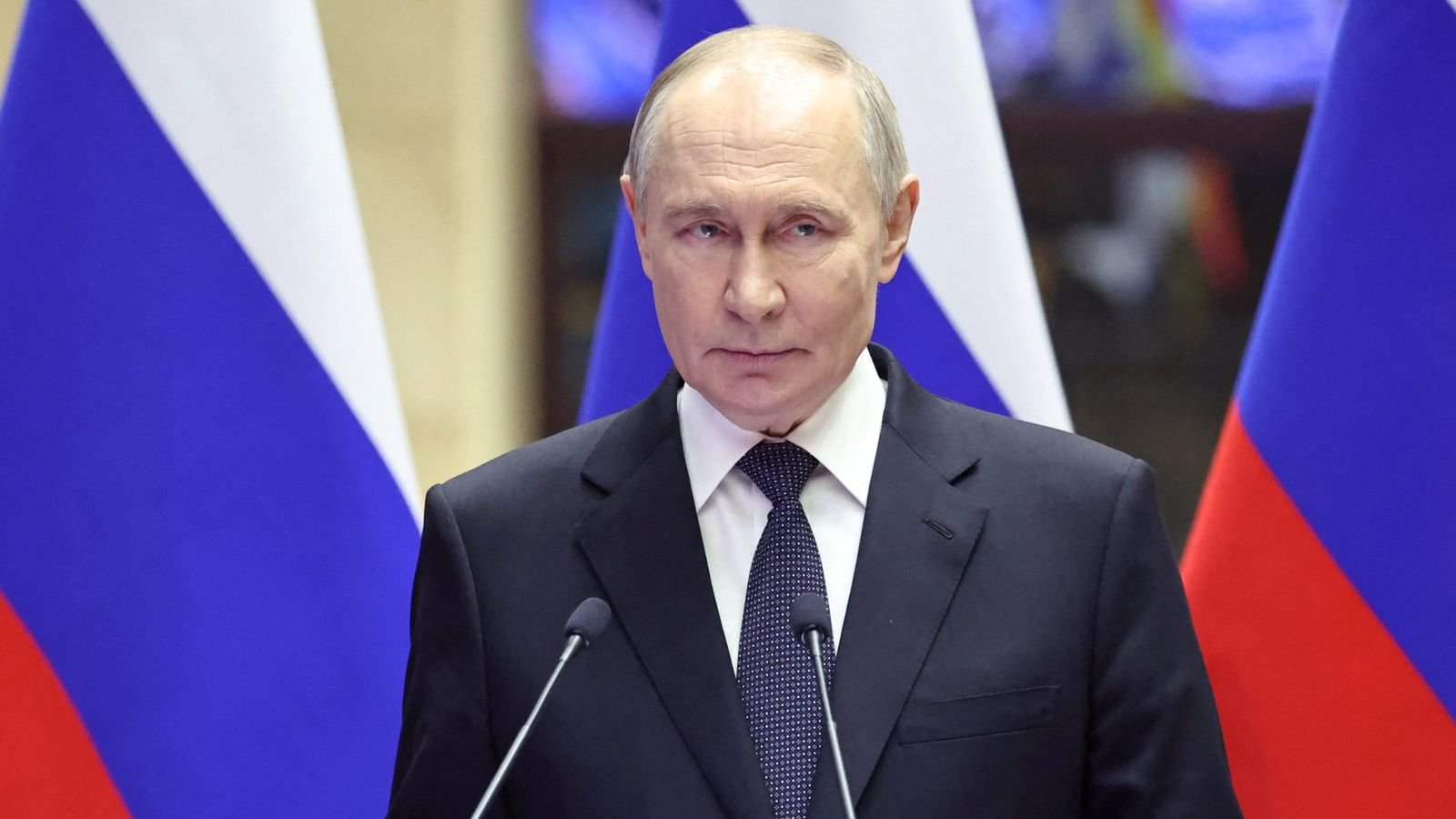
Putin’s Spymaster Engages with New MI6 Chief Amid Rising Tensions
Vladimir Putin’s intelligence chief, Sergei Naryshkin, recently revealed that he held an extensive phone conversation with Blaise Metreweli, the new head of MI6. This exchange, reported by the Russian state news agency Tass, underscores the continuing tensions and complex diplomatic interactions between the UK and Russia.
Communication Between Intelligence Leaders
Naryshkin disclosed that the discussion took place a few days prior and highlighted the parallel nature of intelligence operations, noting that Russian agents operate officially in London while their UK counterparts conduct operations from Moscow. Metreweli assumed leadership of the Secret Intelligence Service on 1 October, marking a notable milestone as she becomes the first woman to hold this position.
Analysis of Russian Intentions
Military analyst Michael Clarke has suggested that the conversation could reflect Naryshkin’s strategic motives, implying that Russia might be trying to project an image of importance to the UK amid various ongoing negotiations in the U.S. Clarke views the outreach as potentially signalling that the UK may be seeking cooperation with Russia.
EU-Tensions Amid Ukrainian Funding Discussions
On a broader European scale, Naryshkin’s statements come as EU leaders convene to discuss funding for Ukraine, particularly focusing on the utilisation of frozen Russian assets. Significant disagreement has surfaced, particularly from Belgium, where Prime Minister Bart De Wever expressed concerns over the risks of Russian retaliation for this financial strategy.
- Approximately €190 billion in Russian assets have been frozen since the onset of the war.
- De Wever emphasised the need for collective action, stating that Belgium should not bear the risks alone.
- Ukrainian President Volodymyr Zelenskyy acknowledged the potential dangers but asserted that the larger threat comes from Russia’s actions.
International Diplomacy and Potential Peace Talks
Across the Atlantic, former U.S. President Donald Trump has been advocating for a swift peace agreement regarding the ongoing conflict. His administration’s representatives are set to meet with a senior adviser to President Putin in Miami to discuss evolving strategies for a peace deal.
Trump has expressed optimism about the prospects of a resolution, urging Ukraine to act promptly, suggesting that delays give Russia the chance to alter its position.
Military Escalation Concerns
In conjunction with these diplomatic efforts, alarming reports have emerged regarding military developments in the region. Belarusian President Alexander Lukashenko confirmed the recent deployment of Russia’s advanced nuclear-capable missile system, the Oreshnik, which is now operational in Belarus. This escalation underscores the precarious military situation in Eastern Europe, particularly as it relates to Ukraine.
Background
The recent developments in UK-Russia relations are set against the backdrop of ongoing hostilities stemming from Russia’s invasion of Ukraine, which commenced in February 2022. The conflict has not only reshaped regional dynamics but has also prompted ongoing discussions regarding collective European responses and military readiness.
As global leaders navigate these turbulent waters, the implications of intelligence communications, military deployments, and diplomatic overtures remain crucial to understanding the evolving landscape of international relations.
Source: Original Article






