






















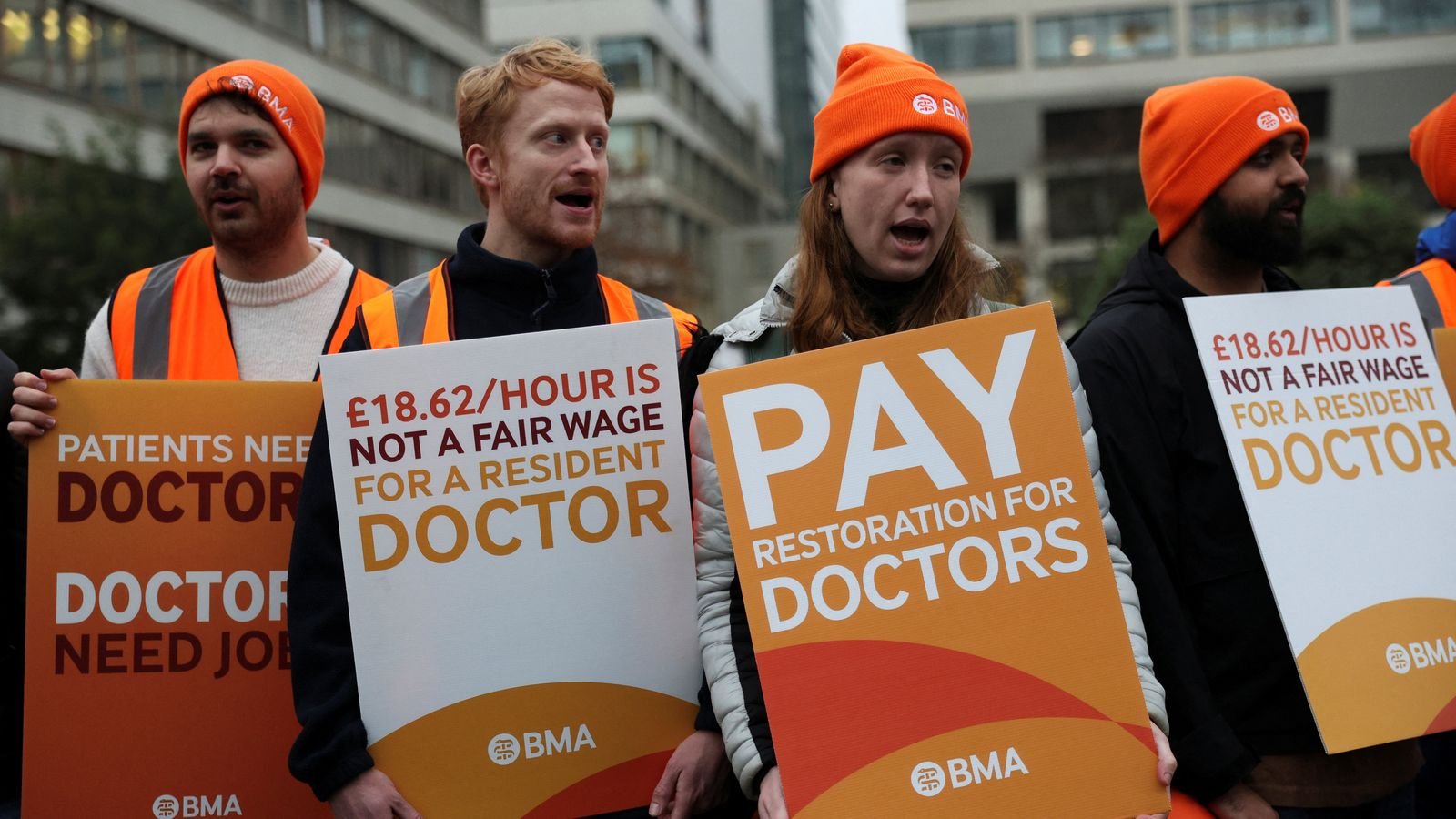
Resident Doctors in England Vote to Extend Strike Action Over Pay and Job Concerns
In a significant move, resident doctors in England have decided to prolong their industrial action for an additional six months amid ongoing disputes regarding pay and job conditions. The British Medical Association (BMA) reported that a substantial 93.4% of resident doctors, previously known as junior doctors, supported the continuation of strike action.
Current Situation
Dr. Jack Fletcher, the chairman of the BMA’s resident doctors committee, expressed optimism about the possibility of averting further strikes. He noted that the government’s recent tone has shifted positively compared to previous communications, suggesting that a resolution could be achieved. “A deal is there to be done,” Dr. Fletcher stated, emphasizing that a mutually beneficial agreement regarding job packages and fair pay over time is attainable.
Government’s Stance
Health Secretary Wes Streeting has stated that the government believes it cannot offer any further increases in pay. A representative from the Department for Health and Social Care highlighted that doctors have already received a 28.9% pay increase over the past three years. Additionally, the government is committed to working with the BMA to address challenges that resident doctors encounter in their careers, including initiatives aimed at prioritising local medical graduates for specialty training positions.
The spokesperson further indicated that the government is engaged in “intensive and constructive discussions” with the BMA to find a resolution, aiming to end the cycle of strikes and mitigate disruptions for patients and NHS staff. The hope is to reach an agreement that would prevent additional strike actions by resident doctors in 2026.
Voting Details
The turnout for the vote was recorded at 52.5%, a slight decline from 55.3% in the previous year. This turnout indicates that approximately one-third of England’s 81,000 resident doctors participated in the voting process.
Background
This latest decision comes as part of a broader struggle within the NHS concerning workforce conditions, pay equity, and the overall sustainability of healthcare services. Ongoing negotiations and industrial actions highlight the pressing issues faced by healthcare professionals in the UK, which continue to resonate within the socio-political landscape.
Source: Original Article






