






















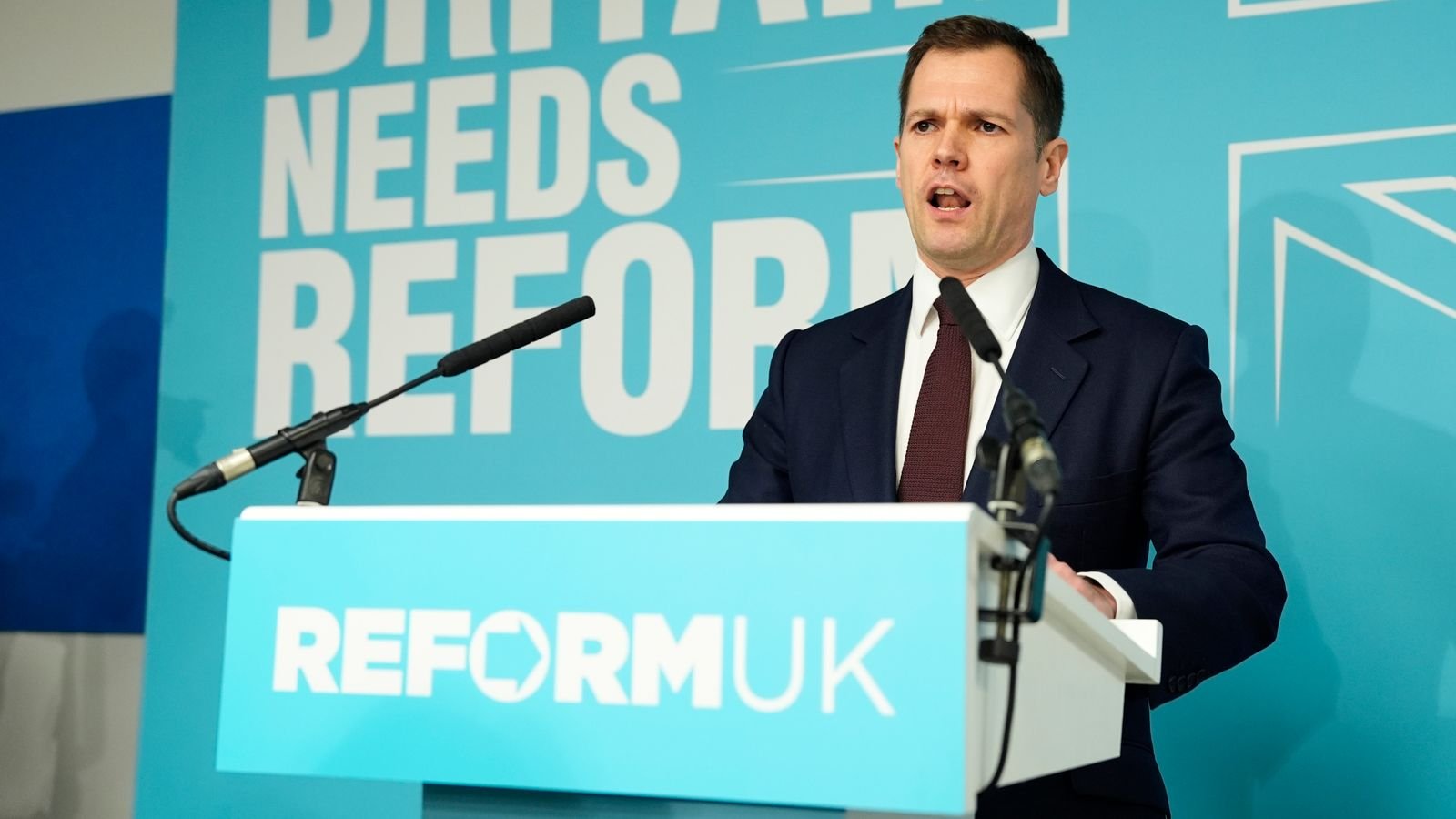
Robert Jenrick’s Political Shift Grounds New Allegiances with Reform UK
Former Conservative minister Robert Jenrick has recently aligned himself with Reform UK, following a notable dismissal from Kemi Badenoch’s shadow cabinet. Jenrick’s political journey, marked by significant shifts in ideology, exemplifies the ongoing metamorphosis within UK politics, particularly regarding immigration policy and party philosophies.
Recent Developments
In a recent Sky News interview, Jenrick expressed openness to welcoming Nigel Farage into the Conservative Party, stirring dissent among traditional Tory supporters. This followed his controversial comments at last autumn’s Conservative conference, where he downplayed the potential for a pact with Reform UK. His political landscape shifted dramatically after being sacked from his position, leading to speculation about his future ambitions.
Jenrick’s political aspirations were evident when he challenged Badenoch for the Conservative leadership in 2024. Notably known for his past ministerial roles, he gained attention for his unilateral intervention in a planning decision regarding property developer Richard Desmond. He also faced backlash for ordering murals intended to comfort child asylum seekers to be removed from reception centres.
Ideological Transformation
Despite identifying himself as a champion of centrism in earlier years, Jenrick has undergone an ideological transformation, becoming a prominent voice for right-wing populism and anti-immigration rhetoric. His shift has drawn comparisons to the strategies and policies of former US President Donald Trump, particularly regarding illegal immigration.
His political evolution has led to him being nicknamed “Robert Generic” among Conservative MPs, a reflection of his changing stance and loyalty within party ranks. Despite claims that his core values remain unchanged, critics argue that he has aligned himself with the hard-right elements of the Conservative Party, diverging from his earlier centrist positions.
Background
Jenrick’s political career began with humble roots, having grown up in a working-class environment. His educational background includes attendance at Cambridge University and training as a solicitor. His early years saw him associated with a more moderate Conservative faction alongside figures like Rishi Sunak and Oliver Dowden.
However, Jenrick’s time in government was fraught with controversies, including accusations of breaching lockdown protocols during the pandemic and facing substantial scrutiny over his planning decisions. These incidents contributed to a perception of him as a controversial figure—even within his party.
His resignation in December 2023, wherein he labelled the government’s asylum policies as insufficiently robust, hinted at underlying motivations for a leadership bid. Such aspirations culminated in a campaign that leaned heavily on hardline immigration policies, including a commitment to exit the European Convention on Human Rights.
Implications for the Future
As Jenrick takes on a significant role within Reform UK, expectations are growing about potential changes in the party’s approach to immigration and political governance. His recent statements, advocating for policies learned from Trump, signal a potential restructuring of the political landscape as the Conservative Party grapples with identity and direction in a post-Brexit environment.
The realignment of figures like Jenrick with Reform UK not only reflects the shifting dynamics within the Conservative Party but also points to broader trends in UK politics where hard-right ideologies are gaining traction. As the political climate continues to evolve, the implications of these shifts will be crucial for understanding future elections and governance.
Source: Original Article






