























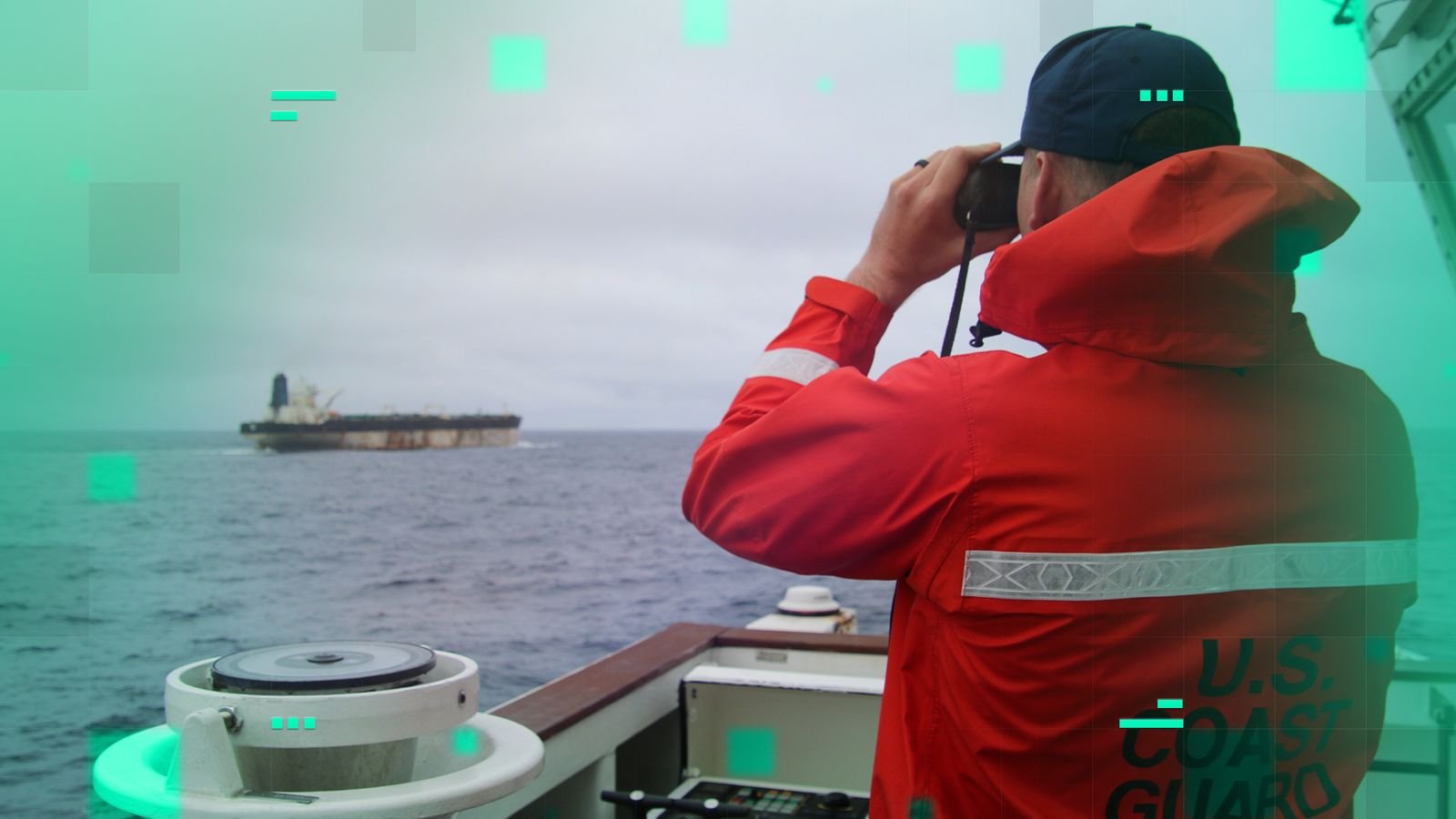
US Military Seizes Sanctioned Oil Tanker Off Iceland
The US military has successfully captured the Marinera, an oil tanker previously known as Bella 1, after a prolonged pursuit, marking a significant operation in the enforcement of international sanctions. The capture, which occurred on January 7, involved support from the UK’s Royal Air Force and Royal Navy, further highlighting the collaborative efforts in maritime security operations.
Details of the Capture
After tracking its movements for over two weeks, reports emerged that the Marinera attempted various tactics to disguise its identity during its journey. According to the US military, the vessel was seized after evading detection for weeks across the Atlantic.
Support for this operation included the provision of the RFA Tideforce, a refuelling ship, as well as multiple US Air Force aircraft, which were active in the hours leading up to the capture. Flight data indicated increased military activity at RAF bases and UK airports in the lead-up to the incident.
Journey of the Marinera
The Marinera’s journey began in Iran and lasted nearly two months, where it reportedly engaged in “spoofing” to mislead ship-tracking systems. On September 3, data placed the tanker around 9km from the Strait of Hormuz, but satellite imagery contradicted this, showing it loading crude oil at Kharg Island, Iran’s primary oil export facility.
Following its departure from Iranian waters, the tanker restored its signal. It was subsequently identified at Egypt’s Suez South anchorage between November 23 and 26, a crucial zone for oil transport, although it remains unconfirmed whether it offloaded oil during that period.
Legal Context and Distress Calls
On December 20, the US Coast Guard made an attempt to board the tanker, citing a seizure warrant based on violations of US sanctions, noting that the Marinera was not flying a valid national flag despite claiming to be registered under Guyana. The US has reported that around 40 sanctioned tankers are currently registered under the Guyanese flag without formal registration in the country.
On December 21, shortly after the attempted boarding, the Marinera made an alarming 39 distress calls. This allowed tracking of its position, locating it just over 500km from Antigua and Barbuda, where it continued to relay warnings of distress.
Flag Changes and Escalating Tensions
After travelling over 3,000 km to the North Atlantic, the vessel re-emerged on January 1 as the Marinera, now flying a Russian flag. Analysis reveals that this trend of sanctioned tankers switching to Russian flags has dramatically increased, with 21 similar vessels making the switch within a month, primarily in response to heightened US enforcement actions.
The Marinera was reportedly escorted by a Russian submarine as it neared Iceland, and after its confiscation on January 7, Russia condemned the seizure, asserting that it violated international maritime law. According to the Russian transport ministry, the tanker had received a temporary permit to fly the Russian flag, adding further complications to already tense relations between the US and Russia.
Implications and Next Steps
The US has ramped up efforts to halt illicit oil activities linked to Venezuela, having seized multiple tankers related to Venezuelan operations in recent months. In addition to the Marinera, the US Southern Command announced the capture of another tanker, M/T Sophia, around the same time, indicating a broader strategy to target maritime vessels suspected of violating sanctions.
Background
This incident highlights the ongoing geopolitical tensions surrounding oil shipping routes and sanctions enforcement. The significance of this capture extends beyond the immediate context, as it underscores the complexities of maritime law, national sovereignty, and the enforcement of international sanctions.
As the situation further develops, the implications for international shipping routes and diplomatic relations continue to unfold, reinforcing the importance of vigilance in maritime security efforts.
Source: Original Article






