






















UK and China Collaborate on Groundbreaking Solar Mission
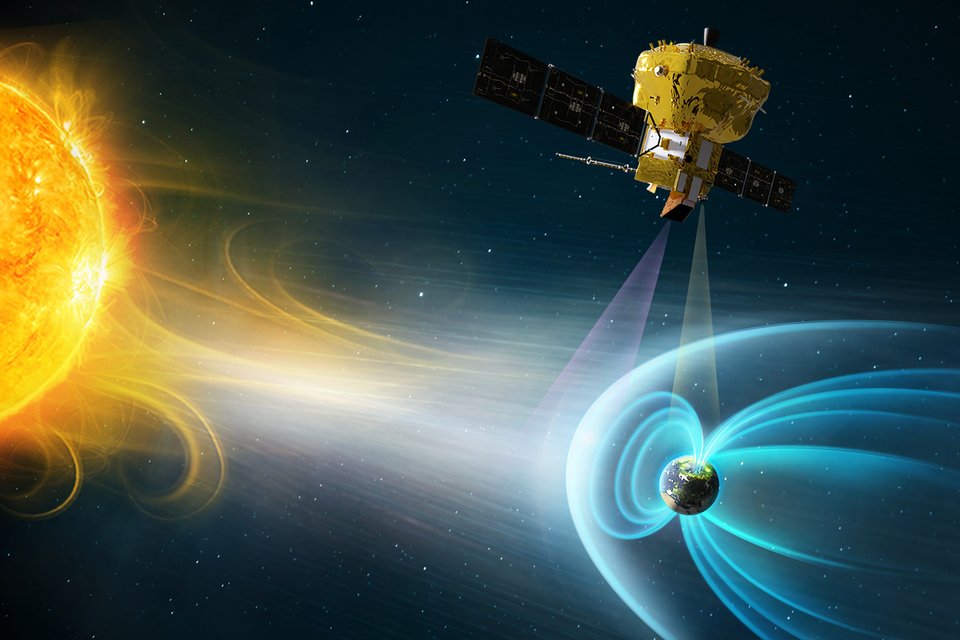
The Solar Wind Magnetosphere Ionosphere Link Explorer (SMILE) mission is set to enhance our understanding of how solar activities affect Earth, marking a significant collaboration between the UK and China. This innovative project will provide the first comprehensive 3D imaging of the Earth’s magnetosphere, contributing valuable insights into space weather and its implications for technology on Earth.
Mission Overview
SMILE’s primary focus is to explore the interaction between the Earth’s magnetosphere and the solar wind—charged particles emitted by the Sun. This mission represents a notable partnership between the European Space Agency (ESA) and the Chinese Academy of Sciences (CAS), with the UK playing a pivotal role by contributing the core scientific instrument, the Soft X-ray Imager (SXI), and co-leading the scientific consortium.
Scientific Objectives
The mission aims to address several fundamental questions, including:
- What are the core dynamics of the solar wind’s interaction with the magnetosphere?
- What mechanisms define the substorm cycle?
- How do storms induced by Coronal Mass Ejections develop, and what is their link to substorms?
To tackle these inquiries, SMILE will collect data on the outer boundaries of the magnetosphere and the behavior of the solar wind, providing insights that could lead to improved forecasting of space weather events.
The Importance of Magnetosphere Research
The Earth boasts the strongest magnetosphere among rocky planets, a crucial factor in its ability to support life. The magnetosphere protects the planet from solar winds, and understanding its dynamics is essential, especially considering that a weakened magnetosphere is believed to have contributed to Mars losing its atmosphere and surface water.
UK Contribution and Benefits
The UK’s systematic involvement in SMILE allows its scientific community to tailor the mission’s data according to their research needs. This initiative directly supports various UK strengths in planetary science, solar physics, and astrophysics, ensuring the nation remains at the forefront of space exploration.
Furthermore, accurate forecasting of space weather is increasingly vital. Extreme space weather events can disrupt various technologies, including satellite navigation and power grids. A recent study by ESA projected that an extreme space weather occurrence could lead to a €15 billion economic impact across Europe, underscoring the necessity for expertise in forecasting these phenomena.
Industry Engagement and Socioeconomic Impact
UK-based Teledyne e2v and Photek Ltd are integral to developing SMILE’s instruments, enhancing the UK’s reputation in space technology. Teledyne e2v will provide the SXI’s detector devices under a £1.5 million contract with ESA, while Photek Ltd is tasked with assembling the UVI instrument’s camera.
Long-term Benefits
The SMILE mission promises significant socioeconomic advantages, including:
- Advancements in X-ray detection technology, with the SXI detectors being the largest of their kind launched into space.
- Development of skills within both the academic sector and the industrial supply chain.
- Enhancing the UK’s international standing in solar and magnetosphere sciences, fostering future projects and funding opportunities.
- Strengthening collaborative ties with countries such as China and Canada through shared scientific endeavors.
Timeline and Future Plans
The SMILE mission was officially selected in 2015 through a joint proposal by ESA and CAS. Following successful completion of various project phases, including systems requirements reviews and design evaluations, the flight instrument is expected to be delivered by June 2024. The anticipated launch date for this groundbreaking mission is 2026.
Source: official statements, news agencies, and public reports.
https://www.gov.uk/government/case-studies/smile-solar-wind-magnetosphere-ionosphere-link-explorer






