






















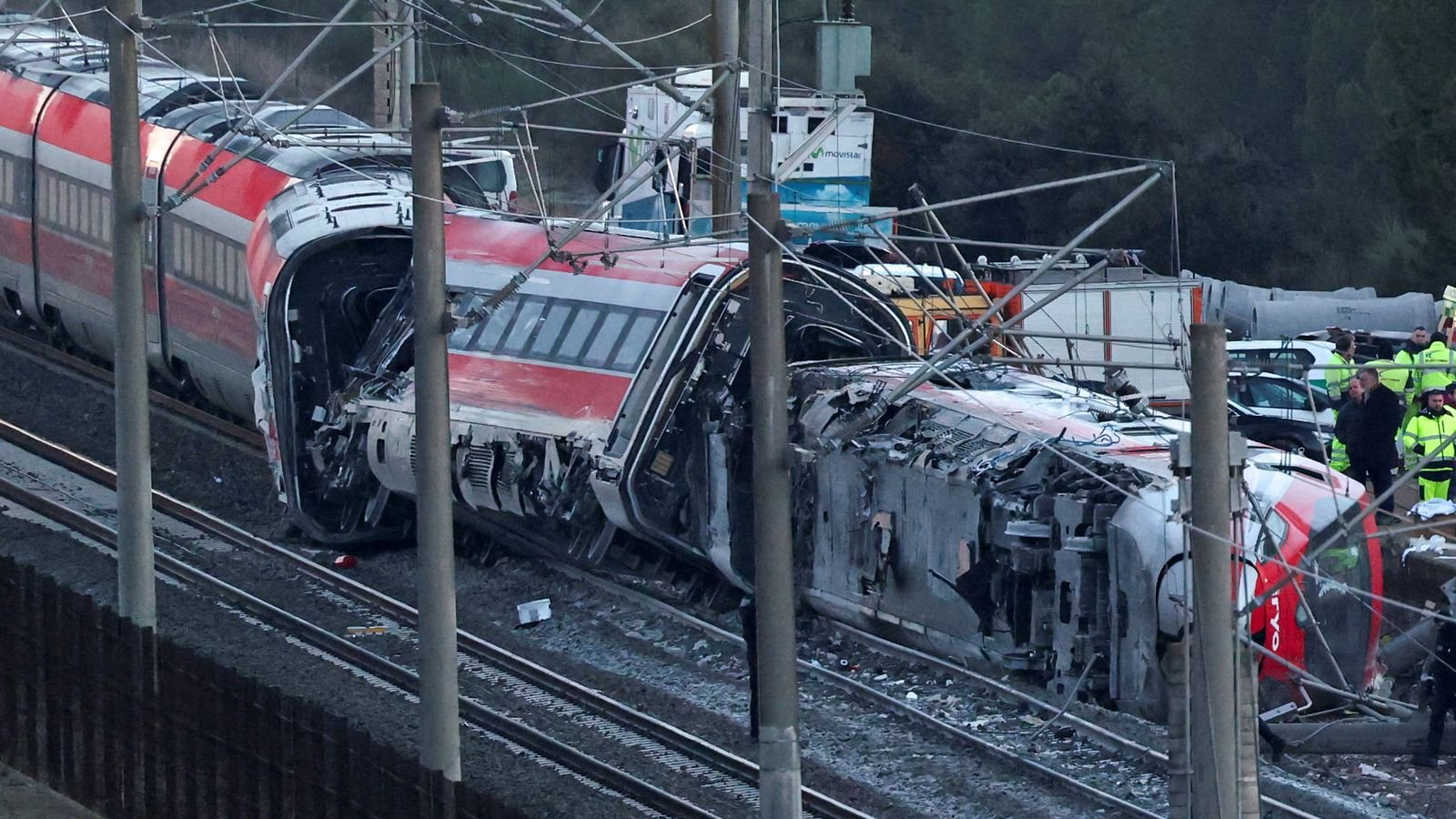
Tragic Train Collision in Southern Spain Claims Lives
In a devastating incident on Sunday evening, at least 39 individuals lost their lives and 170 more sustained injuries when two high-speed trains derailed in Adamuz, southern Spain. The collision took place as the trains were travelling between major cities, with hundreds of passengers onboard.
Details of the Crash
The Iryo service, en route from Malaga to Madrid, derailed at approximately 7:45 PM local time, shortly after departing Cordoba. Following its derailment, it collided with an incoming train that was carrying around 200 passengers from Madrid to Huelva. Spanish transport officials confirmed that the rear section of the Iryo train struck the head of the second train, leading to significant damage and casualties.
Transport Minister Oscar Puente reported that the Renfe-operated train incurred severe destruction, with the first two carriages being knocked off-track and down a four-metre slope. Eyewitness accounts highlighted the chaos that ensued, with emergency responders facing challenges in accessing those trapped in the wreckage.
The Impact and Response
Rescue teams were quick to respond, evacuating passengers from the Iryo train within hours. However, the Renfe train’s carriages were left in a severely damaged state, complicating rescue efforts. The number of fatalities and injuries may rise as recovery operations continue, with five minors reported among the injured, one of them in intensive care.
The local emergency services have confirmed that, as of early Monday morning, 122 individuals received treatment, with around 48 still in hospitals. The driver of the Madrid to Huelva train was identified as one of the deceased.
Cause of the Incident Still Unknown
Authorities have stated that the exact reason for this tragic derailment remains undetermined, with Minister Puente labelling it an “unusual” incident that occurred on a recently refurbished flat section of track. Both the Iryo and Renfe trains were reportedly operating below their designated speed limits at the time of the crash.
Officials from Spain’s railway service are conducting investigations, which include evaluating the state of the trains, the tracks, and possible mechanical issues. A comprehensive report from local prosecutors is pending before a criminal investigation is launched, which may take up to a month.
Passenger Experiences
Accounts from passengers detail the terrifying moments during the crash. One traveller recalled the feeling of sudden jolts and chaos as the carriage experienced collapse and disarray, with reports of screaming and debris falling. Rescue operations necessitated the use of emergency hammers by passengers to escape from trapped conditions.
Current Travel Changes
In the wake of this incident, all high-speed rail services between Madrid and Andalucia have been halted. Authorities have announced that trains connecting to major cities such as Cordoba, Seville, and Malaga will remain out of service for the foreseeable future to accommodate ongoing rescue and investigation efforts.
Background
Train accidents, while rare, can be particularly catastrophic due to the high speeds involved and the number of passengers. This incident marks a significant tragedy for Spain, which has been striving to improve its rail infrastructure and safety standards in recent years. In the wake of this collision, survivors and their families are receiving psychological support and assistance from relevant train services at local stations.
The investigation’s outcome will be critical in determining safety measures to prevent future tragedies like this one and will resonate beyond Spain, highlighting ongoing global discussions about rail safety protocols.
Source: Original Article






