






















Faulty Rail Joint Investigated in Spain’s Train Catastrophe
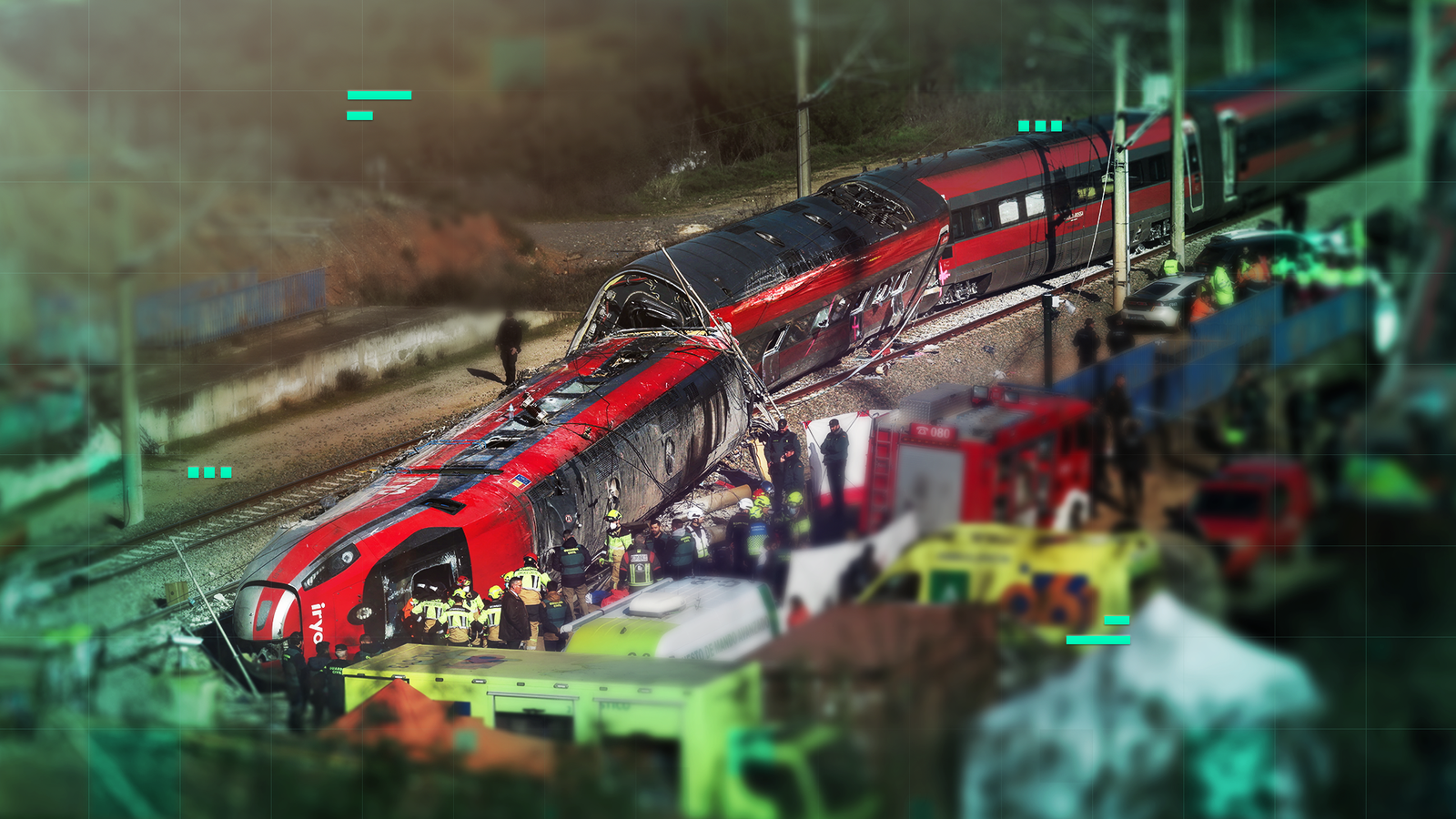
A tragic train collision in Spain has left at least 40 dead and 159 injured, sparking investigations into the cause, with initial reports suggesting a defective rail joint could be a contributing factor. The incident, involving a high-speed train travelling from Malaga to Madrid, marks one of the deadliest railway accidents in recent years.
Details of the Incident
The catastrophic event occurred on Sunday evening when two trains collided near Adamuz, located approximately 230 miles south of Madrid. The first train operated by the private company Iryo departed Malaga around 6:40 PM local time, while the other, run by the state-owned Renfe, left Madrid headed for Huelva at 6:05 PM. Eyewitness accounts reveal chaotic scenes as passengers attempted to escape through broken windows amidst the wreckage.
Around 7:45 PM, the rear of the Iryo train derailed, subsequently crossing onto the opposing track and crashing head-on into the Renfe service, leading to significant casualties. Both trains were reportedly travelling at speeds exceeding 120 mph at the time of the collision.
Investigation Underway
Spain’s Transport Minister Oscar Puente expressed concern over the incident, noting its occurrence on a recently refurbished stretch of track. Officials highlighted that the rear of the Iryo train derailed before colliding with the Renfe train, resulting in the derailment of the first two carriages of the latter. A preliminary investigation has flagged a faulty rail joint, commonly known as a fishplate, as a potential cause, with maintenance indicating the issue had persisted for some time.
- Both trains were operating at high speeds during the crash.
- Minister Puente stated the affected track had undergone renovations just months prior.
- Initial findings seemingly rule out human error as a factor in the incident.
Safety Concerns and Past Incidents
Despite substantial investments in rail infrastructure, previous warnings regarding the track’s condition raise concerns about the overall safety of Spain’s railway system. The Spanish transport workers’ union had alerted rail operator Adif to the heavy wear and tear on the tracks last summer, with reports suggesting a request for reduced speeds had been made in response to safety anxieties.
Background
Spain has faced several railway accidents over the years, with significant incidents being recorded annually since 2006. Most notably, the crash in Santiago de Compostela in 2013 resulted in 79 fatalities. Recent data indicates that derailments in Spain account for a disproportionately high number of rail incidents compared to the European average.
Current investigations are set to explore the circumstances surrounding this latest disaster, with local prosecutors poised to initiate a criminal inquiry once they receive a report from the police. As the nation mourns, Prime Minister Pedro Sanchez has expressed condolences to the bereaved family members, vowing that the investigation will seek the truth behind this disaster.
Source: Original Article






