






















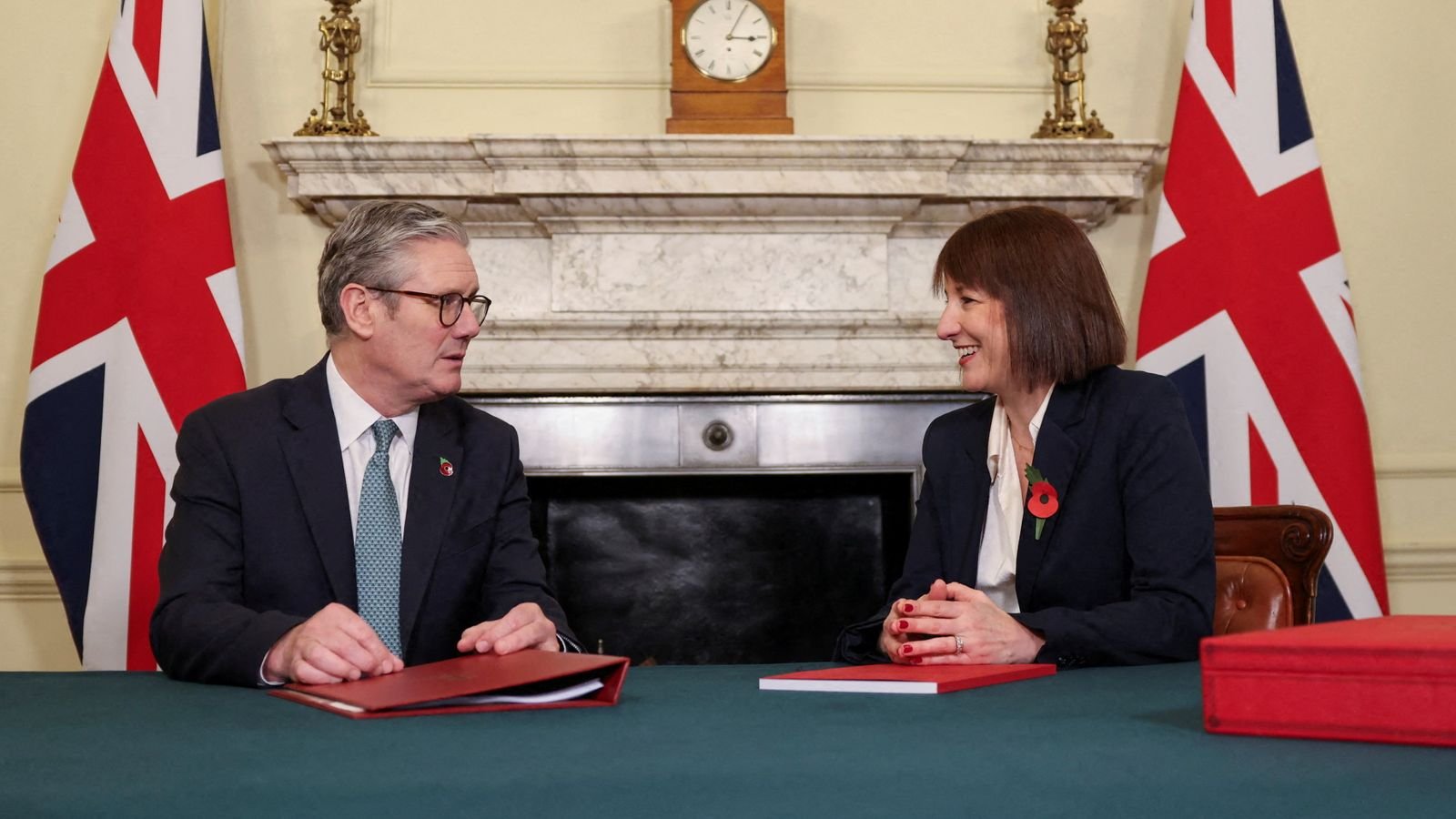
Chancellor Faces Scrutiny Over Tax Increase Justifications
The recent budget announcement has sparked questions regarding the government’s reasons for raising taxes, with critics accusing Prime Minister Keir Starmer of misleading the public and his own Cabinet. Central to this discussion is whether the pressure to increase taxes stemmed from bad news regarding the economy, as suggested by the Prime Minister.
Tax Decisions Linked to Economic Forecasts
The crux of the matter revolves around the Office for Budget Responsibility’s (OBR) updated forecasts, which indicated a £16 billion deficit that the government would need to address. During a news conference, Starmer cited these revisions as the primary justification for the tax hikes, emphasizing the difficult financial landscape the government faces.
Starmer noted, “There was an OBR productivity review… that resulted in £16bn less than we might otherwise have had. That’s a difficult starting point for any budget.”
Understanding the Bigger Picture
Budgets fundamentally involve managing the balance between income and expenditure. The government aims for a fiscal rule where tax revenues must exceed spending after accounting for investments. In the previous budget, taxes had been higher than current spending, with a surplus of £9.9 billion against the established fiscal target.
However, this surplus is not a large buffer, and any fluctuations could impact the government’s financial strategy significantly. As interest on government debt rises, concerns about future tax increases have been prevalent.
The Role of Productivity and Spending
In the summer months leading to the budget announcement, the OBR began reviewing Britain’s productivity, raising alarms in government circles. The initial reports suggested that productivity could diminish tax revenues considerably. There was speculation that the administration might have to respond to such dire forecasts with tax increases.
Upon the arrival of the productivity data, the anticipated financial hit was confirmed to be £16 billion, but it came with silver linings. Adjustments in wage inflation indicated that tax revenues could actually be much better than expected, limiting the overall impact on public finances to between £5 billion and £6 billion.
Decisions Behind the Tax Increase
The significance of this adjusted figure rests in its ability to fall short of the Chancellor’s original £9.9 billion headroom. As a result, the motivations for raising taxes appeared to be more strategic than reactive. The government’s decision to raise taxes appears to be driven by wider policy objectives, including reversing certain welfare reforms and broadening fiscal flexibility.
Despite acknowledging the productivity review, Starmer selected the £16 billion figure as the focal point for justifying the tax increase, potentially giving a misleading impression about the nature of the financial decisions being made.
Conclusion
The fiscal environment remains complex, and the Chancellor’s approach reflects strategic choices rather than merely being reactive. As speculation mounts about the transparency of the government’s financial narrative, it is imperative for officials to communicate these intricacies clearly to the public to maintain trust and understanding regarding fiscal policies.
Background
In recent months, speculation around potential tax increases has been pronounced, especially as rising debt interest costs have pressured governmental finances. The government’s fiscal strategy seeks to outline clear parameters to navigate these challenges effectively.
Source: Original Article






