






















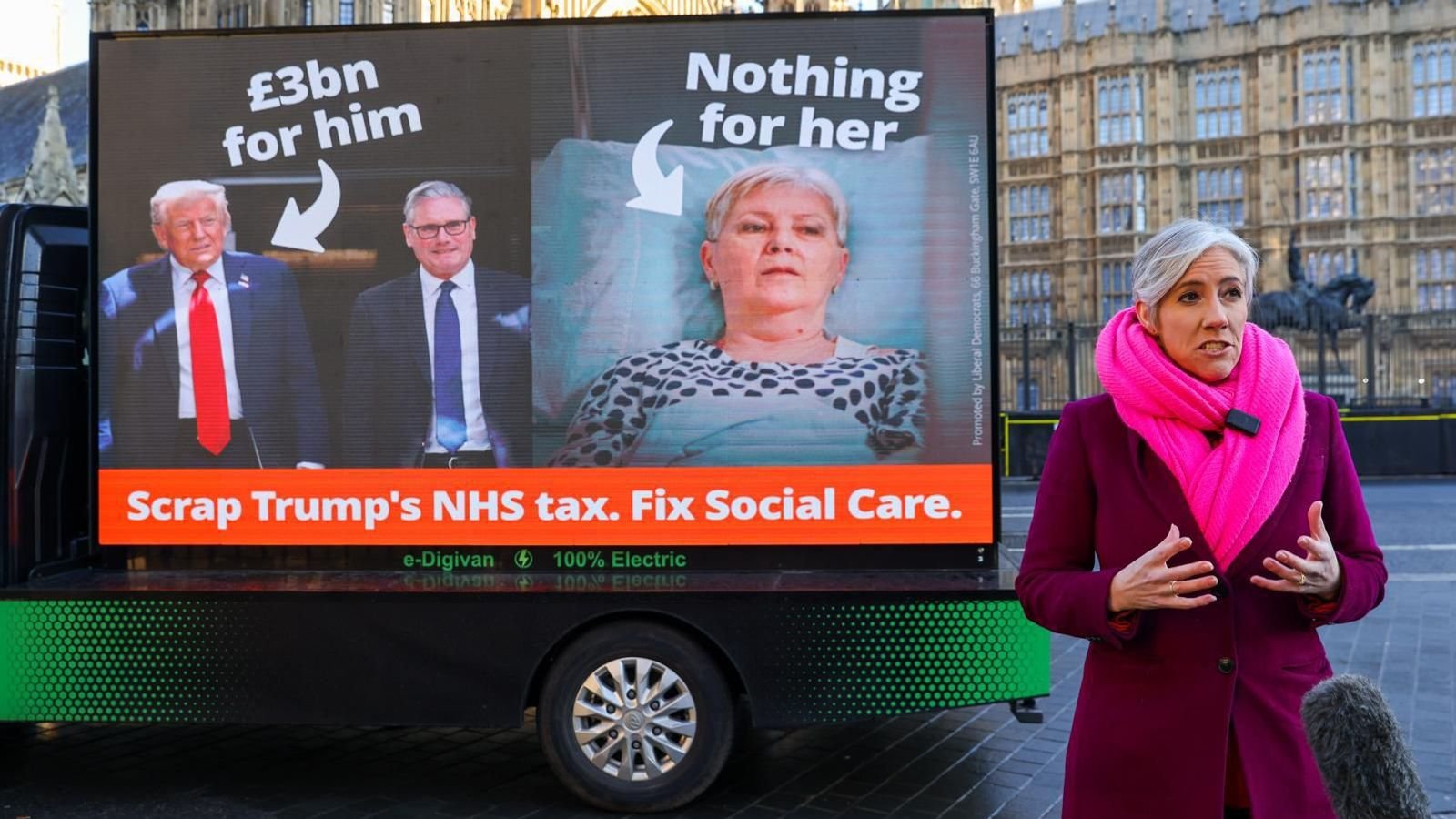
Concerns Over NHS Funding Redirection Amid Drug Pricing Deal
Sir Keir Starmer faces allegations of reallocating £3 billion annually from NHS funds to satisfy demands made by former US President Donald Trump. This shift allegedly channels taxpayer money away from essential NHS services and into the hands of large pharmaceutical corporations.
Details of the Drug Pricing Agreement
In December, the UK government reached an agreement to raise the cost of new medicines by 25% by 2035 to prevent the imposition of trade tariffs on pharmaceuticals by the US. This arrangement involves a revision of the threshold used by the National Institute for Health and Care Excellence (NICE) to evaluate the cost-effectiveness of drugs offered by the NHS, increasing it significantly from £20,000-£30,000 to £25,000-£35,000.
The government claims this adjustment will allow NICE to endorse innovative treatments that demonstrate substantial health benefits, which might have previously been denied based on cost considerations. The anticipated financial implications of this deal are estimated at around £1 billion per year by 2029, although various medical experts, including those from The Lancet, project the potential costs to the NHS could reach as high as £3 billion, depending on the number of new drugs approved under this modified system.
Political Reactions
Daisy Cooper, the Liberal Democrat deputy leader, has criticized the government for what she describes as a lack of public discussion or parliamentary oversight regarding this deal, suggesting it was merely sanctioned by Prime Minister Keir Starmer. She has urged Starmer to reconsider the allocation of these funds—a move she characterizes as a “Trump tax”—and instead redirect the money towards social care initiatives.
Cooper indicated skepticism about the potential benefits of the deal, asserting that the funding is unlikely to yield a substantial increase in new medicines. She referred to independent analyses suggesting that only a handful of new drugs—perhaps three to five—might be introduced to the NHS, while the majority of the funds would merely raise prices on existing medications.
NHS Leaders’ Perspectives
Despite the criticisms, NHS leaders initially expressed support for the government’s assertion that this deal could facilitate access to groundbreaking treatments for numerous patients. However, they cautioned that the NHS lacks adequate funding to absorb the costs associated with this agreement, emphasizing the need to safeguard care, services, and treatment budgets against being compromised.
Whitehall sources have countered concerns by stating that the anticipated rise in drug prices will not detract from NHS service budgets. Instead, they claim these increases will be financed through funds allocated last year specifically to cover the initial costs of the agreement.
Government’s Position
Science Secretary Liz Kendall has defended the arrangement, asserting that it will incentivize life sciences companies to continue to invest and innovate within the UK. Yet, Cooper contends that the government must adopt a more assertive stance in negotiations and accused it of lacking substantial action in addressing social care issues, noting the government’s failure to hold the promised cross-party talks after a year.
Background
This situation arises in the context of ongoing discussions about healthcare funding and pharmaceutical pricing in the UK, underscoring the complexities involved in balancing international trade relations with domestic healthcare needs. The implications of such deals resonate within the broader dialogue of how best to sustain the National Health Service during challenging economic times.
As discussions continue, the government faces mounting pressure to clarify its priorities and budget allocations to ensure that frontline services are not jeopardized in favour of pharmaceutical agreements.
Source: Original Article






