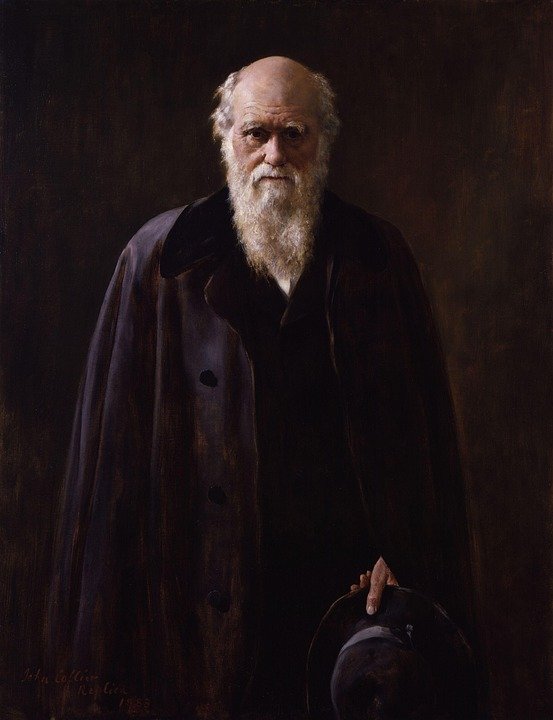
The Historical Context of Darwin’s Theory of Evolution: Science in the 19th Century
The 19th century was a pivotal time in the history of science, characterized by rapid advancements, new discoveries, and the establishment of theories that would reshape our understanding of the natural world. Charles Darwin’s theory of evolution, articulated in his seminal work “On the Origin of Species” in 1859, emerged from this rich scientific backdrop. This article explores the historical context surrounding Darwin’s theory, highlighting key scientific developments and intellectual movements of the time.
The Enlightenment and Scientific Discoveries
The 18th century Enlightenment laid the groundwork for 19th-century scientific thought, promoting reason, empirical evidence, and skepticism towards traditional beliefs. This intellectual movement emphasized the importance of observation and experimentation, influencing various fields:
- Newtonian Physics: Isaac Newton’s laws of motion and universal gravitation established a framework for understanding the physical forces that govern the universe.
- Geology: Figures like James Hutton and Charles Lyell introduced concepts such as uniformitarianism, suggesting that Earth’s geological features were shaped by continuous processes over vast time scales.
- Classification of Species: Botanists and zoologists, including Carl Linnaeus, developed systems for classifying organisms, highlighting similarities and differences in the natural world.
The Birth of Evolutionary Thought
By the early 19th century, the idea of evolution was beginning to take shape among naturalists. Several key figures contributed to the framework that would eventually support Darwin’s theories:
- Lamarckism: Jean-Baptiste Lamarck proposed an early theory of evolution, suggesting that organisms evolve through the inheritance of acquired traits, a concept that was later challenged by Darwin’s findings.
- Erasmus Darwin: Charles Darwin’s grandfather, he speculated on evolution and the idea of a common ancestry among species in his poetic works.
- Geological Insights: The work of geologists demonstrated that Earth’s age was far greater than previously thought, providing the necessary temporal context for evolutionary processes.
Darwin’s Influences and Observations
Darwin’s voyage on the HMS Beagle (1831-1836) was instrumental in shaping his ideas. His observations of diverse ecosystems, particularly in the Galápagos Islands, led him to consider the adaptable nature of species. Key influences on Darwin included:
- Natural Selection: Influenced by Thomas Malthus’s ideas on population growth, Darwin developed his theory of natural selection, positing that organisms best adapted to their environments are more likely to survive and reproduce.
- Basic Genetics: Although the principles of genetics were not fully understood until Gregor Mendel’s work in the 1860s, Darwin’s idea of inheritance, as a mechanism of evolution, began to take shape in this era.
The Reception of Darwin’s Theory
Upon publication, Darwin’s “On the Origin of Species” faced mixed reactions:
- Scientific Communities: Many scientists recognized the weight of Darwin’s evidence, while others were resistant or critical, rooted in prevailing religious beliefs.
- Public Discourse: The theory sparked significant public debate, influencing philosophical discussions and societal beliefs regarding humanity’s place in nature.
Conclusion
The 19th century was a transformative period for science, providing the necessary intellectual and empirical foundation for Darwin’s theory of evolution. Influenced by Enlightenment thinking, advancements in various scientific disciplines, and pivotal voyages of discovery, Darwin’s insights forged a new path in our understanding of life on Earth. His theory not only revolutionized biology but also altered perspectives on humanity’s relationship with the natural world.