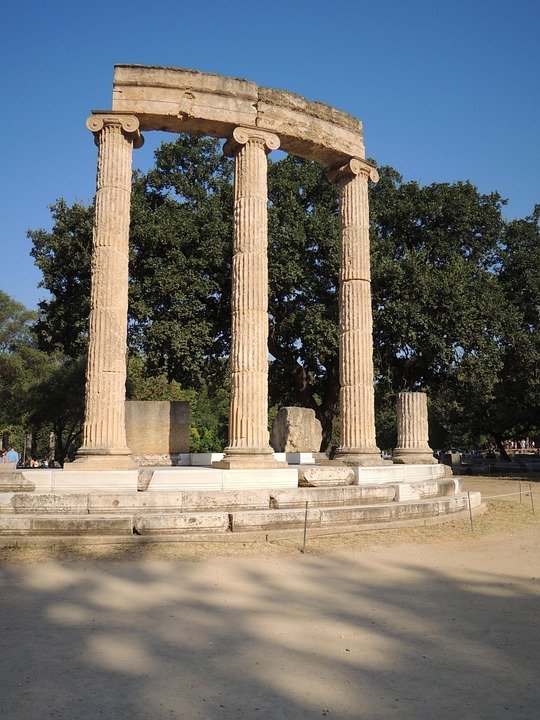
The Origins of the Olympic Games: A Journey Through Ancient Greece
The Olympic Games hold a significant place in the history of sports, symbolizing competition, excellence, and the spirit of unity. Their roots can be traced back to ancient Greece, where the first recorded games took place in 776 BC in the city of Olympia. The Olympics were not merely athletic contests; they were a festival of culture and a demonstration of honor to the Greek god Zeus.
Historical Context
The ancient Greeks celebrated a polytheistic religion, where gods played an integral role in daily life. The choice of Olympia as the venue was not random; it was considered a sacred site dedicated to Zeus. The Olympics occurred every four years, coinciding with religious festivals, attracting athletes and spectators from across the Greek city-states.
Atmosphere and Importance
The significance of the Olympic Games went beyond athletics. They served as a unifying event for the often-warring Greek city-states, allowing rival factions to convene in peace. This truce during the Games enabled athletes to travel to Olympia without fear of conflict.
Events and Athletes
The original Olympic program featured a limited number of events, primarily focusing on track and field disciplines:
- Stadion: A short sprint covering approximately 192 meters.
- Diaulos: A two-stadion race, roughly 384 meters.
- Dolichos: A long-distance event, ranging from 7 to 24 stadia.
- Pankration: A combative sport combining boxing and wrestling techniques.
- Wrestling: Techniques emphasized skill and strength.
- Pentathlon: A multi-event competition including running, long jump, discus throw, javelin throw, and wrestling.
Athletes, known as “agonists,” trained rigorously to prepare for the Games, employing a variety of training methods. Coaches often emphasized physical conditioning, agility, and mental fortitude. Notably, athletes like Milo of Croton were renowned for their strength—Milo’s training techniques included progressively lifting increasingly heavy weights to build muscle mass and endurance.
Training Methods and Techniques
Physical preparation for the Olympics included:
- Strength Training: Athletes utilized bodyweight exercises, as well as lifting heavy stones or other objects.
- Agility Drills: Speed and agility were enhanced through sprints and obstacle courses.
- Recovery: Manual therapies, such as massages and possibly the use of natural remedies for recovery, were common.
Sports Science and Culture
The Olympic Games facilitated advancements in understanding human physiology and performance. Observations made during the Games contributed to what would eventually evolve into modern sports science. The Greeks valued the concept of “arete,” which represents excellence in body and mind, further influencing the ethos behind athletic pursuits.
Legacy and Evolution
The ancient Olympic Games continued for over a millennium until they were abolished in AD 393 by the Roman Emperor Theodosius I. Despite their cessation, the values and spirit of the Olympics remained influential and were revived in the late 19th century with the establishment of the modern Olympic Games. The ideals of sportsmanship, competition, and international camaraderie that characterized the ancient Games continue to resonate today.
The Olympics, both ancient and modern, serve as a reminder of the enduring nature of athletic competition and the unifying power of sport across cultures and generations.