The Stellar Nursery: Understanding Nebulae and Their Role in Star Formation
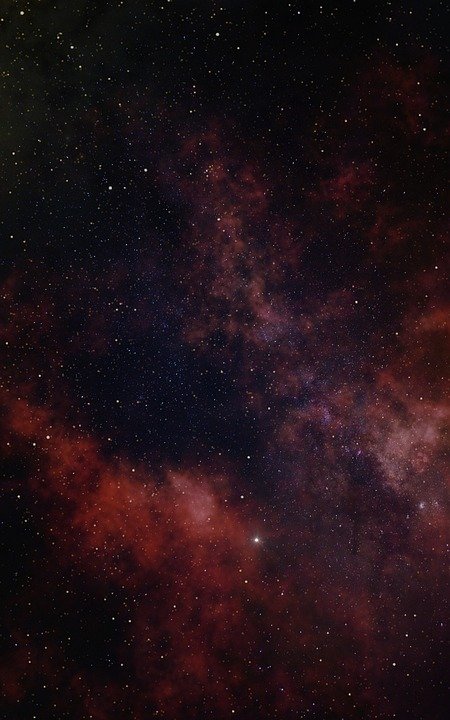
Nebulae are vast clouds of gas and dust that exist in space and are often referred to as stellar nurseries due to their critical role in the birth of stars. Understanding nebulae provides insight into the lifecycle of stars and the dynamics of our universe.
What are Nebulae?
A nebula is a diffuse mass of gas and dust in space, and they can be classified into several categories based on their properties and behavior:
- Emission Nebulae: These clouds consist of ionized gas that emits light. Often found in regions of active star formation, they glow due to the radiation from nearby hot stars.
- Reflection Nebulae: These do not emit their own light but reflect the light of nearby stars. They often appear blue due to the scattering of light.
- Dark Nebulae: Dense regions of gas and dust that block the light from objects behind them, rendering them invisible in certain wavelengths of light.
- Planetary Nebulae: These are formed from the outer layers of gas ejected by dying stars, particularly red giants. They have a distinct ring-like appearance.
The Role of Nebulae in Star Formation
Nebulae play a crucial role in the process of star formation, often referred to as stellar formation. This process typically occurs over millions of years and can be broken down into several stages:
- Gravitational Collapse: Regions within a nebula can become denser due to gravitational attraction. As matter accumulates, it forms a protostar.
- Protostar Formation: As the protostar grows, it heats up because of the gravitational pressure. This process can take thousands to millions of years.
- Nuclear Fusion: Once the temperature and pressure are sufficiently high, nuclear fusion begins in the core of the protostar, converting hydrogen into helium and releasing energy. This marks the birth of a new star.
- Planetary System Formation: The remaining material in the nebula can coalesce into planets and other celestial bodies, leading to the formation of planetary systems.
Historical Context and Observations
The study of nebulae has a rich history in astronomy. Early observations of nebulae were made by astronomers such as Charles Messier in the 18th century, who cataloged many of these objects. Later advancements in telescope technology and the development of spectroscopy allowed scientists to analyze the composition and behaviors of these gas clouds.
Modern telescopes, including the Hubble Space Telescope and ground-based observatories, have provided stunning images and valuable data, enhancing our understanding of nebulae and their contributions to the cosmic ecosystem.
Conclusion
Nebulae are intricate and essential components of the universe, serving as the birthplaces of stars and planetary systems. Their study not only sheds light on the processes of star formation but also on the evolution of galaxies. As ongoing research and observational techniques advance, our understanding of these stellar nurseries continues to deepen.