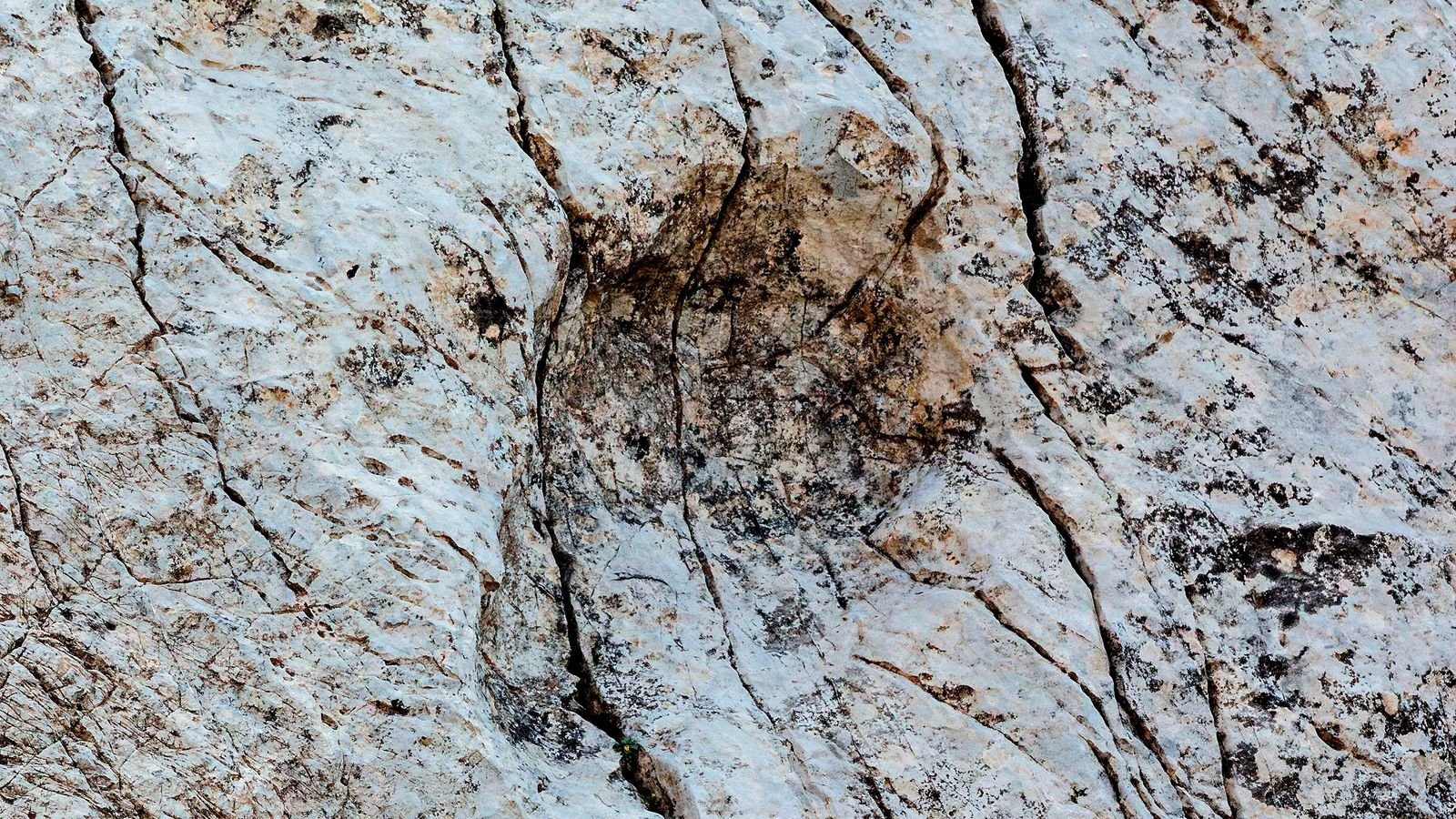
Ancient Dinosaur Footprints Discovered in Northern Italy
Remarkable findings have emerged from Stelvio National Park in northern Italy, where a wildlife photographer stumbled upon an extraordinary collection of dinosaur footprints. Estimated at approximately 210 million years old, these prints number in the tens of thousands and offer an insightful glimpse into the past.
A Significant Discovery
Elio Della Ferrera, while preparing to photograph local wildlife, uncovered this extensive site which spans around three miles. Initial assessments suggest that there are around 20,000 footprints, some reaching widths of up to 40 cm and displaying distinct claw marks. Della Ferrera noted that the sheer volume of prints was the most astonishing aspect of the find.
He stated, “The huge surprise was not so much in discovering the footprints, but in discovering such a massive quantity.” Additionally, he highlighted the challenges of spotting the prints, as they are located on a shaded vertical wall, requiring a powerful camera lens to discern.
Expert Insights
Paleontologist Cristiano Dal Sasso from Milan’s Natural History Museum remarked on the significance of the find, describing it as one of the largest and oldest footprint sites in Italy. Having worked in the field for 35 years, he expressed his amazement, stating, “This time reality really surpasses fantasy.” He observed that the marks indicate creatures moving at a slow and measured pace, rather than in a hurried manner.
The discovery is located at the entrance of the national park, close to Bormio, which is slated to host alpine skiing events during the upcoming Winter Olympics in February.
The Creatures Behind the Prints
Experts suggest that these footprints likely belonged to large, long-necked herbivores known as plateosaurs. The prints date back to the Triassic period, a time when the area was a warm lagoon, providing ideal conditions for dinosaurs to leave tracks in soft mud along coastal regions.
Background
This discovery adds to the growing body of knowledge about dinosaur behaviour and evolution, particularly during the Triassic period. As one of the earliest eras in the age of dinosaurs, finding such extensive footprints enhances understanding of prehistoric life on Earth.
Elio Della Ferrera’s unintentional discovery is a reminder of how nature can still unveil secrets from the distant past, offering modern scientists a valuable opportunity to study and learn.
Source: Original Article