






















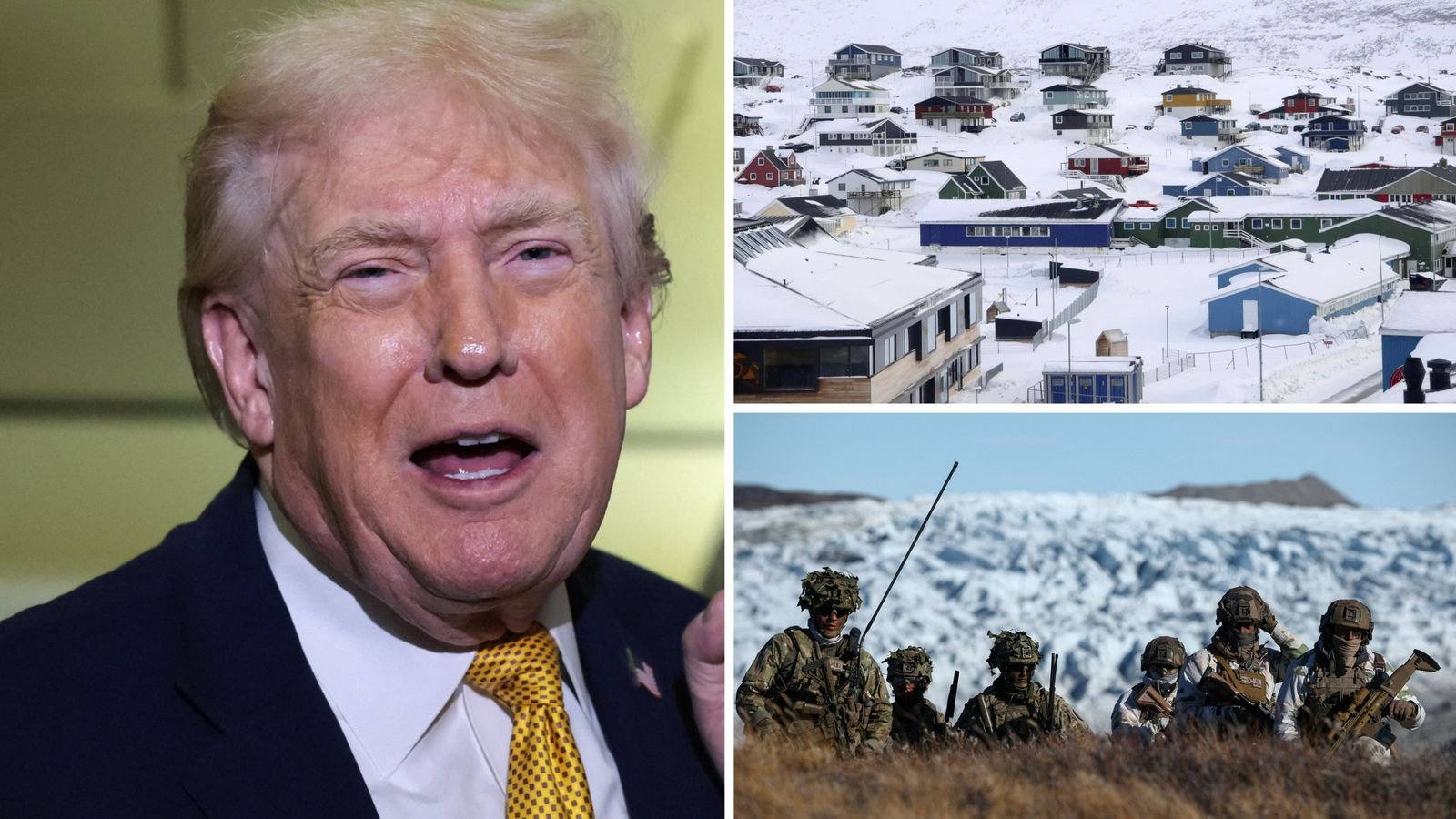
Trump’s Controversial Greenland Remarks Ignite Diplomatic Responses
In an extraordinary communication, US President Donald Trump has reiterated his demand for “complete and total control of Greenland,” prompting a detailed response from Norway’s Prime Minister Jonas Gahr Stoere. This exchange comes amidst Trump’s dissatisfaction over not being awarded the Nobel Peace Prize and follows a message Stoere sent to the US leader regarding various pressing global issues.
The Exchange Between Leaders
President Trump’s remarks were delivered in reaction to a text from Stoere, who reached out on behalf of both Norway and Finland. In his message, Stoere addressed several critical subjects, including Greenland, Gaza, and Ukraine, alongside a recent announcement about tariffs from the Trump administration.
Stoere expressed a desire for collaborative efforts to de-escalate tensions surrounding these issues, remarking on the necessity for unity during tumultuous times. He suggested a call with Trump later that day, offering a choice to connect either with both leaders or separately.
Trump’s Nobel Discontent
Amidst ongoing global geopolitical dynamics, Trump’s frustration over the Nobel Peace Prize highlights his contentious relationship with international diplomacy. While he attempts to assert control over Greenland, the implications extend beyond mere territorial claims, signalling potential shifts in transatlantic relations.
Background
Trump’s fixation with Greenland has been a topic of heated debate, particularly following his earlier proposal to buy the territory from Denmark, which was met with considerable backlash. This latest communication reflects ongoing tensions not just within the Arctic region but also concerning broader international scenarios impacting Europe and the US.
As the world navigates complex challenges, such as the COVID-19 pandemic and rising global tensions, the manner in which world leaders communicate and propose solutions will hold significant weight in shaping future diplomatic relations.
Conclusion
This incident underscores the importance of diplomatic dialogues among nations, especially as they address multifaceted crises. As world leaders respond to one another, their exchanges could either forge stronger alliances or exacerbate existing divisions.
Source: Original Article






