






















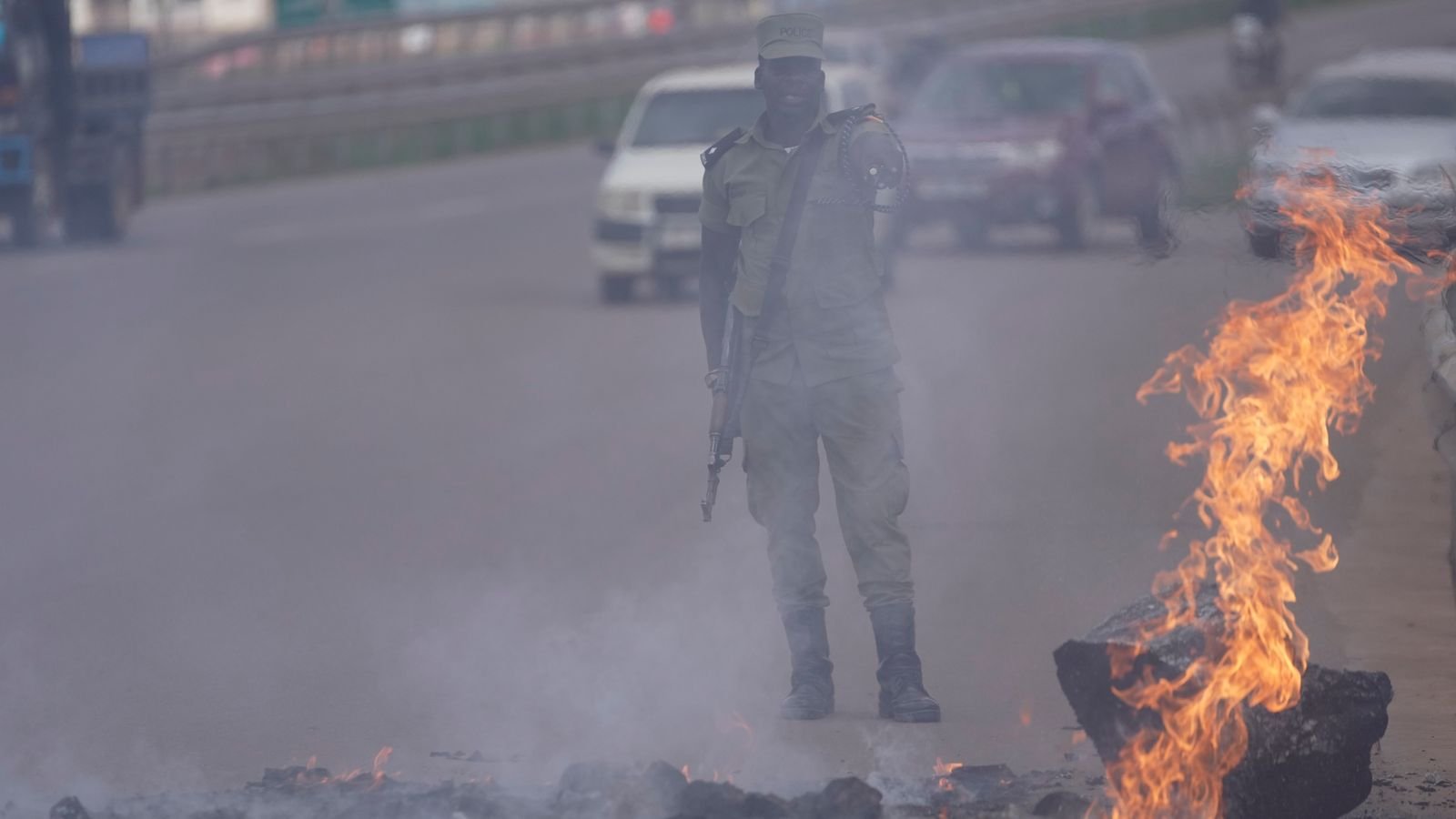
Violence Erupts Amidst Uganda’s Presidential Elections
Seven people have reportedly lost their lives as chaos engulfed Uganda’s presidential election, overshadowing the process with violence and unrest. The elections, which are poised to extend President Yoweri Museveni’s tenure into a fifth decade, have been marred by significant clashes and allegations of voter suppression.
Details of the Violence
In the early hours of the previous night, police reported that machete-wielding assailants were shot by security forces in Butambala, a central town. The deceased were said to be supporters of opposition leader Bobi Wine, who currently trails in the election by a significant margin.
Local police spokesperson Lydia Tumushabe stated that a large group attacked both a polling station and a police station at around 3 am, compelling security forces to act in self-defence. However, disputes have arisen over the circumstances leading to the fatalities, with allegations from Wine’s supporters that the victims were unarmed and shot inside a private residence.
Eyewitness Accounts and Claims
MP Muwanga Kivumbi described the situation as a “massacre,” contending that the victims were targeted while awaiting election results in his garage. He rebuffed the police narrative, asserting that security personnel had earlier dispersed crowds outdoors and therefore could not have been responding to an external threat when the shootings occurred.
Election Context
As votes are being counted, the capital Kampala resembles a war zone, according to reports from observers. A full military presence has been deployed, with accounts of individuals being apprehended by security forces as ballots are cast.
Preliminary results indicate Museveni is positioned to achieve over 75% of the vote, while Bobi Wine claims approximately 21%. Wine has raised concerns over mass electoral fraud amid an ongoing internet blackout, further alleging that his party is facing attempts to silence their voices post-election.
Background
The current elections serve as a continuation of Uganda’s fraught political climate under Museveni, who seized power in 1986 following a brutal civil war. Since then, his government has faced increasing scrutiny over human rights abuses and crackdowns on dissent. The recent electoral process has amplified concerns about the integrity of democratic practices in Uganda, echoing a wider pattern of tension in various nations concerning free and fair elections.
The unfolding situation in Uganda remains critical, as it not only impacts domestic politics but also carries implications for international observers and regional stability. As the world watches, the reactions and actions taken by both Ugandan authorities and opposition groups will be pivotal in shaping Uganda’s future.
Source: Original Article






