Intensified Crackdown on Ugandan Opposition Ahead of Elections
As Uganda approaches its upcoming elections, the political landscape has become increasingly fraught with tension and violence. The prominent opposition leader, Bobi Wine, faces heightened government scrutiny and allegations of election rigging amid a severe crackdown on his supporters.
Bobi Wine’s Surveillance and Growing Concerns
Bobi Wine, a former musician turned politician, resides in a heavily monitored home where the presence of police and security forces is a constant reminder of the challenges he faces. Despite his growing popularity, especially among younger voters, the Ugandan government has escalated its efforts to suppress dissent and manage public perception.
Wine’s political rise began in 2018 when he transformed his celebrity status into a platform for political activism, opposing long-time President Yoweri Museveni and his party. However, as his support base has expanded, so too has the government’s response, leading to increased violence and the abduction of political opponents.
The Reality of Political Repression
“What has changed is that it has gone from bad to worse,” Wine remarked, highlighting the pervasive atmosphere of fear and violence in Uganda. Many individuals have reportedly gone missing in recent years, amplifying concerns about impunity and the state of human rights in the country.
In the lead-up to Uganda’s 2021 general elections, at least 54 lives were lost amid violent crackdowns on protests and dissent. Currently, Wine’s National Unity Party claims that 300 of their members have been detained as they prepare for the electoral contest against Museveni, who has held power for nearly four decades.
Election Climate Under Siege
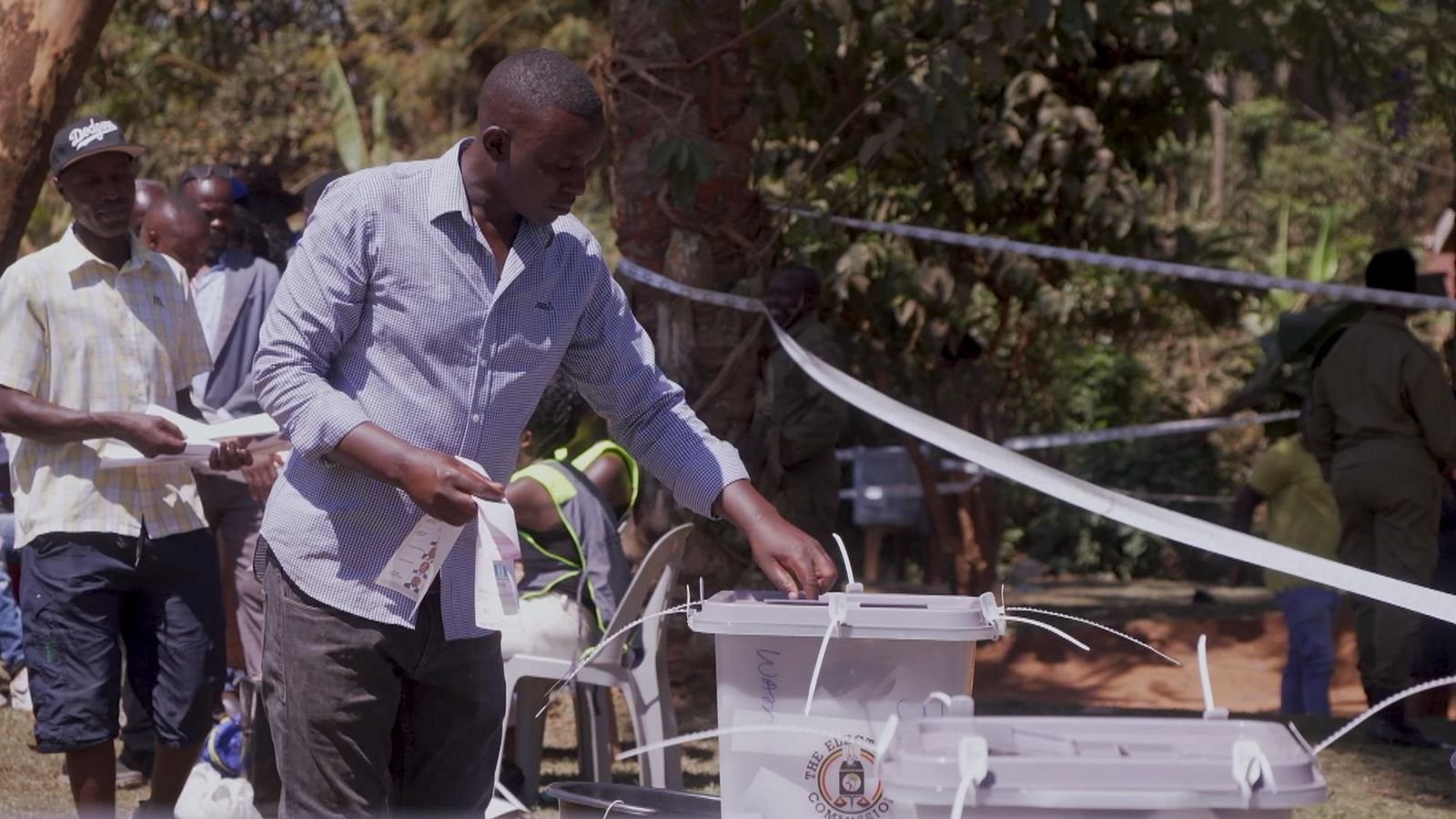
The political climate surrounding the upcoming elections is particularly dire. Reports indicate a complete blackout of internet access and a heavy military presence on the streets of Kampala as voters prepare to cast their ballots. Wine has voiced concerns regarding the detainment of his aides and has emphasized that the election is unfolding under oppressive conditions designed to diminish transparency.
President Museveni’s government has long been accused of manipulating election outcomes, with the president himself dismissing the allegations, claiming that the opposition attempts to rig the election as a means of countering his administration’s popularity.
Background
The ongoing tension between Bobi Wine and President Museveni reflects broader issues of governance and democracy in Uganda. Wine has emerged as a significant figure in the opposition movement, galvanising support from Uganda’s youth, who are increasingly disillusioned with the status quo.
Past elections have been marred by violence, claims of fraud, and restrictions on media coverage—a trend that appears to be continuing as the next election approaches.
The Global Significance
This situation in Uganda has implications not only for its citizens but also for international observers and governments concerned with human rights and democratic integrity. The actions taken by the Ugandan government against opposition figures like Bobi Wine are indicative of a concerning trend in many parts of the world where authoritarianism is on the rise.
Source: Original Article