






















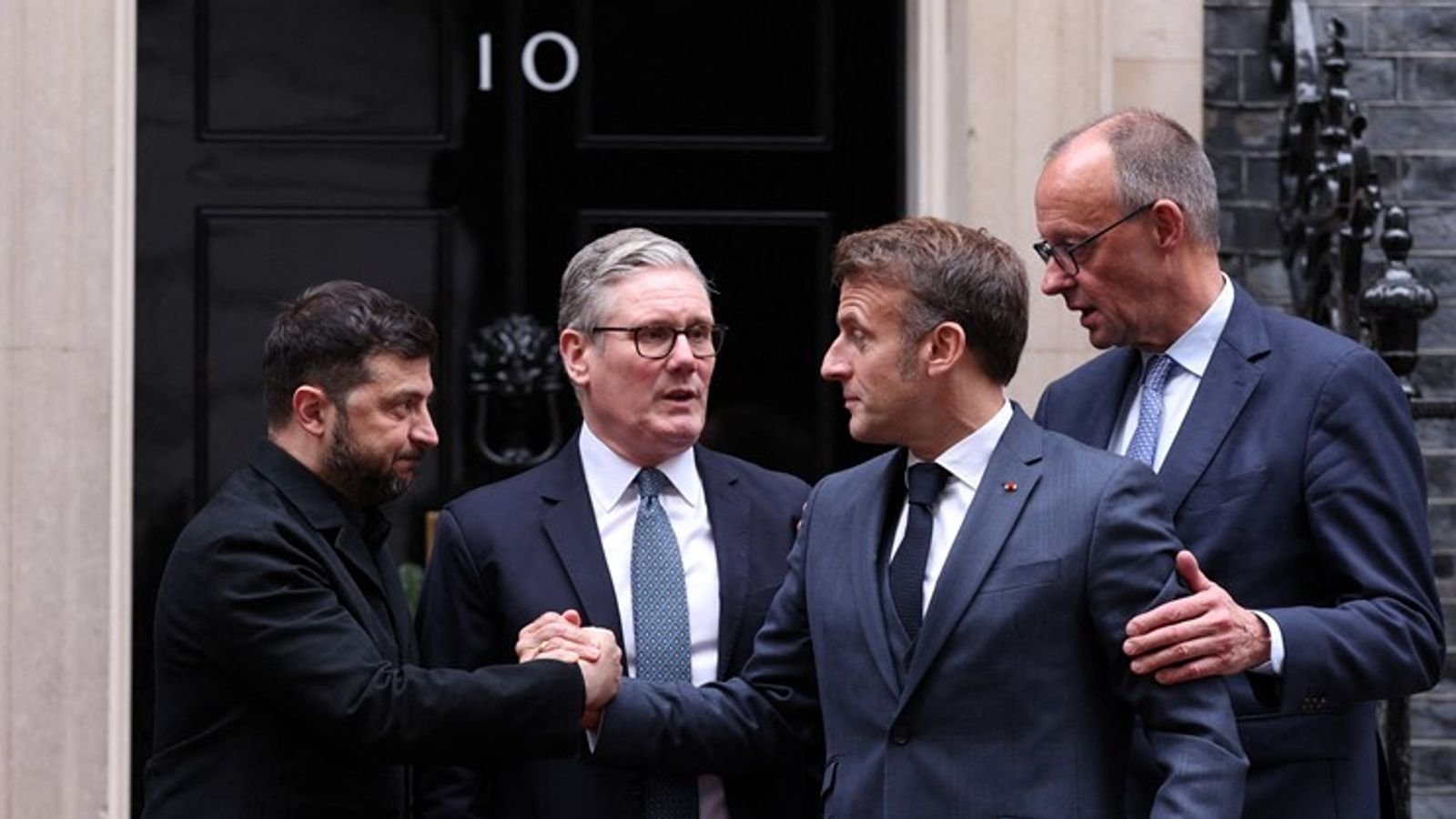
International Allies Convene in Paris to Discuss Ukraine’s Future Security
Leaders from Ukraine and its allies are gathering in Paris today to deliberate on security arrangements following a potential ceasefire agreement with Russia. This pivotal meeting includes prominent figures such as Sir Keir Starmer and aims to formulate a unified response to possible future threats from Moscow.
Context of the Meeting
This strategic assembly takes place against a backdrop of heightened geopolitical tensions, prompted by recent comments and actions from US President Donald Trump. His military operation in Venezuela, which resulted in the capture of leader Nicolas Maduro, coupled with controversial statements about US interests in Greenland, has led to increased strains with European nations.
A Broad Coalition
French President Emmanuel Macron recently expressed optimism for what he described as a “coalition of the willing,” which includes over 20 European nations, alongside Canada, Turkey, Australia, and New Zealand. The coalition is focused on establishing preventive measures against any possible resumption of hostilities from Russia if a ceasefire is agreed upon.
In addition to President Volodymyr Zelenskyy of Ukraine, more than 27 leaders are expected to attend the Paris meeting, which also includes senior US officials, Steve Witkoff and Jared Kushner.
Key Priorities for Discussion
The discussions will centre around five crucial priorities that aim to ensure stability post-conflict:
- Establishing monitoring mechanisms for a ceasefire
- Continued support for Ukraine’s military
- Deployment of a multinational force on land, sea, and air
- Commitments to address any future Russian aggression
- Long-term defence collaboration with Ukraine
Ukrainian officials are particularly focused on securing guarantees of military and financial support from the United States, viewing this as essential for obtaining similar commitments from other allies.
Challenges Ahead
In recent statements, President Zelenskyy highlighted that the concept of deploying European troops is still fraught with challenges, as many nations may require parliamentary approval before committing military forces. He acknowledged that support could also encompass advanced weaponry, technology, and intelligence, rather than solely troop deployments.
Moreover, Zelenskyy underscored the role of the UK and France, the only nuclear-armed countries in Western Europe, in leading post-ceasefire deployments. He remarked that the existence of the coalition would hinge on these nations’ willingness to enhance their military presence in Ukraine, suggesting that without this commitment, the coalition would lack its foundational strength.
Background
The ongoing conflict in Ukraine has persisted since 2014, escalating significantly with Russia’s 2022 invasion. As the war continues, international diplomatic efforts have become crucial in seeking a resolution, with previous rounds of talks having made limited progress. The situation in Ukraine, alongside global implications for security and international relations, underscores the necessity for allied nations to collaborate closely on defense strategies.
The upcoming discussions in Paris mark yet another critical step in addressing these complex issues as nations work together to forge a sustainable peace in the region.
Source: Original Article






