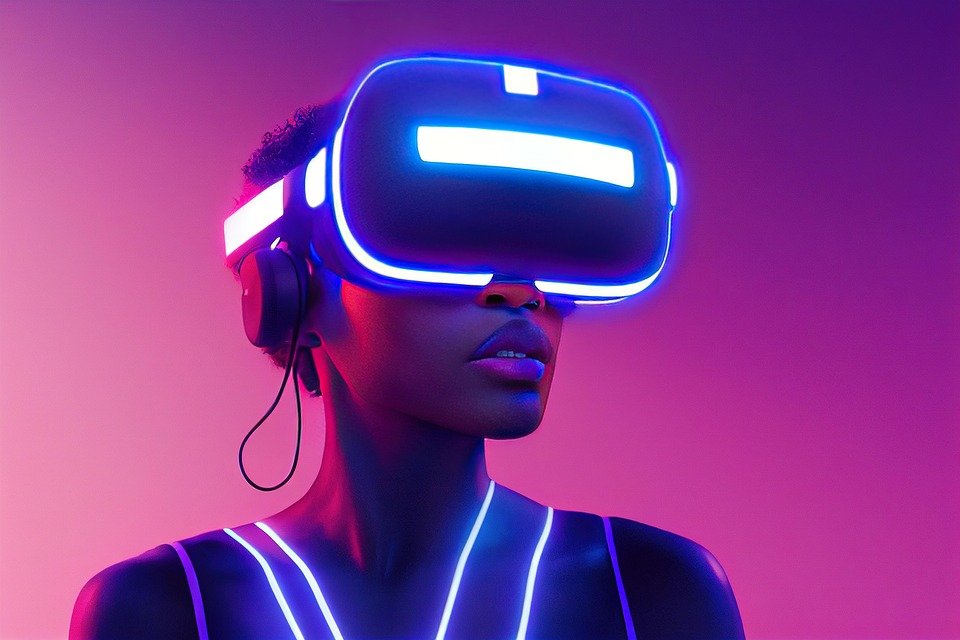
Understanding Augmented Reality: A Comprehensive Overview of Its Core Principles
Augmented Reality (AR) is a technology that overlays digital information—such as images, sounds, or text—onto the real world, enhancing the user’s experience with interactive elements. Unlike Virtual Reality (VR), which immerses the user in a completely artificial environment, AR enriches the real-world environment with additional digital layers. This article aims to provide a foundational understanding of AR by discussing its core principles and underlying technologies.
Core Principles of Augmented Reality
- Real-Time Interaction: AR systems operate in real-time, allowing users to interact with augmented elements as they engage with their physical surroundings. This immediacy is crucial for applications such as gaming and training simulations.
- 3D Registration: For AR to be effective, it must accurately position digital content within 3D space. This involves complex algorithms that interpret the physical world and anchor digital objects in a way that makes them appear as if they coexist in the same environment.
- Combining Real and Virtual Elements: AR blends real-world scenarios with virtual components, creating a seamless experience. Users can view enhancements to their environment through devices such as smartphones or AR glasses, which might display relevant information about objects they see.
- Three Main Categories: There are three primary types of AR implementations:
- Marker-Based AR: This type uses predefined visual markers, such as QR codes, to trigger the display of 3D content when viewed by a camera.
- Markerless AR: Also known as location-based AR, this approach uses GPS, compass, and accelerometer data to determine the user’s location, enabling context-aware interactions without the need for specific visual markers.
- Projection-Based AR: This approach involves the projection of digital images onto physical surfaces, allowing users to interact with virtual content using their hands or other objects.
Underlying Technologies in AR
The effectiveness of AR heavily relies on several foundational technologies:
- Computer Vision: This field of study enables computers to interpret and make decisions based on visual data. In AR, computer vision helps track the environment and recognize physical objects to accurately overlay digital elements.
- Simultaneous Localization and Mapping (SLAM): SLAM is a vital algorithmic framework that helps a device map an environment while simultaneously keeping track of its location within that space. This is essential for AR systems to maintain stability and coherence as users move.
- Sensor Technology: Modern smartphones and AR glasses are equipped with various sensors—such as accelerometers, gyroscopes, and depth sensors—that promote accurate tracking of positional data, which enhances the AR experience.
- Artificial Intelligence: AI plays a crucial role in enhancing the interactivity and adjustability of AR experiences by enabling adaptive responses based on user behavior and spatial context.
Applications of Augmented Reality
AR technology has widespread applicability across numerous sectors:
- Education: AR can provide immersive learning experiences, allowing students to visualize complex subjects like anatomy or astronomy through interactive 3D models.
- Healthcare: Surgeons can use AR systems to access vital information during procedures, improving accuracy and reducing risks.
- Retail: Stores can leverage AR to allow customers to visualize products in their homes before making purchases, enhancing consumer engagement and decision-making.
- Manufacturing: AR can assist in training scenarios and assembly processes by overlaying guidance directly onto machinery, increasing efficiency and accuracy.
Conclusion
Augmented Reality represents a confluence of various technologies that offer enhanced interaction with the real world. With its core principles of real-time interaction, accurate 3D registration, and seamless integration of virtual elements, AR has the potential to transform how individuals engage with information and their environment across diverse fields. Understanding AR’s foundational technologies allows both creators and users to appreciate its capabilities, ensuring its continued evolution and integration into daily life.